Real Celebrities Never Die!
OR
Search For Past Celebrities Whose Birthday You Share
Died Age: 97
www.msn.com
Art Wander
Birthday:
13 Nov, 1927
Date of Death:
12 Aug, 2025
Cause of death:
Natural Cause
Nationality:
American
Famous As:
American television
Age at the time of death:
97
Arthur Wanderlich's Quote's

“Not all those who wander are lost.”
Arthur Wanderlich
🔗 deadcelebrityhub.com
Early Life
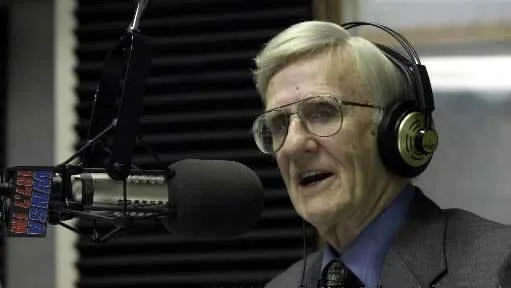
Art Wander was a voice in American sports radio who spoke with both wit and fire, a storyteller who turned local loyalties into communal ritual, and a programmer who helped shape what people heard on the air. Over more than half a century in broadcasting, he built a reputation for sharp commentary, unforgettable nicknames, fierce passion for his hometown, and an ability to spark dialogue—even conflict—with warmth. His legacy is as much about carved-in-character moments as it is about signals and stations.
Arthur Wanderlich—who would later become known as Art Wander—was born November 13, 1927, and raised in the East Side of Buffalo, New York, in a Polish-American family. Growing up, the clamor of the neighborhood and the radio both left their mark: as a youngster, he often skipped school just to watch performers Foster Brooks and Buffalo Bob Smith broadcast live from WGR inside the W.T. Grant department store. Those early moments weren’t just entertainment—they ignited his fascination with the power of voice, broadcast, and performance.
His adolescence coincided with the Depression and its cultural aftershocks; radio was one of the few portals to the wider world. Serving in the U.S. Navy after high school, Wander’s early adult years brought discipline, exposure to different people and ideas, and a growing sense that radio was more than voice—it could be influence.
Education & Formative Influences
Though formal details of art or media schooling are not central to his story, Wander’s education came through lived experience: absorbing radio shows, working in reporting, observing how broadcasts could shape local culture. His early reporting work taught him both the value of facts and the flavor of storytelling. He learned early that color—personality, quirks, local references—mattered as much as content
Career Journey
Art Wander’s professional life unfolds in distinct phases: the early climb, major breakthroughs and the height of influence, then later years of reflection and local legend.
Early Career: Finding the Mic
After his naval service, Wander began producing radio programs for the Veterans Administration hospital system, a foundational experience in crafting broadcasts that matter to people who need them. In 1956, he joined WKBW in Buffalo as a news reporter—working behind the scenes, learning how stories are built, how voices connect with listeners. Within two years, he hired as his assistant a young Irwin Weinstein (later “Irv”), marking one of Wander’s first recognitions of talent and mentorship.
Major Achievements & Turning Points
Wander didn’t stay confined to Buffalo. He became a radio format programmer in major cities—New York City, Chicago, Boston, Dallas, Baltimore, Atlanta, Tampa, and Memphis. Along the way, he developed the sharp instincts and bold voice that would become his trademark. In New York, at WOR-FM, his career took a memorable turn when he met The Beatles and was befriended by their manager, Brian Epstein—an indication of how broad a reach his role could have.
Returning to Buffalo in the 1980s, Wander embraced both programming and on-air sports talk. He leaned into the local: the Buffalo Bills, the New York Mets, the roller derbies, the boxing matches. He became known as much for his personality as for his sports analysis: quips, zingers, malapropisms, friendly jabs at public figures—and a rapport with callers that felt intimate. He earned nicknames like “the Tiny Tot of the Kilowatt” (a cheeky reference to his 5’6” stature) and “your private pope,” the latter born of a fan-made theme. These monikers stuck because they stole attention while conveying affection.
One of the moments that boosted him beyond local radio circles was when Bills general manager Bill Polian publicly called Wander out during a dinner speech: that confrontation spotlighted Wander’s prominence and influence. In 1992, he moved to WGR, and in 1996 to Empire Sports Network (and its radio arm), extending his presence into television as a sports analyst. He remained a fixture in Western New York sports media for many years.
Later Career: Legend in the Local
As the years advanced, Wander’s role shifted somewhat. He retired from full-time work at Empire and its radio affiliates in 2002 but remained engaged. He made regular appearances on television programs like All Sports WNY, contributed commentary to websites, and was honored by his community. In 2008, he was inducted into the Buffalo Broadcasters Hall of Fame—a formal nod to a career that had already become part of Buffalo’s everyday soundtrack.
Personal Life
Art Wander had two children, Scott and Kelley, from his earlier marriage to Joann Adams, which ended in divorce. Outside of broadcasts, he was known by friends and colleagues as energetic, sharp-tongued but warm—someone who loved his hometown, followed its fortunes, and rooted much of his commentary in its culture.
An interesting detail: despite the intensity with which he debated sports managers, analyzed games, or lampooned broadcasting conventions, he never took himself entirely too seriously—his humor, self-deprecation, and willingness to riff with callers often undercut any air of pretension. The nicknames, the theme songs, the duels with public figures—all of it carried with them a sense that this was performance, winking at the audience, but always grounded in fandom.
Legacy
Art Wander died on August 13, 2025, at the age of 97. He left behind more than decades of radio and television work; he left behind a voice that helped define Buffalo’s sports culture for generations. His influence is visible in the people he mentored, the radio personalities who followed his style—sharp, local, irreverent yet affectionate—and in the ongoing conversations among fans who still replay his phrases or reference his takes.
He is remembered as someone who leveraged the microphone not just to report or analyze, but to challenge, to entertain, to stitch community together. Each broadcast was, in its own small way, part of the city’s identity. His legacy lives on in the echoes of listeners, in the way local sports discourse still prizes personality as much as insight, and in a standard he set: be real. Speak with honesty. Know your people. And never let the signal die.
Profile Snapshot
Name:
Arthur Wanderlich
Popular Name:
Art Wander
Gender:
Male
Cause of Death:
Natural Cause
Spouse:
Joann Adams
Place of Birth:
Buffalo, New York.
Place of Death:
New York
Occupation / Profession:
American television
Radio Sports analyst
Personality Type
Virtuoso: Art Wander seems to be an imaginative and idealistic creator, guided more by inner values and emotional truth than by convention, who finds inspiration in wandering, exploring, and expressing the intangible parts of life.
Arthur Wanderlich's Interesting Facts
Art Wander was born Arthur Wanderlich on November 13, 1927, and grew up in a Polish-American family on Buffalo’s East Side.
As a child, he often skipped school to watch live radio performances by Foster Brooks and Buffalo Bob Smith.
He was known as “the Tiny Tot of the Kilowatt,” a nickname inspired by his short height and big radio personality.
His popularity skyrocketed in 1989 when he openly criticized Buffalo Bills GM Bill Polian on his sports talk show.
External Links