Real Celebrities Never Die!
OR
Search For Past Celebrities Whose Birthday You Share
Died Age: 90
brunoceriotti.weebly.com
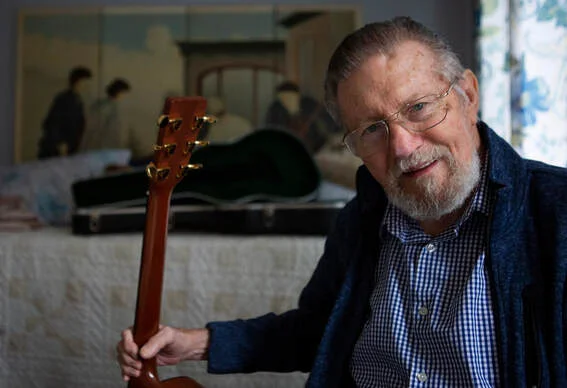
Bob Harvey
Birthday:
16 Nov, 1934
Date of Death:
17 Mar, 2025
Cause of death:
Undisclosed
Nationality:
New Zealand
Famous As:
American bassist
Age at the time of death:
90
Robert Brian Harvey's Quote's

“When you’re playing to people, you’re not just putting sound out — you’re inviting them into a space of shared story.”
Robert Brian Harvey
🔗 deadcelebrityhub.com
Early Life
Bob Harvey was a musician of quiet but pivotal influence: an upright-bass player who helped seed the Bay Area’s mid-1960s folk-to-rock explosion and then carried a lifelong devotion to acoustic music, visual art, and storytelling. Best known as the original bassist of Jefferson Airplane during its formation in 1965, Harvey’s life threaded bluegrass, folk clubs, early San Francisco psychedelia, and later years spent creating journals, lithographs, and intimate performances that kept the spirit of those early days alive.
Robert Brian “Bob” Harvey was born in Burley, Idaho, and raised in the San Francisco Bay Area, where the region’s folk and coffee-house culture would shape him. Early on, he gravitated toward harmony singing and acoustic instruments; those roots in four-part gospel and folk harmony are a throughline in his musical identity. After military service, he returned to California, became part of the small but active folk scene around Burlingame and San Mateo, and began hosting hootenannies that connected him with peers who would later become central figures in the Bay Area sound.
Education and Musical Formation
Harvey’s musical education was largely practical and local rather than institutional—he learned by playing. He picked up banjo and upright bass while performing at coffee houses and community venues in the early 1960s, and he co-founded the Slippery Rock String Band, a bluegrass ensemble that gave him a foundation in acoustic technique and ensemble playing. Those years—playing hootenannies, recording primitive local sessions, and singing harmony—prepared him for an unusual opportunity that arrived in 1965.
Career Journey
Joining the New Sound (1965)
In the summer of 1965, when Marty Balin and Paul Kantner were assembling the band that would become Jefferson Airplane, they recruited Harvey to play acoustic bass. For a brief but formative stretch, he anchored the group at early gigs at The Matrix and on the local circuit, part of the nascent scene that fused folk sensibilities with a louder, more electric future. The band’s direction quickly shifted toward an electric sound, and by October 1965, Harvey was replaced by Jack Casady; Harvey’s tenure was short but historically significant—he helped shape the Airplane’s earliest live chemistry and participated in early demos and performances that predated the band’s recorded debut.
Returning to Acoustic Roots and Later Projects
After Jefferson Airplane, Harvey returned to the acoustic and bluegrass world. He co-founded and performed with the Slippery Rock String Band and later worked with artists and groups including The Holy Mackerel (with songwriter Paul Williams) and San Francisco Blue, which later became Georgia Blue. Across decades, he was involved in regional projects, studio sessions, and small-venue performances—always favouring songs, harmony, and upright-bass warmth over the flash of stadium fame. In later years, he continued to play locally (including performances in Ohio) and to collaborate with younger players who appreciated his living link to the 1960s scene.
Challenges and Turning Points
Harvey’s career illustrates a recurring tension of the 1960s: artists rooted in acoustic, folk-based traditions confronted a fast-moving popular culture that prized electric innovation and new studio bravado. Being replaced in Jefferson Airplane could have been a private setback; instead, Harvey leaned into his strengths—acoustic ensemble work, harmony singing, songwriting, and later, visual art—crafting a life in music that valued depth over celebrity. His path shows how influence isn’t always measured by chart positions but by the roles played in important creative moments.
Personal Life & Character
Harvey’s life had the low-profile warmth of a player who loved the work more than the trappings. He raised a family, moved through different states—Georgia and later Ohio—and kept creating: writing daily poems and drawings that would become a lifetime archive. Those journals were not private curiosities; they became a public project, exhibited as lithographs and presented alongside musical events. Friends and interviewers describe him as modest, reflective, and generous with stories—someone who remembered the early days vividly but never treated them as a claim to celebrity.
Legacy
Bob Harvey died in Lancaster, Ohio, on March 18, 2025, at the age of 90. He is remembered less as a household name and more as a connective figure—a musician whose early presence helped launch one of the most iconic groups in American rock and whose subsequent decades of acoustic work, collaboration, and artistic practice kept the threads of folk and bluegrass alive in multiple communities.
His legacy is layered: a founder in a seminal band’s origin story, a lifelong steward of acoustic music and harmony singing, and an artist whose journals and exhibitions offered a reflective, personal map of the 1960s and beyond.
In the end, Harvey’s story is an instructive one for anyone who prizes musical craft over fame: he shows that being present at key creative moments, returning to what you do well, and documenting a life of art and music can be as influential as any hit record. He remains a quiet, living link to a moment when American folk and rock were inventing themselves—and to a way of working that values collaboration, continuity, and the small, human acts of making music together.
Profile Snapshot
Name:
Robert Brian Harvey
Popular Name:
Bob Harvey
Gender:
Male
Cause of Death:
Undisclosed
Spouse:
Joyce Russell Harvey
Elaine Bern
Place of Birth:
Burley, Washington, United States
Place of Death:
Lancaster, Ohio, United States
Occupation / Profession:
American bassist
Personality Type
Protagonist: Bob Harvey was a thoughtful, down-to-earth artist who let his love for music and simple honesty shape everything he did.
Robert Brian Harvey's Interesting Facts
Harvey kept a private daily journal for decades in which he wrote a poem and drew an illustration almost every day; those journals later became the basis for public art exhibitions.
Before his music career fully took off, he served in the U.S. Navy and recorded in the Philippines during his service.
Even after the high-visibility peak of the 1960s, he chose to remain rooted in smaller venues, acoustic ensemble work and mentorship of younger players rather than chasing mainstream rock stardom.
Achievements & Awards
Bob Harvey was the original bassist for Jefferson Airplane when the band formed in 1965, helping anchor its early live sound before its move into electric rock.
He co-founded the bluegrass-inflected Slippery Rock String Band and later performed in regional projects that maintained the folk/bluegrass acoustic tradition.
In his later years, he exhibited his lifetime of art journals and drawings in the “Time Travel: Poetry, Art, Music and Memories from the ’60s” show, showing his multi-disciplinary creative achievement.
While he did not receive major mainstream awards, his work is recognised within the folk and Bay Area music communities as foundational to the 1960s scene.
External Links