Real Celebrities Never Die!
OR
Search For Past Celebrities Whose Birthday You Share
Died Age: 84
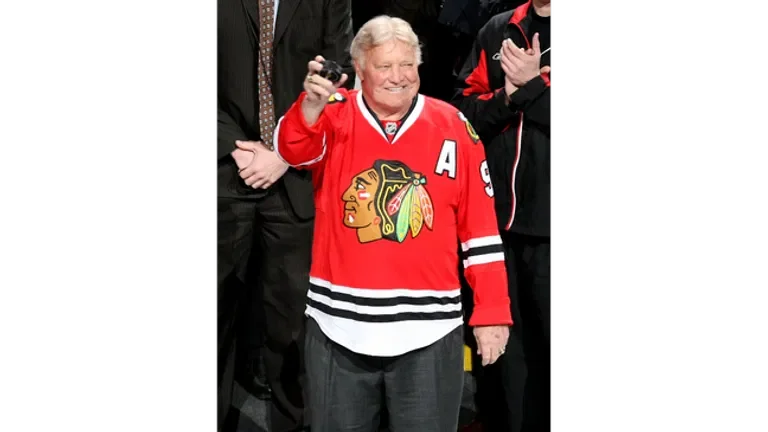
krcgtv.com
Bobby Hull
Birthday:
03 Jan, 1939
Date of Death:
30 Jan, 2023
Cause of death:
Chronic Traumatic Encephalopathy (CTE)
Nationality:
Canadian
Famous As:
Ice hockey player
Age at the time of death:
84
Robert Marvin Hull's Quote's

“You can't be afraid to make waves if you want to make history.”
Robert Marvin Hull
🔗 deadcelebrityhub.com
Early Life: The Making of The Golden Jet
Bobby Hull was one of hockey’s most electrifying—and controversial—figures. Known as “The Golden Jet” for his speed and powerful slapshot, he helped transform the game on and off the ice. But his legacy is complicated by serious allegations of domestic abuse and troubling public statements. Hull’s story is one of brilliance and controversy—an enduring figure whose impact continues to spark debate.
Born on January 3, 1939, in the small town of Pointe Anne, Ontario, Bobby Hull grew up in a modest home where winters were long and hockey was more than just a pastime—it was a way of life. The third of eleven children, Hull learned early the values of hard work and resilience. His father, Robert Hull Sr., worked in the cement industry, while his mother, Lena, managed the bustling household.
Bobby’s passion for hockey took hold on the frozen ponds near his home. Using hand-me-down skates and homemade sticks, he played with relentless enthusiasm, often staying out long after the sun dipped below the horizon. His natural talent stood out early. At just ten years old, he was already turning heads in local leagues, known for his blistering speed and raw shooting power—a skill he'd honed by firing pucks against the barn wall for hours on end.
But Bobby wasn’t alone on the ice for long. His younger brother, Dennis Hull, would also go on to have a successful NHL career, creating one of hockey’s most iconic sibling duos.
Education: A Detour from the Traditional Path
Formal education took a back seat as Hull’s hockey prowess accelerated. By the time he reached high school, it was clear that his future lay on the ice. He joined the Galt Black Hawks, a junior team in Ontario, where his explosive play began drawing serious attention. Though he didn’t pursue college in the traditional sense, his education came from the school of hard hits, fast pucks, and long road trips—experiences that shaped him both as a player and a person.
Career Journey
Early Career:
In 1957, at just 18 years old, Bobby Hull made his NHL debut with the Chicago Black Hawks (now Blackhawks). The rookie arrived with a bang. By his third season, he led the league in points and had fans flocking to see him play. With a slapshot clocked at over 118 mph—legend has it he once broke the glass behind the net in practice—Hull was unlike anything the game had seen before.
His skating was poetry in motion: vast, powerful strides that seemed to carry him effortlessly over the ice. His blonde hair, flapping as he raced down the wing, earned him the nickname “The Golden Jet.” Paired with linemates like Stan Mikita, Hull helped revitalize a struggling franchise and made the Black Hawks one of the most exciting teams in hockey.
Significant Achievements: Breaking Records, Shaking Norms
Hull's accolades came quickly and often. He won the Art Ross Trophy three times, led the league in goals seven times, and took home the Hart Memorial Trophy twice as league MVP. In 1961, he played a pivotal role in leading Chicago to a Stanley Cup victory, which was the franchise’s first since 1938.
But it wasn’t just his performance that made headlines. In 1972, at the peak of his career, Hull made a shocking move: he left the NHL to join the upstart World Hockey Association (WHA), signing with the Winnipeg Jets for a then-unthinkable $1 million contract. That decision didn’t just shake the hockey world—it reshaped it. Hull's move legitimised the WHA and ushered in a new era of player empowerment and financial leverage.
Later Career: A Legacy Cemented
Hull continued to dominate in the WHA, scoring at will and serving as a mentor to young stars, including a teenage Wayne Gretzky. His WHA years further solidified his legend, especially in Canada, where he brought the Jets to prominence and won two league MVP awards.
When the WHA merged with the NHL in 1979, Hull returned briefly to the big league, finishing his career with stints in Winnipeg and Hartford. By the time he retired, he had amassed 610 NHL goals and 303 more in the WHA, solidifying his place as one of the game’s greatest scorers.
Personal Life: Complexity Behind the Fame
Off the ice, Hull was as complex as he was compelling. Charismatic and fiercely proud, he embraced the spotlight but also stirred controversy. He was married twice and fathered five children, including Brett Hull, who would go on to become a Hall of Fame player in his own right, making the Hulls one of hockey’s most iconic father-son duos.
However, Hull's personal life wasn’t without turbulence. He faced allegations of domestic abuse and made deeply controversial comments in interviews that drew widespread condemnation. These aspects of his life cast a long shadow, forcing fans and historians alike to grapple with the duality of his legacy.
Legacy: The Brilliant, Complicated Legend
Bobby Hull passed away in January 2023, leaving behind a towering and complex legacy. To some, he will always be “The Golden Jet”—the dazzling scorer who revolutionised the slapshot, brought glamour to the game, and helped players gain greater rights and pay. To others, his off-ice behaviour complicates the story.
Breathtaking highs and sobering lows marked Bobby Hull’s life, but his influence on hockey is indelible. He was a pioneer, a showman, and a scorer of historic proportions. His story reminds us that greatness often comes with complexity and that the heroes we cheer for on the ice are, ultimately, human. Hull may have skated off into history, but The Golden Jet will forever soar in the mythology of the sport he helped transform.
Profile Snapshot
Name:
Robert Marvin Hull
Popular Name:
Bobby Hull
Gender:
Male
Cause of Death:
Chronic Traumatic Encephalopathy (CTE)
Spouse:
Deborah Hull
Joanne McKay
Place of Birth:
Point Anne, Belleville, Canada
Place of Death:
Wheaton, Illinois, United States
Occupation / Profession:
Ice hockey player
Personality Type
Debater Smart and curious thinkers who cannot resist an intellectual challenge. Bobby Hull was a bold rule-breaker who loved to challenge limits and blaze his trail, both on and off the ice.
Robert Marvin Hull's Interesting Facts
He was ambidextrous, able to shoot with either hand, though he favoured the left.
He was one of the first players to experiment with a curved stick blade, helping to popularise the technique.
Hull often played without a helmet, even as the league grew faster and more dangerous.
Hull once played a game with a broken jaw wired shut—and still scored a goal.
Hull’s slapshot was so powerful that goalies were known to flinch—even before the puck was released.
Hull was an early proponent of intense weight training for hockey players, well before it became standard.
In 1966, he became the first NHL player to score more than 50 goals in a single season, finishing with 54.
Achievements & Awards
Bobby Hull was the first NHL player to score more than 50 goals in a single season, achieving 54 in 1966.
He played in 12 NHL All-Star Games and was inducted into the Hockey Hall of Fame in 1983.
His revolutionary move to the WHA helped change the financial landscape of professional hockey forever.
Over his career, he won the Hart Memorial Trophy twice (1965, 1966) as league MVP and claimed the Art Ross Trophy three times as the NHL's top scorer.
External Links
Latest Profiles
People also viewed

Mike Bossy
Born22 Jan, 1957
Died15 Apr, 2022
NationalityCanadian
Age at time of death65
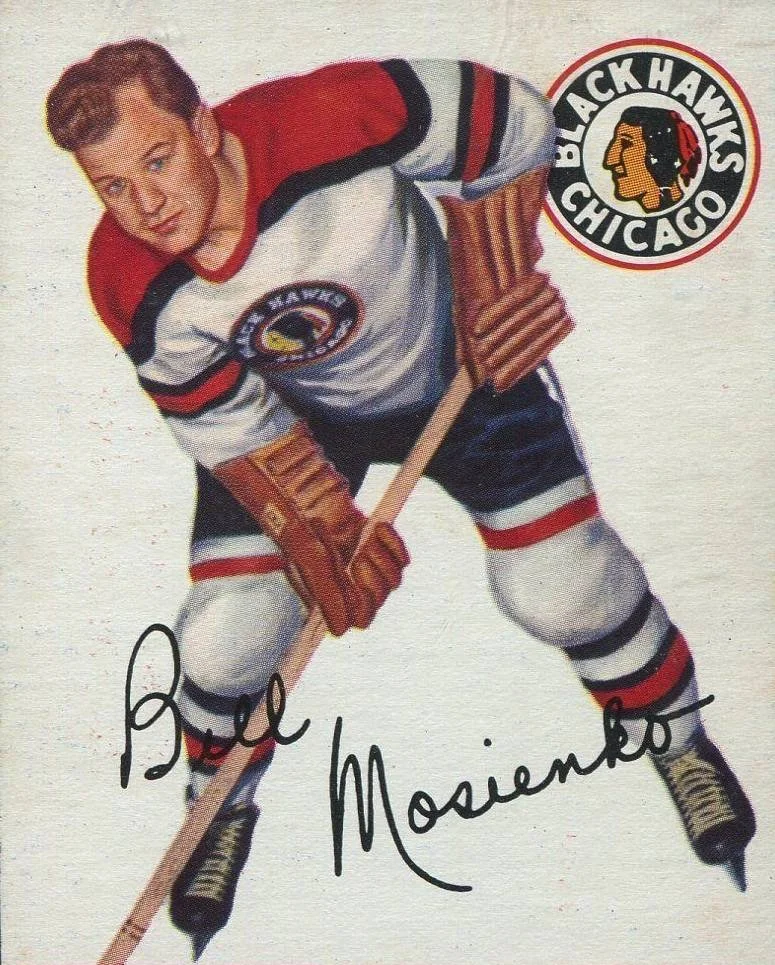
Bill Mosienko
Born02 Nov, 1921
Died09 Jul, 1994
NationalityCanadian
Age at time of death72