Real Celebrities Never Die!
OR
Search For Past Celebrities Whose Birthday You Share
Died Age: 71
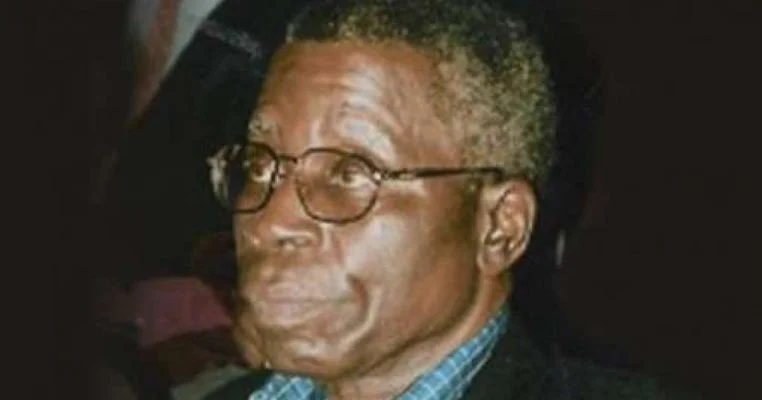
cdn.punchng.com
Bola Ige
Birthday:
13 Sep, 1930
Date of Death:
23 Dec, 2001
Cause of death:
Assassination
Nationality:
Nigerian
Famous As:
Lawyer
Age at the time of death:
71
James Ajibola Idowu Ige's Quote's

“Let the people’s will be the law of the land.””
James Ajibola Idowu Ige
🔗 deadcelebrityhub.com
Humble Beginnings with a Purpose
Bola Ige was a man whose words carried the weight of justice and whose ideals echoed far beyond the courtroom and cabinet chambers. An unflinching advocate for democracy, civil rights, and good governance, Ige was a rare blend of intellectual brilliance and political audacity. In a country often caught in the turbulence of shifting powers and fragile institutions, he stood firm, pen in hand, robes flowing, never backing down from the battle for truth. To many, he wasn’t just a politician or a lawyer; he was Nigeria’s conscience, loud and clear.
Born on September 13, 1930, in Esa-Oke, a quiet town in present-day Osun State, Bola Ige grew up amid colonial Nigeria’s rigid structures and the early whispers of nationalism. His family was steeped in education and tradition. His father was an Anglican catechist, and his mother, a homemaker with a sharp mind and a deep sense of Yoruba pride. From an early age, young Ige learned to value language, not just as a tool, but as a weapon. He was fluent in Yoruba, English, Igbo, and Hausa, a linguistic prowess that later earned him a reputation as a persuasive orator and deft negotiator.
A defining moment came when he was just 10. After overhearing a British colonial officer dismissively refer to Nigerians as “not ready to govern themselves,” Ige was stirred with quiet fury. He later recounted that day as the beginning of his lifelong commitment to proving otherwise.
Scholarship and a Fire for Justice
Education was Bola Ige’s launchpad. He attended Ibadan Grammar School before gaining admission to the University College, Ibadan, which was the intellectual heart of West Africa at the time. There, he was immersed in the ferment of anti-colonial activism and literary debates. But it wasn’t enough to speak the truth in essays; he wanted to wield it in courtrooms.
In the 1950s, he travelled to London, where he studied law at the University of London and was called to the English Bar at Grey’s Inn. Living abroad exposed him to the workings of Western democracy and sharpened his conviction that Nigeria, too, could rise above tribalism and corruption.
He returned home as a lawyer and a visionary, ready to channel his intellect into action.
A Career of Courage and Conviction
Back in Nigeria, Ige set up a law practice in Ibadan. His eloquence in court, coupled with a razor-sharp legal mind, quickly made him one of the most sought-after lawyers in the country. But the courtroom was only his first battlefield. By the late 1960s, Ige entered politics driven not by ambition, but by a desire to reform a nation drifting from its ideals.
A Governor and Reformer
In 1979, during Nigeria’s Second Republic, Bola Ige became the first civilian governor of old Oyo State under the Unity Party of Nigeria (UPN). His tenure was marked by reforms that bore the hallmarks of his lifelong beliefs—education, integrity, and service.
He championed free education and improved rural development, building classrooms in remote villages and pushing for local governance structures that gave power back to the people. A lesser-known but telling anecdote: he once refused to award a state contract to a relative, stating, “This office is not a family business.”
Later Career
In the 1990s and early 2000s, Ige remained a steadfast critic of military rule. His outspoken opposition to General Sani Abacha’s regime earned him admiration but also enemies. When Nigeria returned to civilian rule in 1999, President Olusegun Obasanjo appointed Ige as Minister of Power and later Minister of Justice and Attorney General.
He inherited a justice system in crisis, plagued by corruption and inefficiency. True to form, Ige began reforms. He initiated reviews of unjust detentions, pushed for an independent judiciary, and worked to decongest the nation’s prisons. Even within government, he was unafraid to speak truth to power—a trait that made him both respected and controversial.
His assassination in December 2001, still unresolved, sent shockwaves across the country. It wasn’t just the loss of a man; it felt like the silencing of a principle.
Personal Life: Behind the Public Persona
Despite his public prominence, Bola Ige maintained a deeply private life. He was a devoted husband to Justice Atinuke Ige, herself a legal trailblazer, and father to children who recall his love of books, Yoruba poetry, and evening walks.
Bola Ige had a passion for gardening and reportedly found clarity of thought while tending to hibiscus flowers in his backyard. He also wrote voraciously—his column, PENkelemesi (a play on “peculiar mess”), became a popular fixture in Nigerian newspapers, blending wit, satire, and piercing political analysis.
A Legacy Etched in Integrity
Bola Ige’s life was not marked by ease but by purpose. He spoke when silence would have been safer. He stood when compromise might have been more convenient. His name still reverberates in Nigerian political discourse, invoked by those who remember a time when public office was approached with a sense of duty, not entitlement.
Schools and public institutions bear his name today, but more enduring is the moral template he left behind. His life was a masterclass in courage, and his legacy is a challenge to every Nigerian: Speak up. Stand tall. Do right.
Profile Snapshot
Name:
James Ajibola Idowu Ige
Popular Name:
Bola Ige
Gender:
Male
Cause of Death:
Assassination
Spouse:
Atinuke Ige
Place of Birth:
Zaria
Place of Death:
Ibadan
Occupation / Profession:
Lawyer
Politician
Personality Type
Commander Bold, imaginative and strong-willed leaders, always finding a way – or making one Bola Ige was a bold, visionary leader who combined intellectual rigour with unshakable integrity, always finding or making a way to fight for justice and truth.
James Ajibola Idowu Ige's Interesting Facts
He loved gardening and often found peace while tending to his plants.
He refused to use government power for personal gain, even turning down contracts for family members.
He spoke four major Nigerian languages fluently—Yoruba, English, Hausa, and Igbo.
He was known for wearing traditional Yoruba agbada with flair and pride, even at formal events abroad.
His newspaper column was cleverly titled PENkelemesi, a play on the phrase “peculiar mess.”
Achievements & Awards
Bola Ige implemented transformative policies such as free education and rural development programs.
He was a respected Senior Advocate of Nigeria (SAN), a prestigious legal title recognising excellence in the legal profession.
He worked to reform the legal system, advocate for human rights, and promote judicial independence.
In recognition of his service and impact, several institutions and public buildings have been named in his honour, including the Bola Ige Information Technology Centre.
External Links
Additional Links
Latest Profiles
People also viewed
Gerald Ford
Born14 Jul, 1913
Died26 Dec, 2006
NationalityAmerican
Age at time of death93
Victor Hugo
Born26 Feb, 1802
Died22 May, 1885
NationalityFrench
Age at time of death83
George Murphy
Born04 Jul, 1902
Died03 May, 1992
NationalityAmerican
Age at time of death89
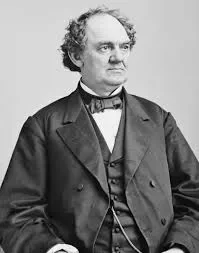
P. T. Barnum
Born05 Jul, 1810
Died07 Apr, 1891
NationalityAmerican
Age at time of death80
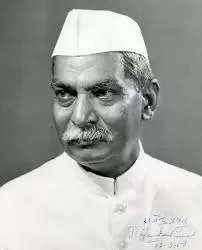
Rajendra Prasad
Born03 Dec, 1884
Died28 Feb, 1963
NationalityIndian
Age at time of death78
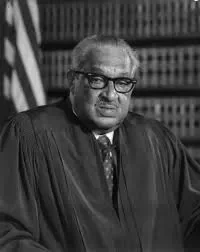
Thurgood Marshall
Born02 Jul, 1908
Died24 Jan, 1993
NationalityAmerican
Age at time of death84
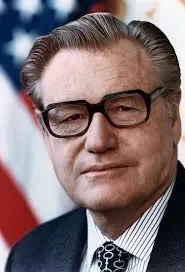
Nelson Rockefeller
Born08 Jul, 1908
Died26 Jan, 1979
NationalityAmerican
Age at time of death70

Ethan Allen
Born21 Jan, 1738
Died12 Feb, 1789
NationalityAmerican
Age at time of death51
John Loud
Born02 Nov, 1844
Died10 Aug, 1916
NationalityAmerican
Age at time of death71
Herbert Hoover
Born10 Aug, 1874
Died20 Oct, 1964
NationalityAmerican
Age at time of death90
Antoine Lavoisier
Born26 Aug, 1743
Died08 May, 1794
NationalityFrench
Age at time of death50
Jacques Delors
Born20 Jul, 1925
Died27 Dec, 2023
NationalityFrench
Age at time of death98
James Harrison
Born17 Apr, 1816
Died03 Sep, 1893
NationalityScottish,Australian
Age at time of death77
Menachem Begin
Born16 Aug, 1913
Died09 Mar, 1992
NationalityIsraeli
Age at time of death78
Peter Fraser
Born28 Aug, 1884
Died12 Dec, 1950
NationalityNew Zealand
Age at time of death66
Muhammad Ali Jinnah
Born25 Dec, 1876
Died11 Sep, 1948
NationalityPakistani
Age at time of death71
Pablo Escobar
Born01 Dec, 1949
Died02 Dec, 1993
NationalityColombian
Age at time of death44
Booker T. Washington
Born05 Apr, 1856
Died14 Nov, 1915
NationalityAmerican
Age at time of death59
John Dickinson
Born13 Nov, 1732
Died14 Feb, 1808
NationalityAmerican
Age at time of death75
George Mason
Born11 Dec, 1725
Died07 Oct, 1792
NationalityAmerican, British
Age at time of death66