Real Celebrities Never Die!
OR
Search For Past Celebrities Whose Birthday You Share
Died Age: 88
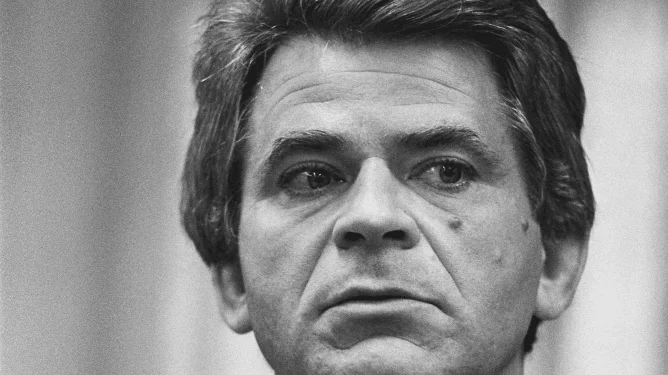
www.chess.com
Boris Spassky
Birthday:
29 Jan, 1937
Date of Death:
26 Feb, 2025
Cause of death:
Minor Stroke
Nationality:
Soviet Union, France, Russia
Famous As:
Russian chess grandmaster
Age at the time of death:
88
Boris Vasilyevich Spassky's Quote's

“The World Champion has a duty to uphold the quality of play more than anyone else.”
Boris Vasilyevich Spassky
🔗 deadcelebrityhub.com
Early Life
Boris Spassky was a chess virtuoso who carried both grace and speed across the board, and whose career came to symbolize much more than checkmates. World Champion from 1969 to 1972, he was the embodiment of both Soviet chess tradition and global pressure—always adapting his style, always under watch, yet always maintaining a dignity and universality that made him beloved around the world. His life is a story of war-born beginnings, prodigious talent, Cold War drama, triumph, loss, and a long sunset during which reverence for the man grew even as his competitive edge waned.
Boris Vasilyevich Spassky was born on January 30, 1937, in Leningrad (today Saint Petersburg). His early years were shaped by upheaval: during World War II, at around age five, his family was among those evacuated from besieged Leningrad, and he spent time in an orphanage in Siberia. It was on one of those early trains—one of the very first moves of chaos in his young life—that he saw chess for the first time. The rules, the pieces, the quiet tension of a game all fascinated him.
Despite the privations of wartime, his natural gift for the game emerged early. By age ten, Spassky defeated Mikhail Botvinnik in a simultaneous exhibition match—a moment that drew attention in Leningrad and signaled that this boy was not like others. He began studying with Vladimir Zak, a strong coach, and by the age of ten was working with master-level teachers nearly every day. He set records in the Soviet chess world: achieving “first category” ranking at ten, “candidate master” at eleven, and Soviet Master by fifteen. These were not just titles; they were proof that a child from wartime Leningrad could rise quickly if the talent and will were there.
Education & Formative Influences
Spassky’s formal studies included journalism at Leningrad State University, but much of his education came from chess itself. He was molded by strong Soviet chess culture—intense tournaments, fierce peers, rigorous coaches, and the expectation not simply to win, but to play with versatility and polish. The Soviet system valued a well-rounded player, and Spassky’s style matured accordingly: he could attack, defend, tangle in complications, or steer a game into calm positional water. Those years gave him both breadth and depth, and taught him resilience under pressure—not only from opponents, but from the weight of national expectation.
Career Journey
Spassky’s chess career falls naturally into several phases: prodigy and rising star; world championship reign; the Fischer match and its aftermath; late career and exile; and his quieter return to his roots.
Phase One: Prodigy and Rising Star
By his late teens, Spassky was already making waves internationally. In 1955, at age 18, he won the World Junior Chess Championship and was awarded the title of Grandmaster. The same year he qualified for his first Candidates Tournament—positioning him among those who might contest the world championship. He won the Soviet Championship in 1961, among other major tournaments, and became known for a rare blend: depth of strategy, flexibility of style.
Phase Two: Champion of the World
In 1969, after years of being a top contender, Spassky defeated Tigran Petrosian to claim the World Chess Champion title. It was a narrow and hard-fought victory—but one that confirmed his status not just as a talented player, but as the dominant one in Soviet and global chess. His championship period was marked by these strengths: adaptability, composure under pressure, and a willingness to shift styles to meet his opponents—traits that set him apart in a field of specialists and tacticians.
Phase Three: Fischer, Loss, and Aftermath
The 1972 match against Bobby Fischer in Reykjavik became one of the most famous confrontations in chess history—not merely because of the chess itself, but because it came to represent Cold War symbolic tension. Spassky lost that match. Though he won some games, Fischer’s relentless pressure and psychological tactics, combined with Spassky’s own burden (of expectation, of political scrutiny), led to Fischer reclaiming the world title. That loss marked a turning point: Spassky had reached the peak, but maintaining that height under the international spotlight proved extraordinarily difficult.
After the loss, he continued competing at high levels. He won the Soviet Championship again in 1973, and remained among the top players for a while. But his form gradually declined; other challengers emerged, and the Soviet system itself shifted focus. Still, his career didn’t end in Reykjavik.
Phase Four: Later Life, Exile, Returns
In 1976, Spassky moved to France, becoming a French citizen in 1978. He played less frequently in elite tournaments, but remained active in chess circles. In 1992, he met Fischer again in a rematch; though he lost, the match was more symbolic, a re-opening of an old chapter. Health setbacks began to limit his play in later years. In 2012, he returned to Russia after decades abroad—a return not just of geography, but of identity.
Personal Life
Boris Spassky was private in many respects, but what is known paints a picture of a man balancing public expectation and inner life. He married multiple times; he fathered children. He had periods of rest, reflection, and detachment from the demands of elite competition. Despite his immense fame, he was often described by peers and observers as humble, gracious, capable of sportsmanship—qualities less visible in many competitors under similar pressure.
He loved more than chess: in his youth, he was athletic, enjoyed physical pursuits. He had interests beyond the board—walking, reading, collecting memories of places he’d visited. And he lived long enough to see the world around chess change dramatically: from Soviet dominance to global competition, from state-sponsored prestige to commercial spectacle.
Legacy
Boris Spassky passed away on February 27, 2025, in Moscow, at the age of 88. His legacy, however, is enduring.
He is remembered not only as World Champion (1969-1972), but as a player of rare versatility—one able to meet any opponent on their terms.
His match with Fischer left an indelible mark, not just on chess history, but on global culture; it illustrated how a game could carry politics, psychology, and pride.
He helped expand what people expect of chess champions—not simply as specialists, but as universalists: tacticians and strategists, fighters and thinkers.
Even in his later years, when he played less and his health faltered, there was a warmth in how players and fans spoke of him: respect, admiration, a sense that one of the great bridges from Soviet chess to modern global chess was closing.
Conclusion
Boris Spassky’s life was a chessboard of contrasts: early hardship and fledgling talent, public triumph and painful loss, youthful prodigy and quiet elder statesman. Yet throughout, he held to something rare—a belief that chess was art, that every move counted not only for victory, but for speech. His legacy lies not just in the games he won, but in the manner in which he played: with adaptability, dignity, and a spirit that carried beyond the board. He will be remembered as one of the greatest universal players the world has ever seen, a champion of the mind, and a human being who weathered both global storms and private trials with resilience and grace.
Profile Snapshot
Name:
Boris Vasilyevich Spassky
Popular Name:
Boris Spassky
Gender:
Male
Cause of Death:
Minor Stroke
Spouse:
Nadezda Konstantinovna Latyntceva
Larisa Zakharovna Solovyova
Marina Yurievna Shcherbachova
Place of Birth:
Leningrad, Soviet Union
Place of Death:
Moscow, Russia
Occupation / Profession:
Russian chess grandmaster
Personality Type
Executive: Boris Spassky was a quietly visionary strategist—an introspective, adaptable, and fair-minded mind who combined calm under pressure with deep intuition, moral integrity, and a universal approach to the game of chess.
Boris Vasilyevich Spassky's Interesting Facts
Boris Spassky became the World Chess Champion in 1969 by defeating Tigran Petrosian.
He is known for his versatile playing style, being equally strong in both attacking and positional chess.
Spassky famously lost the 1972 "Match of the Century" to Bobby Fischer, which brought global attention to chess.
Remarkably, he was a chess prodigy, winning the World Junior Chess Championship at just 18 years old.
Achievements & Awards
Boris Spassky, the 10th World Chess Champion, won the title in 1969 by defeating Tigran Petrosian and held it until 1972, when he famously faced Bobby Fischer in the "Match of the Century." He was also a two-time World Championship challenger and won the Soviet Chess Championship twice, cementing his place as one of the greatest players of his era.
External Links