Real Celebrities Never Die!
OR
Search For Past Celebrities Whose Birthday You Share
Died Age: 91
www.tvinsider.com
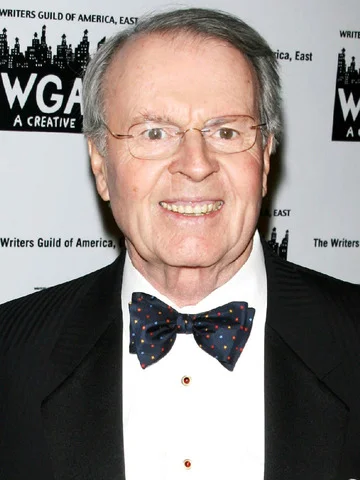
Charles Osgood
Birthday:
07 Jan, 1933
Date of Death:
23 Jan, 2024
Cause of death:
Dementia complications
Nationality:
American
Famous As:
Newsreader
Age at the time of death:
91
Charles Osgood Wood III's Quote's

“Some people, you know, do just about anything to get the news. Me, I just sit here and wait for it.”
Charles Osgood Wood III
🔗 deadcelebrityhub.com
Early Life: A Boy With an Ear for Stories
Charles Osgood delivered the news in song and rhymes, and told it like an old friend seated by your fireplace. With his signature bow tie, gentle voice, and penchant for verse, Osgood carved out a unique place in American media. More than just a broadcaster, he was a storyteller who believed that journalism didn’t have to shout to be heard. Over a career spanning more than five decades, he quietly redefined what it meant to inform and inspire.
Born Charles Osgood Wood III on January 8, 1933, in the Bronx, New York, he grew up during a time when radios crackled in kitchens and storytelling was a family affair. His upbringing was modest. His father worked in insurance, and his mother was a homemaker, but the Wood household was rich in conversation, music, and books. As a boy, Charles was more likely to be found listening to classical compositions or reciting poems than playing baseball.
The Osgood family moved to Baltimore during his teenage years, a transition that shaped his curiosity and sensitivity to people from all walks of life. His early love of language and performance found an outlet in school plays and local radio. By high school, it was clear: young Charles had the voice, the timing, and the soul of a broadcaster.
Education: Shaping a Voice
Osgood’s path to the microphone formally began at Fordham University, where he majored in economics, which was an unlikely choice for a future poet of the airwaves, but one that spoke to his practical side. More importantly, Fordham had its own radio station, WFUV, where Osgood got his first real taste of the broadcast world. It was here that he first signed on using the moniker “Charlie Wood”—a nod to his birth name and a precursor to the stagecraft he’d later perfect.
After graduating in 1954, he served in the U.S. Army as an announcer for the American Forces Network in Europe. The experience wasn’t just a training ground for his voice but a global classroom, teaching him how to communicate with empathy, clarity, and a touch of charm that crossed cultural barriers.
Career Journey: From Background Voice to National Treasure
The Early Years: Finding His Rhythm
After his military service, Osgood spent the late 1950s and early ’60s working a string of radio jobs, including a stint at WCBS radio in New York. He was never the loudest voice in the room, but he was often the most memorable. His distinctive style(part newsman, part poet) began to emerge in short segments that blended humour, rhyme, and reflection. While others reported, Osgood performed journalism.
A pivotal moment came in 1971 when he joined CBS News as a reporter and anchor. There, his voice found a national audience, and the quiet power of his storytelling began to resonate widely.
The CBS Sunday Morning Era: America’s Gentle Guide
In 1994, Charles Osgood took over as host of CBS News Sunday Morning, succeeding the legendary Charles Kuralt. It was the perfect pairing. The show, with its unhurried pace and focus on the arts, culture, and human interest stories, suited Osgood like a glove. His sign-offs became iconic: “Until then, I’ll see you on the radio,” he would say, a line that felt more like a warm handshake than a goodbye.
Under his stewardship, Sunday Morning became a sanctuary from the chaos of 24/7 news. Whether introducing a segment on a little-known violin maker or offering a poetic commentary on the seasons, Osgood treated every story with care and curiosity. He believed the small stories mattered, and he was right.
Later Career and Retirement
Osgood stepped down from Sunday Morning in 2016 after 22 years, though he continued to contribute to CBS radio. His farewell show was filled with tributes from colleagues and viewers who saw him not just as a journalist, but as a part of their weekend routine—comforting, thoughtful, and always a little whimsical.
Osgood was also an accomplished pianist and composer, having released several albums and even performed at Carnegie Hall. Music was another way he told stories.
Personal Life: A Quiet Soul with a Playful Heart
Away from the cameras and microphones, Charles Osgood was a devoted husband to his wife, Jean, and father to five children. He lived much of his later life in New Jersey, cherishing quiet mornings, books, and the occasional rhyme penned on a yellow notepad.
Though he was known for his professionalism, those close to him often noted his mischievous sense of humour. He loved puns, unexpected rhymes, and finding joy in the ordinary. One producer recalled how Osgood once turned a traffic report into a Shakespearean sonnet just because he could.
Legacy: The Voice That Listened
Charles Osgood’s legacy lies not just in the awards he won(of which there were many, including multiple Emmys and a Peabody)but in the lives he touched with his words. In a media world increasingly defined by speed and volume, Osgood proved that stillness, grace, and wit could be just as powerful.
He reminded us that journalism, at its best, is an act of listening, of noticing the things others overlook and honouring them with attention. He didn’t shout to be heard; he whispered, and the world leaned in.
Charles Osgood isn’t just remembered as a broadcaster but as a friend who visited on Sunday mornings, reminded us of beauty in the mundane, and signed off with a poem. In a time of noise, he gave us harmony. And that, perhaps, is his greatest story of all.
Profile Snapshot
Name:
Charles Osgood Wood III
Popular Name:
Charles Osgood
Gender:
Male
Cause of Death:
Dementia complications
Spouse:
Jean Osgood
Place of Birth:
New York, New York, United States
Place of Death:
Saddle River, New Jersey, USA
Occupation / Profession:
Newsreader
TV Journalist
Personality Type
Advocate: Charles Osgood was a quiet, thoughtful storyteller who saw the world through a poetic lens and used his voice to inspire kindness and reflection.
Charles Osgood Wood III's Interesting Facts
Charles Osgood often wrote and delivered his segments in rhyming verse, a rare and charming touch in news broadcasting.
He played piano professionally and once performed at Carnegie Hall, showcasing his love for classical music.
His iconic sign-off, “I’ll see you on the radio,” was inspired by his belief in the enduring magic of audio storytelling.
Achievements & Awards
Charles Osgood earned widespread acclaim for his distinctive broadcasting style, receiving multiple Emmy Awards, including a Daytime Emmy for Outstanding Morning Program during his time on CBS Sunday Morning.
He was honoured with a Peabody Award, one of journalism’s most prestigious recognitions, for excellence in storytelling and commentary.
In 1990, he was inducted into the National Association of Broadcasters Hall of Fame, and later received the Paul White Award, the highest honour from the Radio Television Digital News Association (RTDNA), celebrating his lifetime achievement in broadcast journalism
External Links