Real Celebrities Never Die!
OR
Search For Past Celebrities Whose Birthday You Share
Died Age: 31

static01.nyt.com
Charlie Kirk
Birthday:
13 Oct, 1993
Date of Death:
09 Sep, 2025
Cause of death:
Assassination
Nationality:
American
Famous As:
American right-wing political activist
Age at the time of death:
31
Charles James Kirk's Quote's

“Faith, family, and freedom — that’s what built this country, and that’s what will save it.”
Charles James Kirk
🔗 deadcelebrityhub.com
Early Life
Charlie Kirk was a spark that ignited a political fire among America’s youth. Known for his sharp wit, unrelenting conviction, and instinct for mobilising young people, he turned a personal belief in conservative values into a nationwide movement. From a suburban Chicago upbringing to the founding of a political organisation that became a cultural force, Kirk’s life unfolded like a testament to how ideas, when paired with determination, can change the course of public discourse.
Born on October 14, 1993, in Arlington Heights, Illinois, Charlie Kirk grew up in nearby Prospect Heights in a close-knit, middle-class family. His father, an architect, instilled in him an appreciation for structure and design, while his mother—who later became a counsellor—taught him the importance of empathy and purpose. Theirs was a home where debate was welcomed and curiosity encouraged.
Charlie’s childhood was marked by a blend of conventional Americana and a budding sense of independence. He joined the Boy Scouts, eventually earning the rank of Eagle Scout, an achievement that reflected his discipline and commitment. Even as a teenager, he was outspoken—known among classmates for standing up to authority when he believed something was unfair. Once, when his high school raised cafeteria prices, he organised a small protest, rallying fellow students with a sense of justice that, in hindsight, foreshadowed his future.
Education and Early Influences
Kirk attended Wheeling High School, where his interests leaned toward history and civics. He developed a fascination with free-market economics and political theory, reading thinkers far beyond the typical high school curriculum. His worldview began to take shape early: he saw individual responsibility and limited government not just as policies, but as principles of personal freedom.
He enrolled briefly at Harper College, a community college in Illinois, but left after one semester to focus on activism. His decision to forego a traditional degree would later become part of his personal narrative—an argument that passion and purpose can, in the right circumstances, outweigh formal education. For him, ideas mattered more than credentials.
Career Journey
The Founding Vision: Turning Point USA
In 2012, at just 18 years old, Charlie Kirk co-founded Turning Point USA, a nonprofit dedicated to promoting conservative values on college campuses. With little money but a bold vision, he began travelling to schools across the country, speaking to small groups of students about free markets, limited government, and constitutional liberty. What began as a grassroots effort quickly gained momentum.
Kirk’s energy and charisma drew attention from national conservative figures, and within a few years, Turning Point USA had expanded to hundreds of college and high school chapters. Kirk positioned the organisation as a counterbalance to what he saw as ideological bias in academia. His message was simple but potent: young conservatives didn’t need to apologise for their beliefs.
Rise to Prominence
By his mid-twenties, Charlie Kirk had become a fixture in conservative media. He launched The Charlie Kirk Show, blending political commentary with cultural criticism in a fast-paced, conversational style that resonated with younger audiences. His knack for communication—fiery, passionate, and often provocative—helped him stand out in a crowded political landscape.
At Turning Point, he expanded operations into several affiliated initiatives, including Turning Point Action and Turning Point Faith, widening his reach beyond campuses into churches and community organisations. Under his leadership, TPUSA became known for its large-scale events that drew thousands of students, complete with high-profile speakers, multimedia production, and a sense of youthful enthusiasm rarely seen in conservative politics.
Controversy and Conviction
Charlie Kirk’s ascent wasn’t without turbulence. His outspoken approach and aggressive advocacy drew criticism from opponents who saw his tactics as divisive. Yet, for every controversy, Kirk gained new followers who admired his refusal to back down. He often described politics as a contest of ideas, one where courage mattered more than consensus.
He cultivated close relationships with political figures at the highest levels, positioning Turning Point as an influential force in shaping youth engagement in American conservatism. Whether speaking at college campuses or appearing on national television, Kirk’s presence was a blend of intellect and intensity—a young man who saw himself as part activist, part cultural warrior.
Personal Life
In 2021, Charlie married Erika Frantzve, a businesswoman, philanthropist, and former Miss Arizona USA. Together, they shared a strong Christian faith, which became a guiding element of their partnership. The couple welcomed a daughter in 2022 and a son in 2024. Away from politics, Kirk was known to value time with his family, his church community, and the quiet satisfaction of reflection amid a life spent in the public eye.
Those close to him described him as deeply motivated but surprisingly introspective—a thinker as much as a talker, always reading, writing, or planning his next step. Despite his intensity on stage, he was known among friends for his humour and loyalty.
Legacy
Charlie Kirk’s story is one of conviction meeting opportunity. In a landscape where young voices often struggled to be heard, he built a platform that amplified a generation of conservatives who felt unseen. His work through Turning Point USA reshaped how youth politics operated—making activism digital, dynamic, and culturally relevant.
He leaves behind a legacy marked by both passion and controversy, but above all, by impact. He challenged the status quo of campus politics and proved that ideas, when carried with conviction, could spark national movements. For many, he was a mentor and motivator; for others, a provocateur. Yet no one could deny the force of his presence or the clarity of his purpose.
Charlie Kirk’s life serves as a reminder that belief—unyielding, vocal, and driven—can move people, change institutions, and redefine the conversation for generations to come.
Profile Snapshot
Name:
Charles James Kirk
Popular Name:
Charlie Kirk
Gender:
Male
Cause of Death:
Assassination
Spouse:
Erika Kirk
Place of Birth:
Arlington Heights, Illinois, United States
Place of Death:
Orem, Utah, United States
Occupation / Profession:
American right-wing political activist
Entrepreneur
Media personality.
Personality Type
Protagonist: Charlie Kirk was a decisive, visionary and relentless leader strategist who saw challenges not as barriers, but as opportunities to build, lead, and leave a mark.
Charles James Kirk's Interesting Facts
Charlie once said he had dreamed of attending the U.S. Military Academy at West Point but was turned down. That moment became the motivation for him to pursue a different path of influence.
He was a self-taught student of economics and political philosophy, often citing books by Milton Friedman and Thomas Sowell as transformative.
Despite his fiery public persona, he was known to enjoy quiet reflection and long runs to clear his mind.
Achievements & Awards
Charlie Kirk founded Turning Point USA at just 18, transforming it into one of the largest conservative youth organisations in the United States.
He later launched The Charlie Kirk Show, a successful podcast and radio program that became a top platform for conservative commentary.
Under his leadership, Turning Point expanded into multiple branches, including Turning Point Action and Turning Point Faith, solidifying his role as a leading voice for young conservatives.
He was frequently recognised as one of the most influential conservative activists of his generation, often featured among key political thought leaders in national discussions.
External Links
Latest Profiles
People also viewed

Johns Hopkins
Born19 May, 1795
Died24 Dec, 1873
NationalityAmerican
Age at time of death78

Clarence Birdseye
Born09 Dec, 1886
Died07 Oct, 1956
NationalityAmerican
Age at time of death69

Gary Kildall
Born19 May, 1942
Died11 Jul, 1994
NationalityAmerican
Age at time of death52
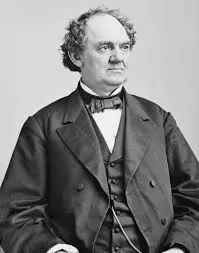
P. T. Barnum
Born05 Jul, 1810
Died07 Apr, 1891
NationalityAmerican
Age at time of death80

Mark Twain
Born30 Nov, 1835
Died21 Apr, 1910
NationalityAmerican
Age at time of death74

Eazy-E
Born07 Sep, 1964
Died26 Mar, 1995
NationalityAmerican
Age at time of death30

George Dayton
Born06 Mar, 1857
Died18 Feb, 1938
NationalityAmerican
Age at time of death80

Paul Allen
Born21 Jan, 1953
Died15 Oct, 2018
NationalityAmerican
Age at time of death65
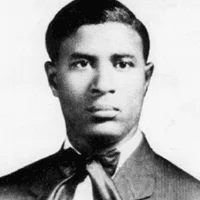
Garrett Morgan
Born04 Mar, 1877
Died27 Jul, 1963
NationalityAmerican
Age at time of death86
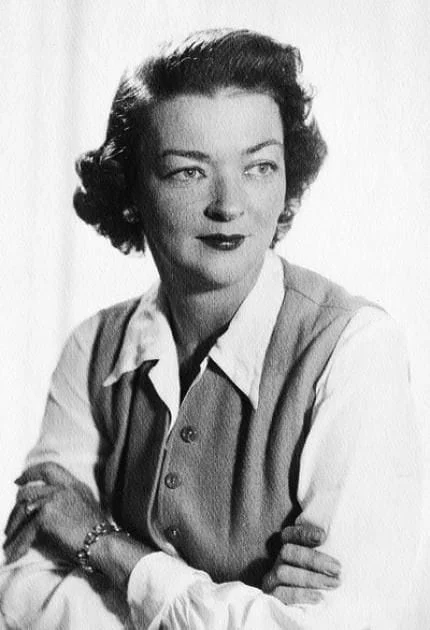
Marion Donovan
Born15 Oct, 1917
Died04 Nov, 1998
NationalityAmerican
Age at time of death81

Rollin King
Born10 Apr, 1931
Died26 Jun, 2014
NationalityAmerican
Age at time of death83

Joseph Terry
Born22 Apr, 1793
Died04 Mar, 1850
NationalityBritish
Age at time of death56

Edwin Perkins
Born08 Jan, 1889
Died03 Jul, 1961
NationalityAmerican
Age at time of death72

Bette Nesmith Graham
Born23 Mar, 1924
Died12 May, 1980
NationalityAmerican
Age at time of death56

Melitta Bentz
Born31 Jan, 1873
Died29 Jun, 1950
NationalityGerman
Age at time of death77

George Eastman
Born12 Jul, 1854
Died14 Mar, 1932
NationalityAmerican
Age at time of death77

K C Gillette
Born05 Jan, 1855
Died09 Jul, 1932
NationalityAmerican
Age at time of death77

Walt Disney
Born05 Dec, 1901
Died15 Dec, 1966
NationalityAmerican
Age at time of death65

Rudolf Diesel
Born18 Mar, 1858
Died29 Sep, 1913
NationalityFrench, German
Age at time of death55
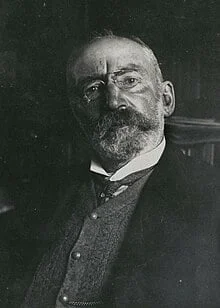
J. F. Archibald
Born14 Jan, 1856
Died10 Sep, 1919
NationalityAustralian
Age at time of death63