Real Celebrities Never Die!
OR
Search For Past Celebrities Whose Birthday You Share
Died Age: 62
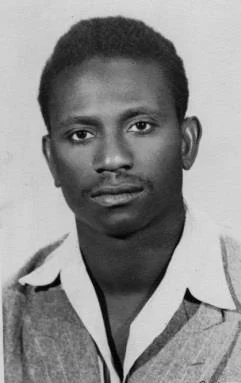
img.lemde.fr
Cheikh Anta Diop
Birthday:
29 Dec, 1923
Date of Death:
07 Feb, 1986
Cause of death:
Heart attack
Nationality:
Senegalese
Famous As:
Anthropologist
Age at the time of death:
62
Seex Anta Jóob's Quote's
“Historical falsification must be combated with the most formidable weapon: scientific truth.”
Seex Anta Jóob
🔗 deadcelebrityhub.com
Early Life: Roots of a Rebel Thinker
Cheikh Anta Diop was a revolutionary mind who dared to challenge centuries of Eurocentric narratives and reimagine Africa’s place in the world. Fluent in the languages of physics and philosophy, history and linguistics, Diop blended disciplines with uncommon fluency to construct a bold, African-centred view of history. His mission wasn’t just academic but cultural, political, and deeply personal. He stood as a bridge between ancient African greatness and a future of renewed dignity.
Born on December 29, 1923, in the small village of Thieytou in Senegal, Cheikh Anta Diop grew up in a Wolof-speaking, Lebu family steeped in Islamic traditions and proud of their cultural heritage. Thieytou, while modest in size, had an ancestral pulse. It was a place where oral histories were cherished and the echoes of precolonial Africa lingered in the air. Diop's early years were defined by storytelling, rhythm, and respect for wisdom, a grounding that would shape his intellectual compass.
He was the kind of child who didn’t just ask what, but why—a question that would follow him into adulthood. “How did we come to be ruled by others? What happened to our past?” These weren’t abstract musings for Diop; they were deeply existential inquiries for a continent grappling with colonisation.
Education: The Making of a Polymath
In 1946, Diop left Senegal for Paris with a scholarship to study physics, but the City of Light offered more than laboratory benches. Paris was also a ferment of anti-colonial thought in the post-war years, and Diop immersed himself in this political awakening. He earned degrees in philosophy and chemistry and later enrolled at the Sorbonne for his doctoral work—an unusual path that mirrored his own hybrid intellect.
But it was in the dusty archives and academic salons of Paris where Diop began to unearth a truth that would shape his life’s work: that Africa had been systematically written out of history. His PhD thesis, initially rejected for being too radical, later became his seminal book: Nations Nègres et Culture (1955). It argued that ancient Egypt was a black African civilisation, laying the groundwork for a new Afrocentric historical narrative.
Diop studied nuclear physics under Frédéric Joliot-Curie, the son-in-law of Marie Curie, making Diop one of the few African scholars at the time with advanced training in the hard sciences.
Career Milestones
Pushing Against the Tide
Diop’s early career was a storm of controversy. In academic circles, his claims were dismissed as “political” rather than scholarly. But Diop, ever persistent, leaned into the rigour of multidisciplinary research, combining radiocarbon dating, linguistic analysis, and historical anthropology. He used science as a weapon of cultural recovery.
At a 1974 UNESCO symposium in Cairo, he famously debated prominent Egyptologists and held his ground with sharp data and a calm demeanour. His command of hieroglyphics and biological evidence stunned sceptics and won admirers.
Major Achievements: Building African-Centred Institutions
In 1966, Diop returned to Senegal, not to bask in accolades, but to build. He founded the Laboratory of African Prehistory at the University of Dakar (now bearing his name), where he introduced the first radiocarbon dating facility in Africa. His aim? To decolonise African history with African tools.
The African Origin of Civilization: Myth or Reality remains a classic he wrote which advised Senegalese political leaders on how cultural identity could fuel development. He believed that true independence wasn’t just about borders but about consciousness.
Later Career: The Philosopher of African Unity
As he aged, Diop’s focus widened. He wrote about African federalism, unity, and even proposed a single African language based on Wolof. Though he never held high office, he became a guide to Pan-Africanist leaders and thinkers, from Kwame Nkrumah to Malcolm X. His voice was both grounded in data and soaring in vision.
Beyond the Mind: Personal Life
Despite his towering intellect, Diop was known to be soft-spoken, intensely private, and almost monk-like in discipline. He was married to Louise Marie Diop-Maes, a fellow intellectual and longtime partner in his cultural mission. He rarely sought the spotlight, preferring instead the sanctuary of libraries, laboratories, and quiet conversation.
Friends recall his love for jazz and his tendency to scribble notes in the margins of books late into the night. He lived modestly, more like a sage than a celebrity.
Legacy: The Man Who Gave Africa Back to Itself
Cheikh Anta Diop passed away in 1986, but his influence only deepened. Today, entire fields of Afrocentric historiography trace their roots to his work. His name graces universities, conferences, and Pan-African movements. More than anything, Diop gave black people, especially Africans, the permission to imagine themselves as descendants of greatness, not victims of fate.
In a world that had long looked down on Africa as a continent without history, Diop stood up and declared, with evidence and elegance, that Africa was the cradle of civilisation.
Profile Snapshot
Name:
Seex Anta Jóob
Popular Name:
Cheikh Anta Diop
Gender:
Male
Cause of Death:
Heart attack
Spouse:
Louise Marie Maes
Place of Birth:
Tiahitou, Senegal
Place of Death:
Dakar, Senegal
Occupation / Profession:
Anthropologist
Historian
Physicist
Politician
Personality Type
Architect Imaginative and strategic thinkers, with a plan for everything. Cheikh Anta Diop was a visionary strategist and relentless thinker, whose quiet intensity and scientific precision fueled a lifelong mission to reconstruct Africa’s history with logic, evidence, and unshakable purpose.
Seex Anta Jóob's Interesting Facts
He spoke multiple languages, including ancient ones
He trained under a Nobel-winning scientist: Frédéric Joliot-Curie
He wanted a unified African language
His PhD thesis was rejected twice
Achievements & Awards
Cheikh Anta Diop’s work revolutionised African historiography by using carbon-14 dating to prove the African origins of ancient civilisations, particularly Egypt.
He also inspired the creation of numerous research institutes, schools, and scholarly prizes bearing his name.
He was the first to establish a radiocarbon laboratory in Africa, giving scholars the tools to scientifically date African artifacts and sites.
His groundbreaking book The African Origin of Civilization: Myth or Reality became a cornerstone of Afrocentric historical thought and is still widely studied around the world.
In 1981, Senegal honoured him by renaming the University of Dakar as Cheikh Anta Diop University (UCAD)
In 1986, Senegal issued a national postage stamp in his memory, celebrating him as a cultural icon.
External Links
Latest Profiles
People also viewed
C. V. Raman
Born07 Nov, 1888
Died21 Nov, 1970
NationalityIndian
Age at time of death82
Eva Crane
Born12 Jun, 1912
Died06 Sep, 2007
NationalityBritish
Age at time of death95

Sally Ride
Born26 May, 1951
Died23 Jul, 2012
NationalityAmerican
Age at time of death61
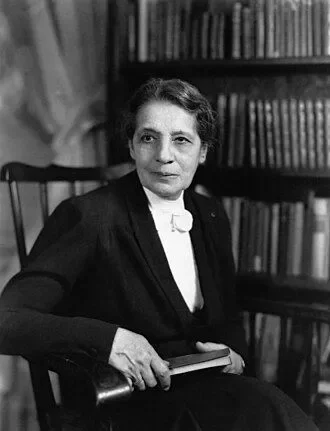
Lise Meitner
Born07 Nov, 1878
Died27 Oct, 1968
NationalityAustrian, Swedish
Age at time of death89
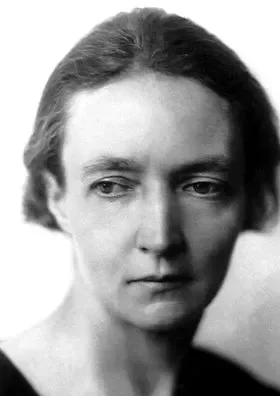
Irène Joliot-Curie
Born12 Sep, 1897
Died17 Mar, 1956
NationalityFrench
Age at time of death58
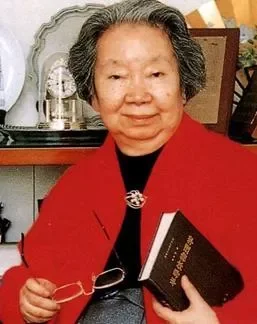
Xie Xide
Born19 Mar, 1921
Died04 Mar, 2000
NationalityChinese
Age at time of death78
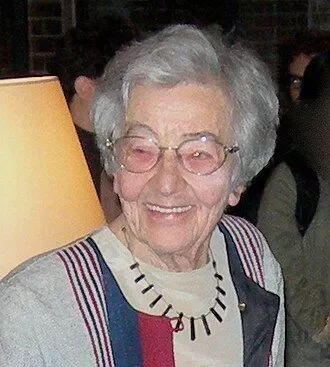
Ursula Franklin
Born16 Sep, 1921
Died22 Jul, 2016
NationalityGerman, Canadian
Age at time of death94
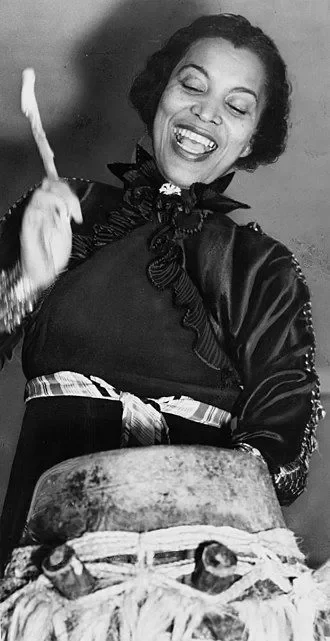
Zora Neale Hurston
Born07 Jan, 1891
Died28 Jan, 1960
NationalityAmerican
Age at time of death69
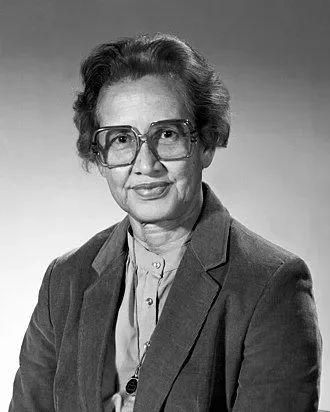
Katherine Johnson
Born26 Aug, 1918
Died24 Feb, 2020
NationalityAmerican
Age at time of death101
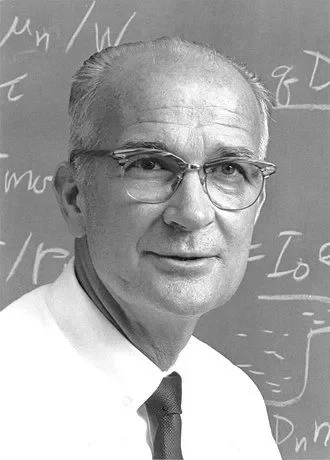
William Shockley
Born13 Feb, 1910
Died12 Aug, 1989
NationalityAmerican
Age at time of death79
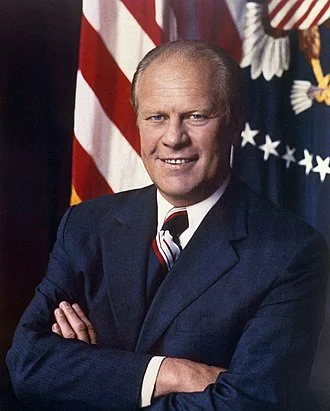
Gerald Ford
Born14 Jul, 1913
Died26 Dec, 2006
NationalityAmerican
Age at time of death93
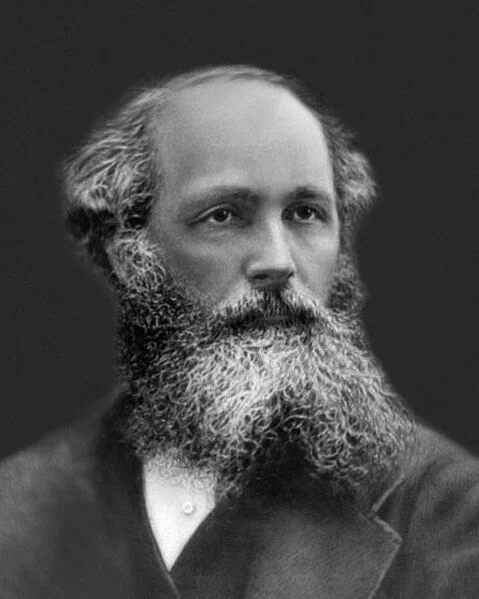
James Clerk Maxwell
Born13 Jun, 1831
Died05 Nov, 1879
NationalityScottish
Age at time of death48
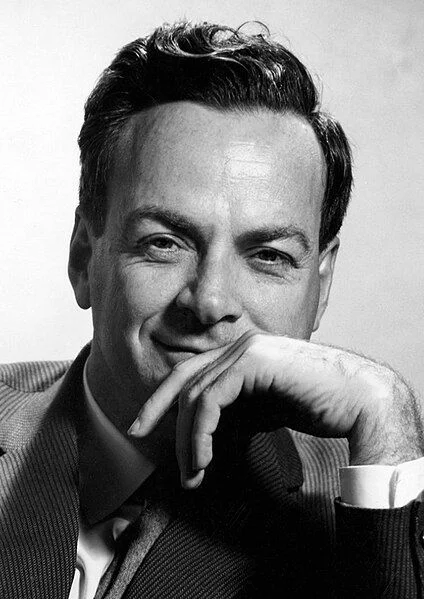
Richard Feynman
Born11 May, 1918
Died15 Feb, 1988
NationalityAmerican
Age at time of death69
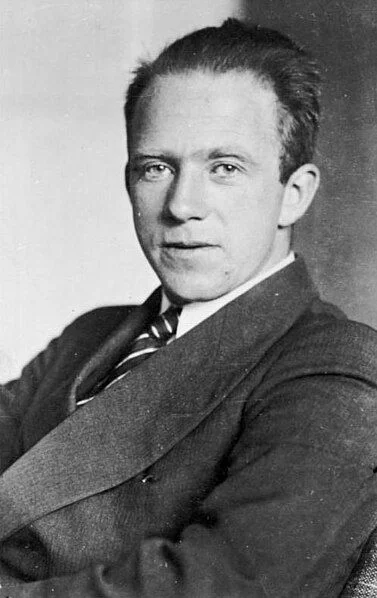
Werner Heisenberg
Born05 Dec, 1901
Died01 Feb, 1976
NationalityGerman
Age at time of death74
Marie Curie
Born07 Nov, 1867
Died04 Jul, 1934
NationalityPolish, French
Age at time of death66
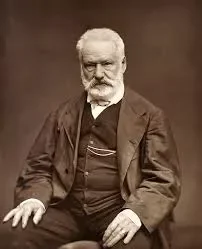
Victor Hugo
Born26 Feb, 1802
Died22 May, 1885
NationalityFrench
Age at time of death83
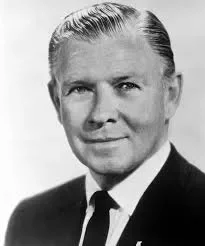
George Murphy
Born04 Jul, 1902
Died03 May, 1992
NationalityAmerican
Age at time of death89
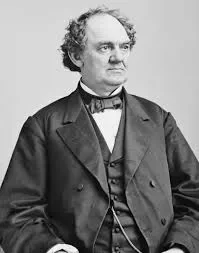
P. T. Barnum
Born05 Jul, 1810
Died07 Apr, 1891
NationalityAmerican
Age at time of death80
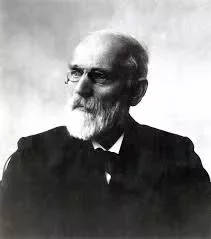
Johannes Diderik van der Waals
Born23 Nov, 1837
Died08 Mar, 1923
NationalityDutch
Age at time of death85
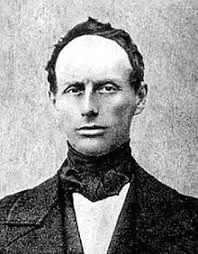
Christian Doppler
Born29 Nov, 1803
Died17 Mar, 1853
NationalityAustrian
Age at time of death49