Real Celebrities Never Die!
OR
Search For Past Celebrities Whose Birthday You Share
Died Age: 103
www.britannica.com
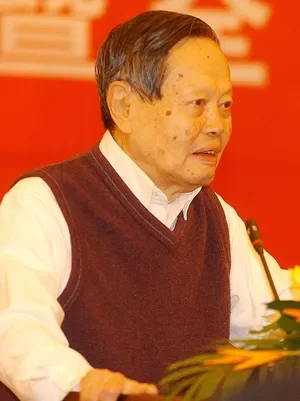
Chen Ning Yang
Birthday:
21 Sep, 1922
Date of Death:
17 Oct, 2025
Cause of death:
illness
Nationality:
Chinese
Famous As:
Chinese-American theoretical physicist
Age at the time of death:
103
Yang Chen-Ning's Quote's

“There are only two kinds of math books: those you cannot read beyond the first sentence, and those you cannot read beyond the first page.”
Yang Chen-Ning
🔗 deadcelebrityhub.com
Overview
Chen-Ning Yang is one of the most influential theoretical physicists of the 20th century—a thinker whose ideas reshaped the foundations of modern physics and whose intellectual courage helped usher in new eras of scientific understanding. Known for his profound intuition, mathematical elegance, and unyielding curiosity, Yang’s work traverses symmetry, particle physics, and statistical mechanics, leaving a legacy that continues to guide physicists today.
Early Life: A Childhood Surrounded by Ideas
Chen-Ning Yang was born on October 1, 1922, in Hefei, China, into a household that prized scholarship. His father, Yang Ko-Chun, was a mathematics professor; his mother, Luo Meng-hua, was a cultured, intellectually vibrant presence who encouraged her children to explore the world through books. Their home buzzed with academic discussions, chalkboards scribbled with equations, and a deep reverence for learning—a perfect environment for a mind as hungry as Yang’s.
During the turbulent years of his youth, Yang’s family moved often due to the Sino-Japanese War, eventually settling in Kunming, where he attended the National Southwest Associated University—a haven for China’s most brilliant students and teachers during wartime. These years shaped him profoundly. He later described Kunming as a place where hardship strengthened resolve and where intellectual freedom thrived despite the chaos outside.
A lesser-known detail: as a boy, Yang was fascinated by puzzles and would spend hours creating geometric patterns, a habit his father encouraged but never corrected—believing that play and mathematics were simply two sides of the same curiosity.
Education: The Making of a Theorist
Yang’s brilliance quickly became evident. He completed his undergraduate degree in physics in 1942 and began graduate studies shortly after, studying under some of China’s most accomplished scientists. His early research already demonstrated a deep sensitivity to symmetry—a theme that would define his life’s work.
In 1946, he earned a fellowship to study at the University of Chicago under physicist Edward Teller. There, Yang’s potential rapidly became undeniable. He completed his Ph.D. in 1948, focusing on statistical mechanics, and caught the attention of Enrico Fermi, who respected Yang for his sharp reasoning and quiet confidence.
Chicago was transformative. Surrounded by giants of the Manhattan Project and the pioneers of particle physics, Yang developed the intellectual independence that would power his future breakthroughs.
Early Career: A New Voice in Theoretical Physics
Yang joined the Institute for Advanced Study in Princeton in 1949, where he worked alongside luminaries like Albert Einstein. Though young, he quickly built a reputation for deep insight and a unique ability to see patterns where others saw noise.
During this period, Yang began collaborating with Tsung-Dao Lee, a partnership that would soon change physics forever.
Breakthrough: Challenging a “Sacred” Law of Nature
In the mid-1950s, the principle of parity conservation—the idea that the laws of physics are indifferent to left and right—was considered unquestionable. But Yang and Lee were not so convinced. After analyzing puzzling experimental results, they proposed something bold: parity might not be conserved in weak nuclear interactions.
Their insight stunned the scientific community.
The experimental confirmation in 1957 shook physics to its core. That same year, Yang and Lee were awarded the Nobel Prize in Physics, making Yang, at age 34, one of the youngest laureates in history. The victory was not only scientific—it was philosophical, reminding physicists that even the “laws of nature” must be tested relentlessly.
Fun trivia: When the confirmation of parity violation came in, Yang reportedly said very little. Those who knew him said his quiet demeanor hid an inner furnace—he celebrated by immediately returning to work.
Major Achievements: Elegance, Symmetry, and the Shape of Modern Physics
Though the parity work is his most famous achievement, Yang’s career is filled with breakthroughs that echo across physics:
Yang–Mills Theory (1954)
Developed with Robert Mills, this framework introduced non-abelian gauge symmetries and later became the mathematical backbone of the Standard Model of particle physics. Without Yang–Mills, modern particle physics simply would not exist.Yang–Baxter Equation (1960s–70s)
A cornerstone of statistical mechanics and quantum integrable systems, this equation now appears in fields as diverse as condensed matter physics, knot theory, and quantum computing.Work on monopoles, fiber bundles, and topology
Yang’s approach helped bring differential geometry into mainstream physics, showing that beauty and utility often coexist in theoretical work.
Colleagues often noted that Yang approached physics like poetry—seeking elegance not for aesthetics alone, but because “beautiful mathematics,” he believed, often pointed toward deeper truths.
Later Career: A Bridge Between Worlds
In 1966, Yang moved to Stony Brook University, where he established the C. N. Yang Institute for Theoretical Physics, nurturing generations of physicists. Later in life, he returned to China, becoming an important figure in its scientific revitalization, encouraging young scholars and supporting the country’s reemergence in global physics research.
Even in his later decades, Yang remained active—writing papers, delivering lectures, and maintaining his passion for exploring the hidden symmetries of nature.
Personal Life: A Quiet, Disciplined Scholar
Outside of physics, Yang is known for his calm demeanor, deliberate speech, and love of classical Chinese poetry. He married twice and is a father to three children. Friends describe him as contemplative, disciplined, and unexpectedly humorous in private moments.
An endearing detail: Yang often said he preferred long walks to clear his mind—ideas, he believed, flowed best when the body was in motion.
Legacy: A Mind That Redefined Modern Physics
Chen-Ning Yang’s impact on physics is immeasurable. His insights seeded entire fields, reshaped scientific assumptions, and offered elegant frameworks that continue to guide research today. His work on symmetry and gauge theory stands as one of the pillars of theoretical physics, influencing everything from particle accelerators to quantum fields.
But beyond the equations and accolades, Yang’s legacy is that of a thinker unafraid to question the unquestionable—a scientist who followed beauty, symmetry, and intuition into the heart of nature’s secrets.
Chen-Ning Yang is remembered as a visionary whose ideas transformed our understanding of the universe. His life stands as a testament to the power of curiosity, rigor, and the courage to rethink the foundations of reality itself.
Profile Snapshot
Name:
Yang Chen-Ning
Popular Name:
Chen Ning Yang
Gender:
Male
Cause of Death:
illness
Spouse:
Tu chih-Li
Weng Fan
Place of Birth:
Hefei, Anhui, Republic of China
Place of Death:
Beijing, People's Republic of China
Occupation / Profession:
Chinese-American theoretical physicist
Personality Type
Logician: Chen Ning Yang was a deeply analytical, visionary thinker who combined rigorous logic with a sense of beauty and structure — a quietly determined “mastermind” who challenged accepted norms and reshaped our understanding of nature through bold, elegant theoretical insight.
Yang Chen-Ning's Interesting Facts
Chen-Ning Yang won the 1957 Nobel Prize in Physics with Tsung-Dao Lee for their groundbreaking work showing that parity is not conserved in weak interactions.
He made major contributions to statistical mechanics, including the Yang–Baxter equation, which became foundational in mathematical physics.
Yang played a key role in developing gauge theory concepts that later influenced the Standard Model of particle physics.
In 1966, he became the first person of Chinese descent elected to the U.S. National Aca
Achievements & Awards
Chen Ning Yang, a pioneering physicist, received the Nobel Prize in Physics in 1957 alongside Tsung-Dao Lee for their groundbreaking work on parity non-conservation in weak nuclear interactions.
He has also been honored with numerous other awards, including the National Medal of Science (USA) and the Benjamin Franklin Medal, recognizing his profound contributions to theoretical physics.
His work fundamentally changed our understanding of particle physics and symmetry laws in nature.
External Links