Real Celebrities Never Die!
OR
Search For Past Celebrities Whose Birthday You Share
Died Age: 62
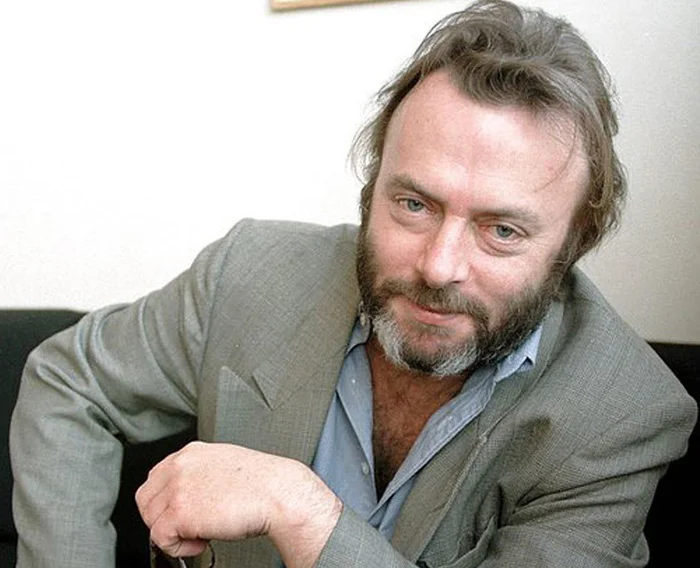
images.gr-assets.com
Christopher Hitchens
Birthday:
13 Apr, 1949
Date of Death:
15 Dec, 2011
Cause of death:
Esophageal Cancer
Nationality:
British, American
Famous As:
Author
Age at the time of death:
62
Christopher Eric Hitchens 's Quote's

“What can be asserted without evidence can also be dismissed without evidence.”
Christopher Eric Hitchens
🔗 deadcelebrityhub.com
Origins of a Rebel Mind: Early Life
Few intellectuals could command a stage, a page, or a pint quite like Christopher Hitchens. A literary pugilist with a velvet tongue, Hitchens was a man of contradictions, an iconoclast who revered classical rhetoric, a Trotskyist-turned-contrarian who toasted capitalism with whiskey, and a secular prophet whose fiery critiques echoed like sermons. To many, he was a fearless truth-teller; to others, a provocateur who enjoyed the skirmish more than the settlement. But above all, he was unapologetically himself; witty, well-read, and unrelentingly committed to the power of reasoned argument.
Christopher Eric Hitchens was born on April 13, 1949, in Portsmouth, England, into a family that, while modest in means, was steeped in the complexities of post-war British identity. His father, Eric Hitchens, a reserved former Royal Navy officer, carried the quiet dignity of a war veteran. His mother, Yvonne, a charming and intellectually curious woman, had grander ambitions for her son. "If there is going to be an upper class in this country, then Christopher is going to be in it," she once said, with both pride and resolve.
Tragedy would later cast a long shadow on Hitchens's childhood. His mother died in a suicide pact with her lover in Athens when Hitchens was just 24. It was a loss that haunted him and deepened his lifelong distrust of religious consolation.
A precocious reader, young Christopher devoured Orwell and Waugh with equal hunger. It was during his boarding school years at the Leys School in Cambridge that his flair for argument and disdain for authority began to take root. He later said he learned to debate not to win, but to test the strength of his beliefs. His mind was already in rehearsal for the rhetorical battles to come.
The Crucible of Thought: Education and Awakening
Hitchens attended Balliol College, Oxford, in the late 1960s. It was a time and place teeming with ideological fervour and intellectual ferment. There, he studied Philosophy, Politics, and Economics, though his real education happened outside the lecture halls. He joined the International Socialists, flirted with Marxism, and protested the Vietnam War, all while refining his prose for the university's literary magazines.
Oxford also introduced him to a dazzling network of future power brokers—Bill Clinton among them, with whom he would later have both camaraderie and quarrel. It was during this period that Hitchens developed what would become his lifelong ethos: a relentless questioning of authority, whether political, religious, or social.
A Pen as a Weapon: Early Career
After Oxford, Hitchens began his journalistic career in London, writing for left-wing publications such as the New Statesman. His early work already bore the hallmarks of his style: erudite, cutting, and unflinchingly honest. He wrote about Cyprus, the Falklands, and the Cold War with a clarity that belied his youth. Yet even then, his ideological loyalties were fluid. Though firmly on the political left, Hitchens refused to conform to party lines, often alienating allies with his scathing critiques of both Labour leaders and communist regimes.
Hitchens was once nearly arrested in Portugal for defying military censors while reporting on the Carnation Revolution. It wouldn’t be the last time his convictions landed him in hot water.
Major Achievements and Turning Points
In 1981, Hitchens moved to Washington, D.C., beginning his decades-long love-hate relationship with America. He became a contributing editor at The Nation, where he wrote piercing essays on U.S. foreign policy, Henry Kissinger (whom he famously branded a war criminal), and the hypocrisies of American exceptionalism.
But it was the post-9/11 period that marked a dramatic pivot in his career. Hitchens broke with many on the left by supporting the Iraq War, a decision rooted in his abhorrence of totalitarianism and his solidarity with Iraqi dissidents. This stance earned him fierce backlash, yet he never flinched. “I’m not a good team player,” he said. “I’m not even a team player.”
Amid this ideological turbulence, Hitchens also found a second wind as an orator. His public debates against religious apologists, political figures, and cultural critics became legendary. Whether sparring with Tony Blair on religion or eviscerating opponents on college campuses, Hitchens turned rhetoric into theatre. His baritone voice, laced with irony and conviction, was as intoxicating as the Johnnie Walker Black Label he sipped between syllables.
His 2007 book God Is Not Great: How Religion Poisons Everything became a bestseller and a cornerstone of the New Atheism movement. In it, he combined moral outrage with historical depth, arguing not just that God doesn't exist, but that belief in Him has been a scourge on civilisation. The book cemented his role as one of the most formidable public intellectuals of the 21st century.
A Life Lived Out Loud: Personal Life
For all his firebrand public persona, those close to Hitchens describe a man who was warm, loyal, and deeply generous, particularly with books and conversation. He married writer Carol Blue in 1981, and their home became a haven of spirited discussion and highbrow hospitality. He had three children and took great pride in his role as a father, once describing parenthood as the “final argument against solipsism.”
Hitchens’s vices, such as smoking, drinking, and debating until dawn, were as much a part of his character as his intellect. He was famous for being able to quote Keats or P.G. Wodehouse from memory, often while nursing his third scotch.
A quirky fact: Hitchens insisted on writing while standing at a lectern, classical-style, and often compared journalism to barristry—“an argument to be won in public.”
The Final Argument: Legacy
In 2010, Hitchens was diagnosed with oesophageal cancer. True to form, he chronicled his illness with unsparing honesty in Mortality, writing essays that stared death down without flinching or false comfort. Even as his body weakened, his mind remained defiant. “To the dumb question ‘Why me?’ the cosmos barely bothers to return the reply: Why not?”
Christopher Hitchens died on December 15, 2011, at the age of 62. His passing left a void in public discourse. He left a reminder that eloquence, conviction, and courage are rare traits when found together.
Today, Hitchens is remembered not just as a polemicist or provocateur, but as a defender of enlightenment values in an age of noise. He challenged sacred cows with surgical wit and reminded the world that reason, when paired with style, could still stir hearts. He didn’t just write essays—he lived them.
Legacy is often spoken of in monuments and awards. Hitchens's is made of sentences: razor-sharp, unrelenting, and unforgettable.
Profile Snapshot
Name:
Christopher Eric Hitchens
Popular Name:
Christopher Hitchens
Gender:
Male
Cause of Death:
Esophageal Cancer
Spouse:
Carol Blue
Eleni Meleagrou
Place of Birth:
Portsmouth, United Kingdom
Place of Death:
Houston, Texas, United States
Occupation / Profession:
Author
Journalist
Personality Type
Debater: Smart and curious thinkers who cannot resist an intellectual challenge. A fiercely independent thinker with a sharp tongue and sharper mind, Christopher Hitchens lived to question, provoke, and illuminate. He was never content with the easy answer, always chasing the deeper argument.
Christopher Eric Hitchens 's Interesting Facts
Despite his anti-religious stance, he requested to be buried in the same cemetery as his friend and Christian conservative Peter Robinson.
He was ambidextrous and could write with both hands.
Hitchens once claimed he could memorise entire poems after a single reading, often quoting them during debates.
Achievements & Awards
Christopher Hitchens published over a dozen books, including the bestselling God Is Not Great, and contributed to The Atlantic, Vanity Fair, and Slate, earning a reputation as one of the most influential essayists of his time.
He was also named one of the top 100 public intellectuals by Foreign Policy and Prospect magazines.
His book Hitch-22, a memoir, was critically acclaimed for its candour and literary merit.
In 2011, he was posthumously awarded the Richard Dawkins Award for promoting secularism and critical thinking.
Latest Profiles
People also viewed
Eva Crane
Born12 Jun, 1912
Died06 Sep, 2007
NationalityBritish
Age at time of death95
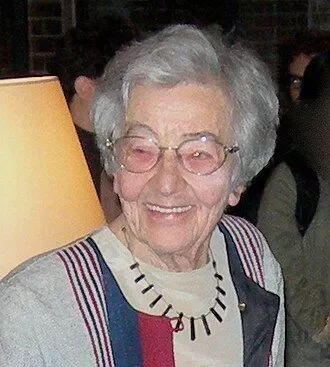
Ursula Franklin
Born16 Sep, 1921
Died22 Jul, 2016
NationalityGerman, Canadian
Age at time of death94
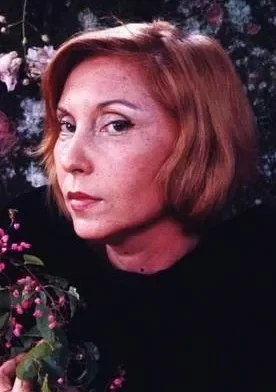
Clarice Lispector
Born10 Dec, 1920
Died09 Dec, 1977
NationalityBrazilian
Age at time of death56
Phyllis Diller
Born17 Jul, 1917
Died20 Aug, 2012
NationalityAmerican
Age at time of death95
Lily Ebert
Born29 Dec, 1923
Died09 Oct, 2024
NationalityHungarian, British
Age at time of death100
Joyce Kilmer
Born06 Dec, 1886
Died30 Jul, 1918
NationalityAmerican
Age at time of death31
Jonas Cohn
Born01 Dec, 1869
Died28 Jan, 1947
NationalityGerman
Age at time of death77
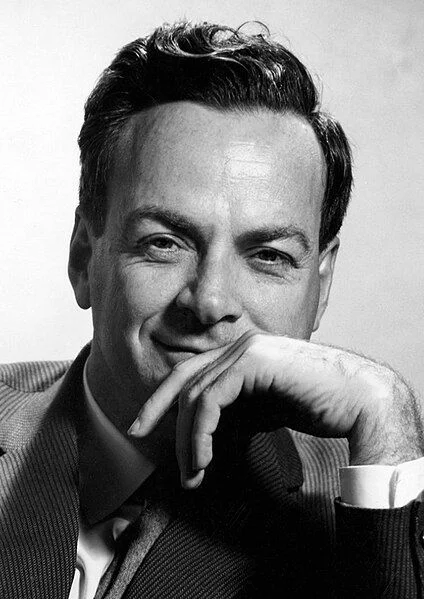
Richard Feynman
Born11 May, 1918
Died15 Feb, 1988
NationalityAmerican
Age at time of death69
Marshall Brain
Born17 May, 1961
Died20 Nov, 2024
NationalityAmerican
Age at time of death63
Tina Turner
Born26 Nov, 1939
Died24 May, 2023
NationalityAfrican, American
Age at time of death83
Eric Morecambe
Born14 May, 1926
Died28 May, 1984
NationalityBritish
Age at time of death58
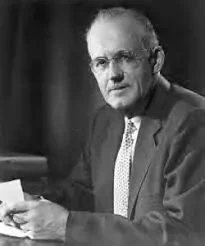
A. W. Tozer
Born21 Apr, 1897
Died12 May, 1963
NationalityAmerican, Canadian
Age at time of death66
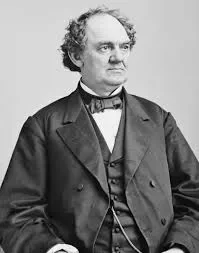
P. T. Barnum
Born05 Jul, 1810
Died07 Apr, 1891
NationalityAmerican
Age at time of death80
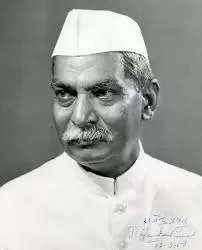
Rajendra Prasad
Born03 Dec, 1884
Died28 Feb, 1963
NationalityIndian
Age at time of death78
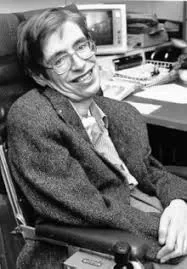
Stephen Hawking
Born08 Jan, 1942
Died14 Mar, 2018
NationalityEnglish
Age at time of death76
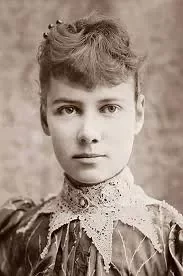
Nellie Bly
Born05 May, 1864
Died27 Jan, 1922
NationalityAmerican
Age at time of death57
George Fox
Born04 Jul, 1624
Died13 Jan, 1691
NationalityEnglish
Age at time of death66
Albert Hofmann
Born11 Jan, 1906
Died29 Apr, 2008
NationalitySwiss
Age at time of death102
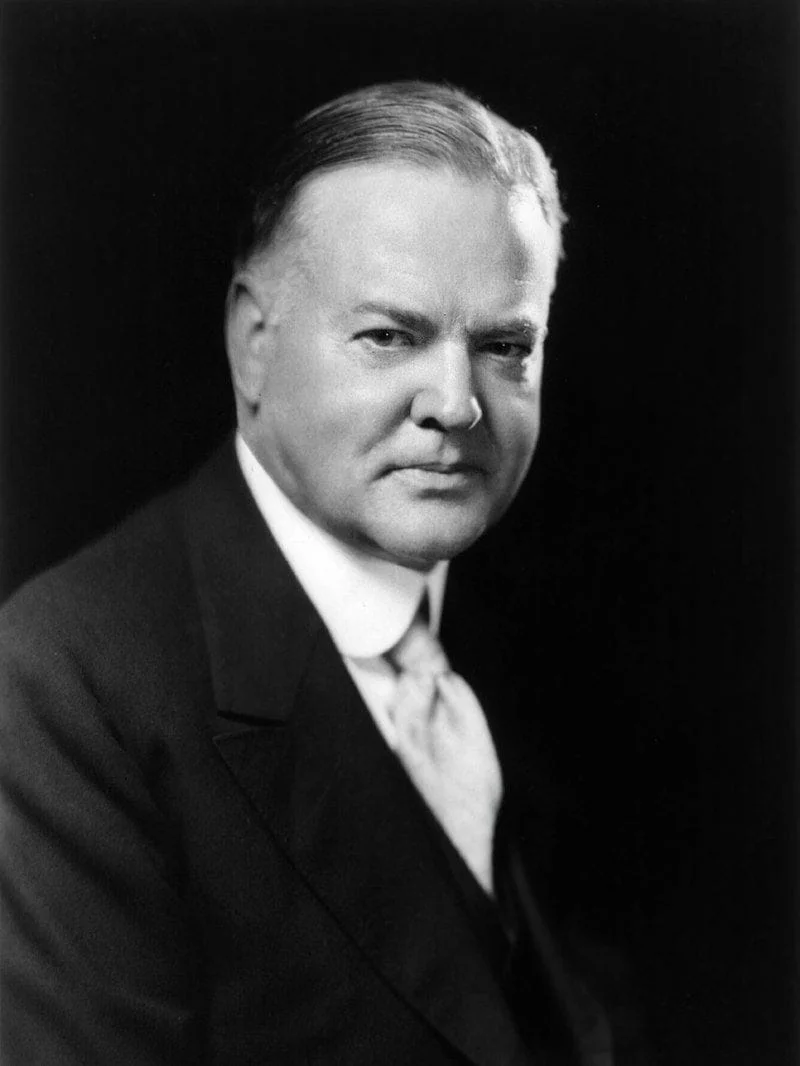
Herbert Hoover
Born10 Aug, 1874
Died20 Oct, 1964
NationalityAmerican
Age at time of death90

Jade Goody
Born05 Jun, 1981
Died22 Mar, 2009
NationalityBritish
Age at time of death27