Real Celebrities Never Die!
OR
Search For Past Celebrities Whose Birthday You Share
Died Age: 87
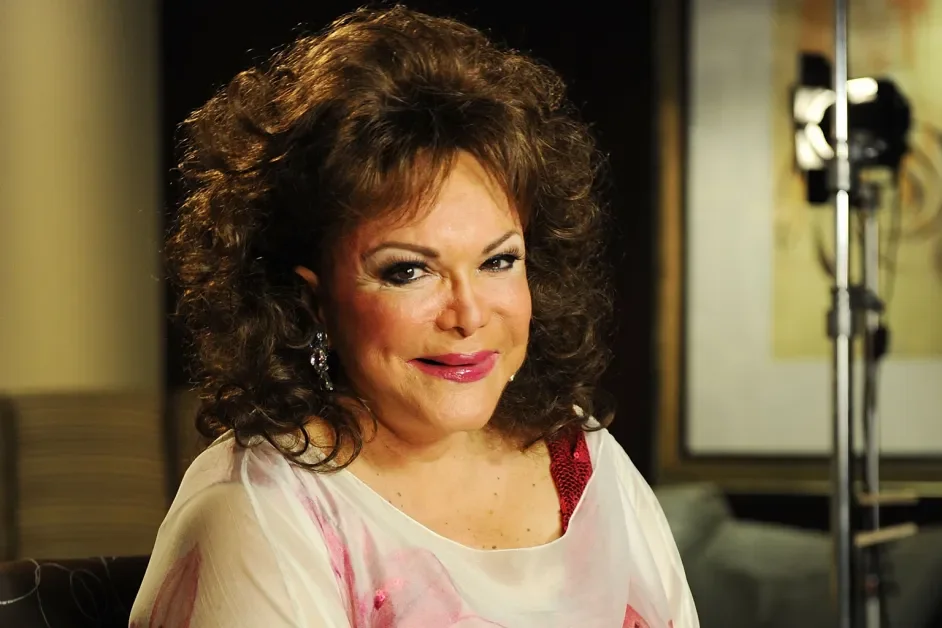
www.billboard.com
Connie Francis
Birthday:
11 Dec, 1937
Date of Death:
15 Jul, 2025
Cause of death:
Complications from pneumonia
Nationality:
American
Famous As:
Singer
Age at the time of death:
87
Concetta Rosa Maria Franconero 's Quote's

“You can’t sing about heartbreak unless you’ve lived it.”
Concetta Rosa Maria Franconero
🔗 deadcelebrityhub.com
Early Life: The Making of a Star
Connie Francis, with her crystalline voice, could make heartbreak sound elegant and joy sound effortless. At her peak, she was the most popular female vocalist in the world, bridging cultures, generations, and genres with songs that still echo decades later.
Born Concetta Rosa Maria Franconero on December 12, 1937, in Newark, New Jersey, Connie grew up in an Italian-American household steeped in tradition and ambition. Her father, George Franconero, Sr., recognised her musical spark early, insisting she take accordion lessons before she could even reach the pedals. But what began as a father’s insistence soon became a family mission: Connie would become a star.
The duality of discipline and passion marked her early years. Between school and music lessons, she performed at local talent shows, often balancing books and a heavy accordion on stage. By her teens, she was a regular on television’s Startime Kids, where her poise and maturity hinted at a future far beyond the local circuit. Yet, her father’s unyielding drive would shape not just her career—but her identity as an artist determined never to give up.
Education and the Leap to Stardom
Connie attended Newark Arts High School, a place that nurtured her musicality and provided her first structured training in voice and performance. Though she later enrolled at New York University with plans to become an interpreter—she was fluent in several languages—music always pulled her back. That multilingual talent would later become one of her trademarks, allowing her to record in multiple languages and connect with audiences worldwide.
Her big break, however, rarely happened. After a string of singles failed to make an impact, MGM Records considered dropping her. But then came “Who’s Sorry Now?”—a song her father pushed her to record against her instincts. Released in 1958, it soared to the top of the charts, transforming Connie Francis overnight into a household name.
Career Journey: Triumphs, Challenges, and Reinvention
The Early Years (1950s–1960s):
Once “Who’s Sorry Now?” hit, Connie Francis became unstoppable. She dominated the late 1950s and early 1960s with anthems like “Stupid Cupid,” “Lipstick on Your Collar,” and the wistful “Where the Boys Are.” The latter, the theme song for the 1960 film in which she also starred, became her signature—a tender, cinematic ballad that captured the optimism and innocence of the era.
Her versatility was staggering. She moved seamlessly from pop to country to traditional Italian songs, even recording in German, Spanish, and Hebrew. In Germany, her version of “Die Liebe ist ein seltsames Spiel” topped charts, making her one of the first American singers to achieve true international stardom.
Challenges and Resilience (1970s–1980s):
Behind the glamour, Connie faced a life marked by profound struggle. In 1974, she endured a devastating assault that forced her into years of recovery and seclusion. As if that weren’t enough, her brother George’s tragic death added to the pain. Yet, her resilience shone through. By the late 1970s, she staged a comeback, returning to concert stages with the same poise and power that had once captivated the world.
A lesser-known but remarkable chapter in her life was her advocacy for victims of violent crime and mental health awareness. After her assault, she became a tireless campaigner for security reform in hotels, using her platform to push for changes that made travellers safer—a legacy that extended far beyond music.
Later Career and Legacy Work (1990s–Present):
Though the pop charts eventually moved on, Connie Francis never stopped performing. Her later years were filled with nostalgia tours, autobiographical books, and renewed appreciation from fans and historians alike. She embraced her role as a cultural bridge, celebrating her heritage and reminding audiences that music—like memory—never fades.
Personal Life: The Woman Behind the Voice
Connie’s personal life was as dramatic as her songs. She married and divorced several times, often struggling to balance her personal happiness with her public persona. Yet, she remained fiercely loyal to her family and her roots. Friends often described her as warm, sharp-witted, and deeply empathetic—a woman whose laughter could light up a room even after everything she’d endured.
One endearing detail: Connie kept every fan letter she ever received, storing them in boxes labelled by year. To her, they weren’t just notes—they were proof that her voice had mattered, that it had connected her to millions of lives across oceans and decades.
Legacy: The Eternal Voice
Connie Francis’s legacy is etched not just in her chart-topping hits but in her emotional honesty. She was the first woman to successfully bridge the pop and international markets, paving the way for future global icons. Her songs—whether playful or melancholy—carried a sincerity that transcended language and time.
Today, she stands as one of the most successful female recording artists of the 20th century, a pioneer whose career blazed a trail for countless women in music. Her story is one of brilliance and bravery—a reminder that the truest stars shine brightest not because their path was easy, but because they refused to dim.
Profile Snapshot
Name:
Concetta Rosa Maria Franconero
Popular Name:
Connie Francis
Gender:
Female
Cause of Death:
Complications from pneumonia
Spouse:
Bob Parkinson
Joseph Garzilli
Izzy Marion
Dick Kanellis
Place of Birth:
Newark, New Jersey, United States
Place of Death:
Broward Health North, Deerfield Beach, Florida, United States
Occupation / Profession:
Singer
Musician
Author
Actress
Personality Type
Entrepreneur: Connie Francis was a radiant soul whose voice and spirit turned emotion into melody, lighting up the world with warmth, courage, and heart.
Concetta Rosa Maria Franconero 's Interesting Facts
Connie once recorded songs in more than a dozen languages to connect with her fans around the world.
She was the first artist to record a pop album at the famous Abbey Road Studios in London.
She has a lifelong love of animals and once said she often preferred their company to Hollywood parties.
Achievements & Awards
Connie Francis became one of the most successful female recording artists of the 20th century, selling over 100 million records worldwide.
She scored dozens of chart-topping hits, including “Who’s Sorry Now?”, “Everybody’s Somebody’s Fool,” and “Where the Boys Are,” which became international classics.
Her career earned her numerous honours, including induction into the Vocal Group Hall of Fame and recognition as the first woman to reach number one on the Billboard Hot 100.
Beyond her musical success, she also starred in films and recorded in multiple languages, solidifying her global appeal.
External Links
Latest Profiles
People also viewed

Jimi Hendrix
Born27 Nov, 1942
Died18 Sep, 1970
NationalityAmerican
Age at time of death27

Jesse Powell
Born12 Sep, 1971
Died13 Sep, 2022
NationalityAmerican
Age at time of death51

George Harrison
Born25 Feb, 1943
Died29 Nov, 2001
NationalityBritish
Age at time of death58

Tony Bennett
Born03 Aug, 1926
Died21 Jul, 2023
NationalityAmerican
Age at time of death96
Eva Crane
Born12 Jun, 1912
Died06 Sep, 2007
NationalityBritish
Age at time of death95

Sally Ann Howes
Born20 Jul, 1930
Died19 Dec, 2021
NationalityBritish, American
Age at time of death91

Olivia de Havilland
Born01 Jul, 1916
Died26 Jul, 2020
NationalityBritish, American
Age at time of death104
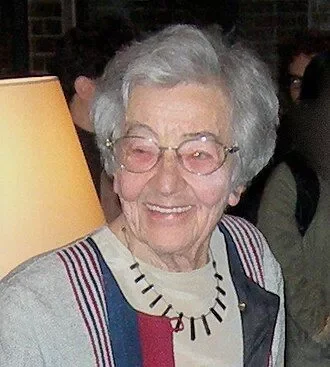
Ursula Franklin
Born16 Sep, 1921
Died22 Jul, 2016
NationalityGerman, Canadian
Age at time of death94
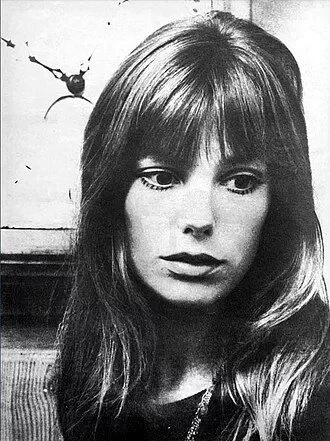
Jane Birkin
Born14 Dec, 1946
Died16 Jul, 2023
NationalityBritish, French
Age at time of death76

Chester Bennington
Born20 Mar, 1976
Died20 Jul, 2017
NationalityAmerican
Age at time of death41

Lupe Vélez
Born18 Jul, 1908
Died14 Dec, 1944
NationalityMexican
Age at time of death36

Johnny Ace
Born09 Jun, 1929
Died25 Dec, 1954
NationalityAmerican
Age at time of death25

Vera-Ellen
Born16 Feb, 1921
Died30 Aug, 1981
NationalityAmerican German
Age at time of death60

Phyllis Diller
Born17 Jul, 1917
Died20 Aug, 2012
NationalityAmerican
Age at time of death95

Olivia Newton-John
Born26 Sep, 1948
Died08 Aug, 2022
NationalityBritish, Australian
Age at time of death73
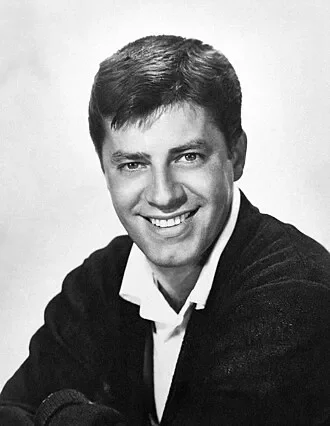
Jerry Lewis
Born16 Mar, 1926
Died20 Aug, 2017
NationalityAmerican
Age at time of death91

Lily Ebert
Born29 Dec, 1923
Died09 Oct, 2024
NationalityHungarian, British
Age at time of death100

Cissy Houston
Born30 Sep, 1933
Died07 Oct, 2024
NationalityAmerican
Age at time of death91

Mary Martin
Born01 Dec, 1913
Died03 Nov, 1990
NationalityAmerican
Age at time of death76

Jonas Cohn
Born01 Dec, 1869
Died28 Jan, 1947
NationalityGerman
Age at time of death77