Real Celebrities Never Die!
OR
Search For Past Celebrities Whose Birthday You Share
Died Age: 79
www.nytimes.com
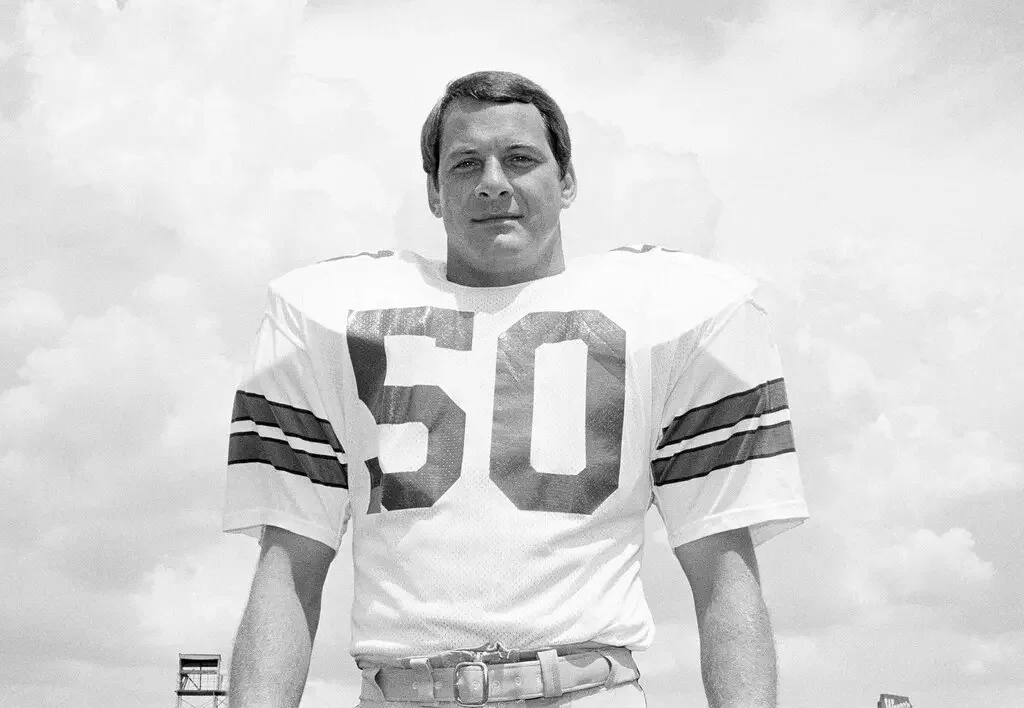
D.D Lewis
Birthday:
15 Oct, 1945
Date of Death:
15 Sep, 2025
Cause of death:
Kidney Failure
Nationality:
American
Famous As:
American professional football player
Age at the time of death:
79
Dwight Douglas Lewis's Quote's

“Texas Stadium has a hole in the roof, so God can watch his favorite team play.”
Dwight Douglas Lewis
🔗 deadcelebrityhub.com
Early Life
D.D. Lewis was the kind of linebacker who didn’t always get the flash, but always got the job done. A cornerstone of the Dallas Cowboys’ famed “Doomsday Defense,” he played with consistency, toughness, and heart through more than a decade of NFL high stakes. He wasn’t simply a defender of turf—he was someone who built trust, durability, leadership, and helped carry his teams from losing records to championships. His legacy is one of loyalty, grit, steady excellence, and a quiet ferocity that spoke louder than many big names.
Dwight Douglas Lewis was born on October 16, 1945, in Knoxville, Tennessee. He was the youngest of fourteen children. His parents named him after Generals Dwight Eisenhower and Douglas MacArthur—an early sign of expectations, icons, strength. As a boy in Knoxville, Lewis discovered football at Fulton High School. He excelled early on, becoming a Tennessee All-State linebacker in 1963. Even then, he demonstrated both physical ability and an inner resolve: in Tennessee’s competitive high school football scene, he stood out.
These early years weren’t easy. Growing up in a large family with limited resources, Lewis had to work for everything: recognition, playing time, respect. But he leveraged that environment: every tackle, every game was a chance to prove something.
Education & Formative Influences
Lewis went to Mississippi State University, where from about 1965 to 1967 he was a three-year starter and played both ways—on defense and occasionally elsewhere. He led the team in tackles and assists each of those seasons. Even though Mississippi State had more losses than wins during his time there, that didn’t stop Lewis from making a name for himself. He earned All-SEC honors twice, including First-Team, and in his senior year was named SEC Defensive Player of the Year and was also First-Team All-American. Coaches—opponents especially—noted him for his instincts, his relentless pursuit, his ability to make plays even when the odds were against him.
Those college years taught him more than technique: he learned leadership (he was team captain in his senior year), grit, how to stand out when the rest of your team is struggling, and how to keep focus even when wins are rare.
Career Journey
Lewis’s career unfolds in phases: early challenge and adjustment; establishment as starter; playoff battles and super bowls; longevity and reputation.
Early Professional Years & Adjustment
He was drafted in the sixth round in 1968 by the Dallas Cowboys. Many scouts worried he was too small for the pro game. His rookie camp saw positional experimentation—tried at center initially, but soon moved to linebacker. In 1969, his second season, his career was interrupted by military service. On returning, for a few seasons he served as a backup, absorbing lessons, techniques, learning the pro pace and patience.
Becoming a Starter & “Doomsday Defense”
In 1973, after Chuck Howley’s retirement, Lewis became the Cowboys’ starting weakside linebacker. From 1973 through 1981, through thick and thin, he held that spot. He missed very few games. From 1973 to 1981 he started 132 of 134 possible regular-season games in that slot. His performance was steady, his tackling reliable, his leadership subtle but visible. He was part of a defensive core that included other legends. Under Tom Landry’s system, with such teammates, he helped build what Cowboys fans came to think of as an identity—tough defense, organized, disciplined.
Playoffs, Super Bowls & Signature Moments
Lewis played in 27 postseason games, a team record. He appeared in five Super Bowls, winning two of them. One of his standout games was the 1975 NFC Championship Game, when he intercepted two passes against the Los Angeles Rams, helping Dallas reach the Super Bowl. He played in nine NFC Championship games overall. His teams rarely lost once they made the postseason, and he helped provide stability through those high-pressure moments.
He never had a Pro Bowl selection despite all his playoff experience—but his teammates and coaches respected him deeply. He served as defensive co-captain at times, and earned the Bart Starr Meritorious Award in 1981. He was beloved by fans for his consistency, unflashy heroism, and everyday leadership.
Later Years & Retirement
After the 1981 season, Lewis retired. Over 13 NFL seasons, he played 186 games, started many of them, and missed only a handful of games across his tenure. He never had a losing season in his entire Cowboys career—a remarkable feat. He left as one of the most durable, dependable players in the organization’s history.
Personal Life
Off the field, Lewis was known for being humble, a stabilizing presence in locker rooms, someone teammates respected for quiet character. He was loved for his humor, his loyalty, his faith. One memorable quote: he once said “Texas Stadium has a hole in its roof so God can watch His favorite team play.” That kind of warmth, that kind of humility, endeared him to fans.
He was also deeply connected to Mississippi State and Knoxville. He was inducted into the College Football Hall of Fame in 2001, and into various state and university halls of fame. He stayed connected to his roots—people often remember his early years, how he rose from modest circumstances by sheer effort and integrity.
Legacy
D.D. Lewis leaves a legacy that combines excellence with reliability.
He embodied what a professional should be: durable, consistent, a workhorse. In an era of star athletes with spotlight, he was seldom the flash, but always essential.
His playoff record alone—27 postseason games, five Super Bowls—places him among the most battle-tested defenders in Cowboys history.
His college honors remind us that greatness doesn’t depend on team record: he stood out even when his college team lost more games than it won.
He influenced younger players by example: how to play when you’re not the marquee name; how to show up every game; how leadership can be understated.
In the annals of the NFL and of Dallas Cowboys lore, he is remembered as a pillar of the Doomsday Defense era—a man of resilience, humility, and performance.
Conclusion
D.D. Lewis’s story is a powerful one: of a young boy from Knoxville, the youngest of fourteen, who fought his way into college stardom, then into a pro career built on toughness and dependability. He took hardship and limitation—not enough size, early losses, time away for service—and turned them into fuel. His thirteen years in Dallas were marked by achievements not always screaming in headlines, but felt in yards gained, in games won, in nights under pressure. Lewis showed that football isn’t just about making big plays—it’s about doing your job, showing up, and holding your ground. His legacy will live on in every linebacker who learns that “durable” is as important as “dynamic,” in every fan who admires the player who anchors without needing attention. D.D. Lewis will be remembered as a true professional, a quiet hero of the gridiron, one of the foundations of Cowboys history
Profile Snapshot
Name:
Dwight Douglas Lewis
Popular Name:
D.D Lewis
Gender:
Male
Cause of Death:
Kidney Failure
Spouse:
Diane Lewis
Place of Birth:
Knoxville, Tennessee, U.S.
Place of Death:
Plano, Texas, U.S.
Occupation / Profession:
American professional football player
Personality Type
Virtuoso: D. D. Lewis was a quietly steadfast force — a disciplined, humble, and deeply resilient athlete who built greatness by showing up every day, taking responsibility, and letting his work speak louder than his words; even as he wrestled with inner fears and the burden of identity, his loyalty, reliability and integrity shone through.
Dwight Douglas Lewis's Interesting Facts
1. D.D. Lewis was the youngest of 14 children and was named Dwight Douglas after generals Eisenhower and MacArthur.
2. He played his entire 13-year NFL career with the Dallas Cowboys, winning two Super Bowls.
3. He appeared in five Super Bowls, making him one of only eight players in NFL history to do so.
4. In the 1975 NFC Championship Game, he intercepted two passes to help send Dallas to the Super Bowl.
Achievements & Awards
D.D. Lewis was a standout linebacker who won two Super Bowls with the Dallas Cowboys. In college, he was recognized as SEC Defensive Player of the Year, earned All-SEC and All-America honors, and later received the honor of being inducted into the College Football Hall of Fame.
External Links