Real Celebrities Never Die!
OR
Search For Past Celebrities Whose Birthday You Share
Died Age: 86
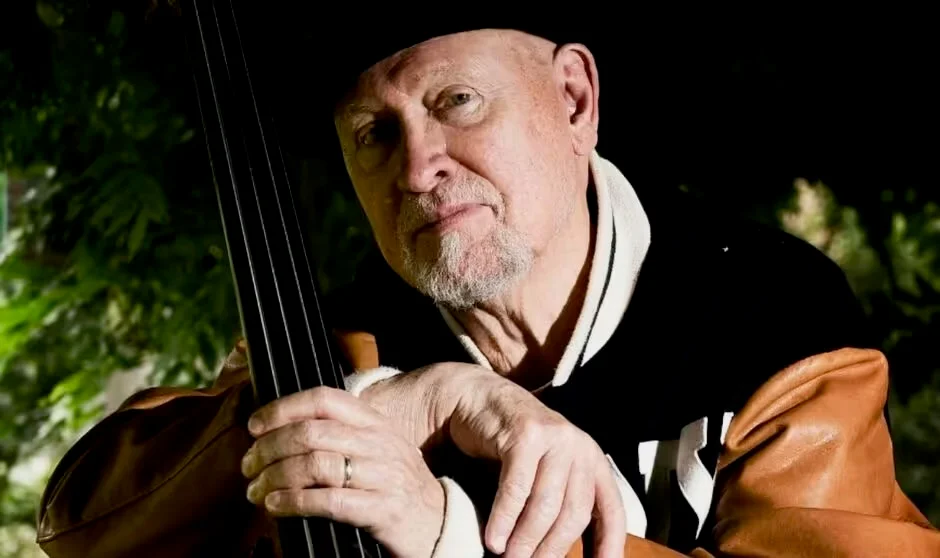
crotchetyman.blog
Danny Thompson
Birthday:
03 Apr, 1939
Date of Death:
22 Sep, 2025
Cause of death:
Leukemia
Nationality:
British
Famous As:
Multi-instrumentalist
Age at the time of death:
86
Daniel Henry Edward Thompson's Quote's

“I never wanted to be famous; I just wanted to play honestly”
Daniel Henry Edward Thompson
🔗 deadcelebrityhub.com
Early Life
Danny Thompson was a musician whose double bass seemed to breathe—its deep, resonant tone carrying stories of love and struggle. For more than six decades, Thompson’s playing shaped the sound of modern British music, bridging folk, jazz, blues, and rock with effortless grace. He was an artist who never chased the spotlight, yet whose presence could transform a song from good to unforgettable.
Born Daniel Henry Edward Thompson on April 4, 1939, in Teignmouth, Devon, Danny’s early life was marked by loss and resilience. His father, a miner who joined the Royal Navy during the Second World War, was killed in action when Danny was still a child. The family moved to Battersea in London shortly after, where Thompson grew up in a working-class community that valued grit, humour, and hard work.
As a boy, he showed a knack for both sport and music. He played football so well that he was briefly a junior for Chelsea and boxed competitively. But music kept tugging at him. He started on guitar and mandolin, then experimented with trumpet and trombone before discovering the double bass—the instrument that would define his life. At sixteen, he bought his first bass for about five pounds. He named it “Victoria,” and it stayed with him for life, its weathered wood and scars ageing alongside him.
During his National Service, Thompson played trombone in an army band in Penang, Malaysia. That period abroad broadened his ear, introducing him to jazz, rhythm, and improvisation. By the time he returned to London, music had become more than a pastime. It was his calling.
Education and Formation
Thompson’s musical education came not from conservatories, but from relentless practice and London’s club circuit. He played anywhere he could—small jazz trios, blues bars, rehearsal rooms above pubs. He was a quick study, learning from the musicians around him and driven by a fierce desire to improve. Above the door of his room, he hung a sign that read PRACTICE—a reminder that mastery was built, not gifted.
That work ethic, paired with raw instinct, set him apart. The double bass became his companion, not just his instrument. “Victoria” wasn’t pristine—it bore layers of paint and wear—but Thompson believed every scrape told part of his story.
Career Journey
The Early Years
By the mid-1960s, Thompson had become a fixture in the London music scene. He joined Alexis Korner’s Blues Incorporated, the breeding ground for Britain’s blues explosion, and briefly led a trio that included future guitar legend John McLaughlin. But his career took off when he co-founded Pentangle in 1967 with Bert Jansch, John Renbourn, Jacqui McShee, and Terry Cox.
Pentangle was revolutionary. Blending jazz improvisation with folk tradition, they defied categorisation. Their 1969 album Basket of Light became a landmark of British folk-jazz, and Thompson’s playing—melodic, fluid, and commanding—anchored their sound. He wasn’t just keeping rhythm; he was in dialogue with the other instruments, making the bass sing.
Mid-Career and Reinvention
When Pentangle’s original lineup disbanded in the early 1970s, Thompson’s phone never stopped ringing. He became one of the most sought-after session musicians in the country, working with artists like John Martyn, Nick Drake, Richard Thompson, and Kate Bush. His basslines added warmth and depth to John Martyn’s Solid Air and grace to Nick Drake’s haunting recordings.
Yet beneath the acclaim, Thompson wrestled with personal challenges. Years of touring and recording took their toll, and he struggled with alcoholism. His eventual decision to get sober in the late 1970s marked a major turning point. From that moment on, his playing gained a new clarity—less about perfection, more about honesty.
In 1987, he released his first solo album, Whatever, which showcased his versatility and the full emotional range of his instrument. By then, he had found peace not only in music but also in spirituality—converting to Islam in 1990 and adopting the name Hamza. This change reflected his evolving philosophy: discipline, humility, and devotion, both in art and in life.
Later Career
Even as the decades passed, Danny Thompson remained a vital force. He joined projects like Transatlantic Sessions, collaborated with everyone from folk icons to jazz innovators, and continued performing around the world. Despite facing serious health issues—including major heart surgery and a stroke in 1998—he returned to the stage each time with renewed determination.
In 2007, he received a Lifetime Achievement Award from the BBC Radio 2 Folk Awards, honouring not only his role in Pentangle but also his extraordinary contribution to British music. At 80, he was still performing with the same energy and curiosity that had driven him as a teenager. His final public appearances, including a performance at Richard Thompson’s 75th birthday concert at the Royal Albert Hall in 2024, were celebrated as testaments to his enduring artistry.
Personal Life
Away from the stage, Thompson was warm, humorous, and unpretentious. He married twice—first to Daphne, with whom he had a son, Danny Jr., a drummer who went on to perform with the band Hawkwind. Later, he married Sylvia, his partner through his final decades.
Friends often spoke of his loyalty and quiet strength. He could spend hours talking about boxing or fishing with the same enthusiasm he brought to music. His conversion to Islam deepened his sense of peace and focus, something that resonated in his later playing—calm, centred, yet profoundly expressive.
And through it all, “Victoria,” his faithful 19th-century double bass, stayed by his side. He called it “the old girl,” and though its paint had long worn away, its sound only grew richer.
Legacy
Danny Thompson’s influence can be heard in the DNA of modern British music. He wasn’t just a bassist—he was an interpreter, a bridge between genres, a musician’s musician. His work helped define the British folk revival, expanded the possibilities of the bass, and set a standard for musical empathy and precision.
He brought a jazz player’s freedom to folk and a folk player’s soul to jazz. Musicians who worked with him often said he never played the same phrase twice—he was always listening, always responding. His sound was as emotional as it was technical, his timing impeccable yet full of human warmth.
Danny Thompson passed away in September 2025 at the age of 86, leaving behind not just recordings but a spirit of collaboration, humility, and mastery that continues to inspire. His life’s melody was one of reinvention—of a man who turned personal trials into art, who treated his instrument like a friend, and who, through every note, reminded us that music is a conversation between heart and craft.
Profile Snapshot
Name:
Daniel Henry Edward Thompson
Popular Name:
Danny Thompson
Gender:
Male
Cause of Death:
Leukemia
Spouse:
Sylvia
Place of Birth:
Devon, United Kingdom
Place of Death:
Rickmansworth, United Kingdom
Occupation / Profession:
Multi-instrumentalist
Personality Type
Entertainer: Danny Thompson was a true artist who used his bass to speak from the heart, turning simple notes into deep, honest feeling.
Daniel Henry Edward Thompson's Interesting Facts
His beloved 19th-century double bass, “Victoria,” was purchased for just five pounds in his teens and remained his main instrument throughout his life.
Before becoming a professional musician, he played junior football for Chelsea F.C., showing early signs of his competitive spirit.
Thompson often practised with a sign over his door that simply read “Practice”—a mantra he credited for his lifelong mastery
Achievements & Awards
Danny Thompson’s achievements spanned over six decades of groundbreaking music. As co-founder of Pentangle, he helped redefine the boundaries between folk, jazz, and blues, creating a sound that influenced generations of musicians.
He worked with legends such as John Martyn, Nick Drake, and Kate Bush, bringing his distinctive double bass tone to countless classic recordings.
In recognition of his contributions, he received the BBC Radio 2 Folk Awards Lifetime Achievement Award in 2007 for both his solo work and his role in Pentangle.
External Links
Latest Profiles
People also viewed
Elliot Smith
Born06 Aug, 1969
Died21 Oct, 2003
NationalityAmerican
Age at time of death34
Brian Jones
Born28 Feb, 1942
Died03 Jul, 1969
NationalityBritish
Age at time of death27
Garth Hudson
Born02 Aug, 1937
Died21 Jan, 2025
NationalityCanadian
Age at time of death87
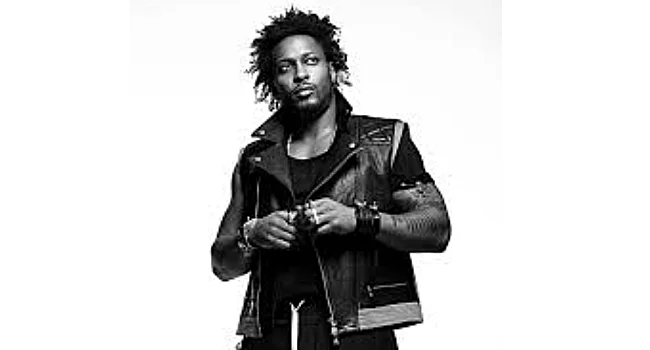
D’Angelo
Born10 Feb, 1974
Died13 Oct, 2025
NationalityAmerican
Age at time of death51