Real Celebrities Never Die!
OR
Search For Past Celebrities Whose Birthday You Share
Died Age: 85
cdn.mos.cms.futurecdn.net
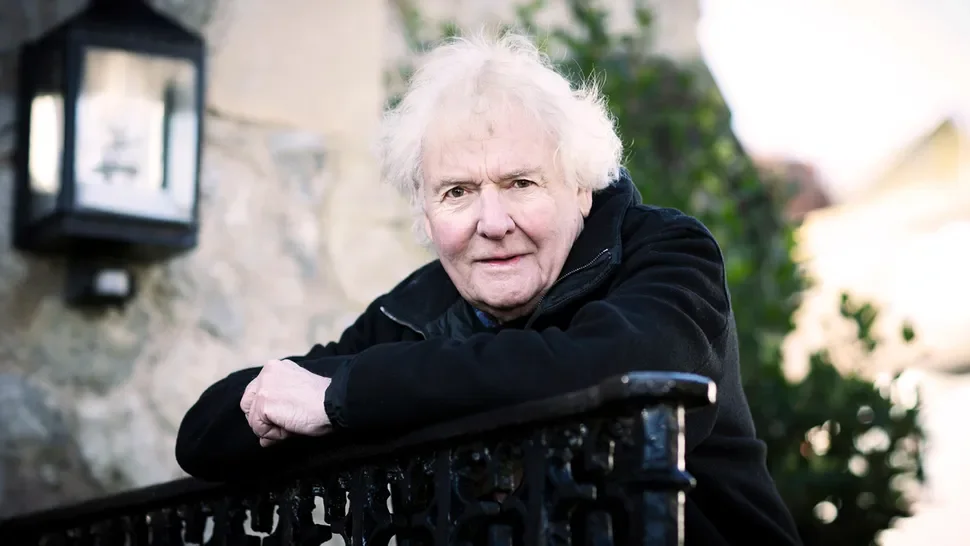
Dave Cousins
Birthday:
07 Jan, 1940
Date of Death:
13 Jul, 2025
Cause of death:
Unknown
Nationality:
English
Famous As:
English musician
Age at the time of death:
85
David Joseph Cousins's Quote's

“Every song has its own story; you just have to listen closely to hear the truth in it.”
David Joseph Cousins
🔗 deadcelebrityhub.com
Early Life: Seeds of Imagination
Dave Cousins has always been more than a musician. A poet with a guitar, a philosopher in denim, and a visionary bandleader, Cousins helped shape British folk-rock into a genre of intellect and introspection. As the frontman of the Strawbs, he wove mysticism, politics, and human emotion into haunting melodies that transcended trends and generations.
For over five decades, Cousins stood at the intersection of poetry and performance, crafting songs that questioned, consoled, and stirred the soul. His story is one of evolution—an artist constantly seeking the deeper current beneath the surface of song.
Born David Joseph Hindson on January 7, 1945, in West Sussex, England, Dave Cousins grew up in post-war Britain—a place still recovering, still reimagining itself. From an early age, he showed signs of a restless mind. His mother encouraged literature, and young Dave devoured books of mythology, history, and fantasy, cultivating a fascination with storytelling that would later define his songwriting.
He picked up the banjo as a teenager, drawn to the textures of American bluegrass and the raw sincerity of folk. But even then, his interests ran deeper than mere imitation. He was drawn to the idea of folk music not just as tradition, but as vehicle for personal truth and modern commentary.
Education: A Scholar of Words and Waves
Cousins studied statistics and pure mathematics at the University of Leicester, but it was clear early on that his heart leaned toward music and narrative. The precision of math sharpened his lyrical structuring, while university life exposed him to new forms of art, literature, and emerging political ideals.
In 1964, while still at university, he formed a bluegrass band called The Strawberry Hill Boys—named after Strawberry Hill in Twickenham. The name would eventually be shortened to Strawbs, as the music evolved beyond its acoustic roots.
Though his degree was in math, Cousins’ education was as much about learning to blend disciplines—story, sound, structure—and turn them into something original.
Career Journey
The Folk Years: Acoustic Roots, Big Questions
In the late 1960s, the Strawbs began as a traditional folk group, but Cousins’ songwriting quickly pushed them toward broader horizons. Albums like Strawbs (1969) and Dragonfly (1970) contained elements of British folklore and lyrical introspection, often weaving fantasy with social reflection.
The band famously collaborated with a then-unknown Sandy Denny (who would go on to sing with Fairport Convention), releasing the now-rare All Our Own Work—a precursor to the folk-rock sound that would dominate the decade.
The Prog-Folk Pinnacle: Ambition and Evolution
With albums like Just a Collection of Antiques and Curios (1970), Grave New World (1972), and Hero and Heroine (1974), Cousins steered the Strawbs into progressive rock territory. His songs became more theatrical, and his lyrics, more philosophical.
“Autumn,” “The Hangman and the Papist,” and “New World” reflected a writer wrestling with war, faith, aging, and inner conflict—delivered with his signature raspy voice, equal parts preacher and prophet.
The Strawbs toured with bands like Yes and Rick Wakeman (who was briefly a Strawbs member before joining Yes), further cementing their place in the prog-rock pantheon.
Fun Fact: Cousins once turned down a gig as a BBC producer to continue with the Strawbs—choosing artistic uncertainty over a stable career in broadcasting.
Later Work: Reinvention and Quiet Legacy
Even as commercial tastes changed, Cousins remained active—releasing solo work, reforming Strawbs in various incarnations, and experimenting with new sonic textures. He released deeply personal albums like Two Weeks Last Summer (1972) and The Boy in the Sailor Suit (2007), which felt like letters to his younger self—full of melancholy, wisdom, and wonder.
Throughout the 2000s and 2010s, he continued touring with Strawbs, often introducing their music to younger audiences rediscovering prog-folk through vinyl revivals and streaming algorithms.
Personal Life: The Private Poet
Though never a tabloid figure, Cousins' introspective lyrics often gave clues to his emotional life. Relationships, aging, spirituality, and memory became recurring themes in his work. He spent time living in Denmark and Canada and maintained an affection for quiet solitude and old English landscapes.
A voracious reader and amateur historian, Cousins also dabbled in radio production and management, including work with Radio Tees and XFM, balancing his artistic output with a keen sense for media and communication.
His distinctive voice—nasal, aching, and unmistakably sincere—remains one of the most recognizable in British folk-rock.
Legacy: Keeper of the Lyrical Flame
Dave Cousins is remembered not just as a musician, but as a guardian of lyrical depth in an increasingly commercial world. He kept the integrity of folk storytelling alive while embracing the sonic ambition of progressive rock.
Artists from Steven Wilson to Decemberists have cited his work as influential, and his song “Hero and Heroine” continues to resonate with themes of inner strength and transformation.
In a career that defied easy categorization, Cousins stood for authenticity, thoughtfulness, and the belief that music can be both beautiful and meaningful.
Even now, when he takes the stage—grizzled, poetic, and guitar in hand—there’s the sense that you’re not just watching a performance. You’re witnessing a man who has spent a lifetime searching for the heart of a story—and found it, time and again, in song.
Profile Snapshot
Name:
David Joseph Cousins
Popular Name:
Dave Cousins
Gender:
Male
Cause of Death:
Unknown
Spouse:
Maggie Broadbent
Mary Holmes
Geraldine
Place of Birth:
Hounslow, Middlesex, England
Place of Death:
Canterbury, Kent, England
Occupation / Profession:
English musician
Personality Type
Architect Imaginative and strategic thinkers, with a plan for everything. Dave Cousins is a visionary strategist and inventive boundary-pusher—an independent thinker driven by long-range artistic and entrepreneurial goals, crafting music and ventures with meticulous purpose and creative depth.
David Joseph Cousins's Interesting Facts
Beyond music, he has also worked as a record producer and has a passion for vintage guitars.
Cousins has been a key songwriter, blending folk, rock, and progressive styles throughout his career.
Dave Cousins is the lead vocalist and founding member of the British folk-rock band Strawbs.
He started his music career playing banjo and then switched to guitar as the band’s sound evolved.
Achievements & Awards
Dave Cousins, known for his work as the lead singer and songwriter of the folk-rock band Strawbs, has earned acclaim for his contributions to music over several decades.
His legacy includes numerous albums that have stood the test of time and collaborations with respected musicians.
While not widely recognized with major commercial awards, his influence in the British progressive and folk-rock scenes has been celebrated through critical respect and a loyal fanbase.
External Links