Real Celebrities Never Die!
OR
Search For Past Celebrities Whose Birthday You Share
Died Age: 68
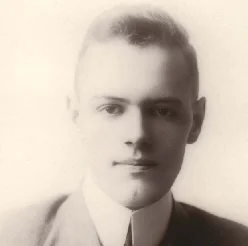
wikipedia.org
Earle Dickson
Birthday:
09 Oct, 1892
Date of Death:
21 Sep, 1961
Cause of death:
Unknown
Nationality:
American
Famous As:
Business Executive
Age at the time of death:
68
Earle Ensign Dickson's Quote's

“I just wanted to make something to help Josephine.”
Earle Ensign Dickson
🔗 deadcelebrityhub.com
Earle Dickson : Early Life
Earle Ensign Dickson (1892–1961) was an American inventor who is best known for developing the BAND-AID® adhesive bandage, a very simple yet clever product that revolutionized the process of healing minor cuts. Earle was born on October 10, 1892, in Grandview, Tennessee, to Richard Ensign Dickson and Minnie Augusta (Hester) Dickson. Earle's father was the president of the Grand View Normal Institute during Earle's childhood.
Education and Early Career
Dickson proceeded to further studies at Yale University before joining Johnson & Johnson as a cotton buyer. He married Josephine Knight in 1917. Josephine had the habit of cutting herself with minor burns and cuts while cooking at home in New Brunswick, New Jersey. It was not practical to treat such wounds with the manual use of adhesive tape and gauze, which previously did not stay in place on active fingers.
Invention of the BAND-AID®
Driven by the need to discover a more convenient solution method for his wife's frequent injuries, Dickson came up with an innovative solution in 1920. He placed tiny pieces of sterile gauze at regular intervals along a roll of surgical tape and topped them with crinoline fabric to keep them in a sterile state. This offered a system where Josephine could simply cut off a section and use it on her injuries by herself.
Commercial Production and Popularization
Seeing the potential of his invention, Dickson showed it to his employer, Johnson & Johnson. James Wood Johnson, the president of the company, was so impressed that he decided to commercially produce the product. In 1921, BAND-AID® adhesive bandages were produced by hand and put on the market. It took some time for the sales to build up, with little more than $3,000 worth being sold in the first year. In an effort to build usage and awareness, Johnson & Johnson gave away free BAND-AIDs® to Boy Scout troops and butchers, who often had minor cuts.
Mass Production and Advancements
By 1924, the company had developed machines to mass-produce the bandages, standardized to 3 inches long by ¾ inch wide and with a red pull string to facilitate easy opening. This shift to machine production reduced costs and enhanced availability, leading to a popularity boom. The familiar tin packaging was introduced in 1926, and this allowed consumers to reuse the tin containers for other domestic products.
Career Progression and Innovations
Dickson's work paid off, and he was made the vice president of the company in 1932, a role he played until his 1957 retirement. The BAND-AID® underwent numerous enhancements while he was in office, including the incorporation of sterilization in 1939 and plastic strips in 1958. Despite all these changes, the concepts of Dickson's original idea were relatively unchanged.
Legacy and Recognition
Earle Dickson died on September 21, 1961, in Kitchener, Canada. His innovation has left a lasting legacy, with billions of BAND-AID® adhesive bandages sold worldwide every year. For his valuable contribution to the healthcare industry, Dickson was posthumously honored with induction into the National Inventors Hall of Fame in 2017. Dickson's tale is a classic illustration of how a straightforward, functional solution to a personal issue can become an innovation that impacts millions of people across the globe. His passion for enhancing daily healthcare has made the BAND-AID® adhesive bandage a household name, illustrating the tremendous influence of solving everyday problems with creative thinking.
Profile Snapshot
Name:
Earle Ensign Dickson
Popular Name:
Earle Dickson
Gender:
Male
Cause of Death:
Unknown
Spouse:
Josephine Frances Knight
Place of Birth:
Grandview, Tennessee, USA
Place of Death:
New Brunswick, New Jersey, USA
Occupation / Profession:
Business Executive
Cotton Buyer
Inventor
Personality Type
Defender: Very dedicated and warm protectors, always ready to defend their loved ones. He was known for thoughtfulness, reliability, and a focus on helping those around them.
Earle Ensign Dickson's Interesting Facts
Dickson invented the Band-Aid because his wife frequently cut herself while cooking.
He hand-made the first Band-Aids using adhesive tape and gauze.
He never sought fame and lived a quiet life despite his invention’s success.
Johnson & Johnson initially gave Band-Aids away for free to boost popularity.
Achievements & Awards
Band-Aid sold over 100 billion units worldwide by the 21st century.
Invented the Band-Aid adhesive bandage in 1920.
Patented the Band-Aid (U.S. Patent No. 1,612,267) in 1924.
Recognized posthumously for contributions to first aid.
Rose to Vice President at Johnson & Johnson.
External Links
Latest Profiles
People also viewed
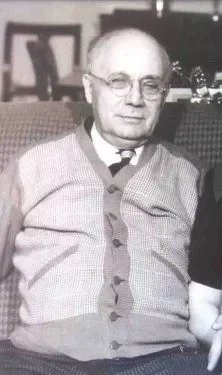
Otto Frederick Rohwedder
Born28 Jul, 1880
Died08 Nov, 1960
NationalityAmerican
Age at time of death80
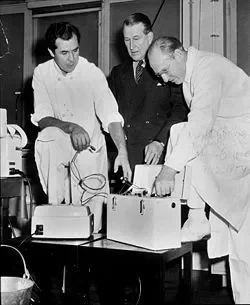
Rune Elmqvist
Born01 Dec, 1906
Died15 Dec, 1996
NationalitySwedish
Age at time of death90
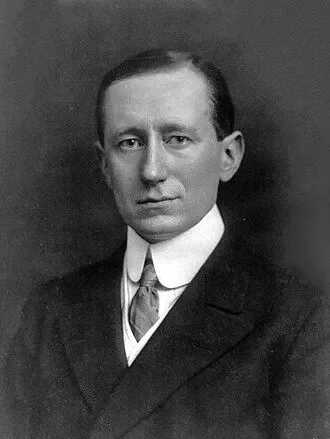
Guglielmo Marconi
Born25 Apr, 1874
Died20 Jul, 1937
NationalityItalian
Age at time of death63
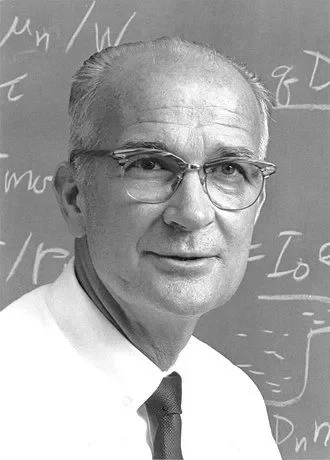
William Shockley
Born13 Feb, 1910
Died12 Aug, 1989
NationalityAmerican
Age at time of death79
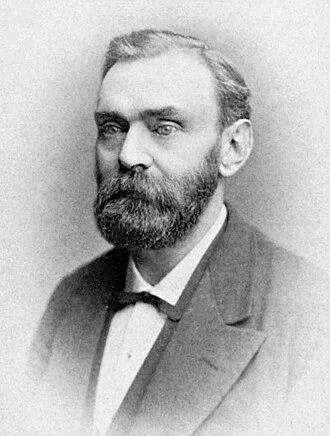
Alfred Nobel
Born21 Oct, 1833
Died10 Dec, 1896
NationalitySwedish
Age at time of death63
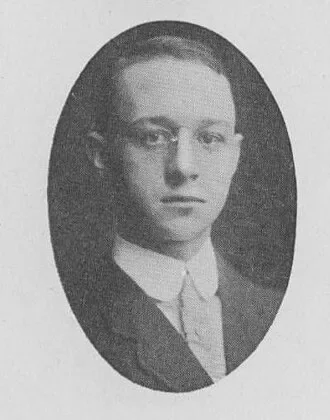
Clarence Birdseye
Born09 Dec, 1886
Died07 Oct, 1956
NationalityAmerican
Age at time of death69
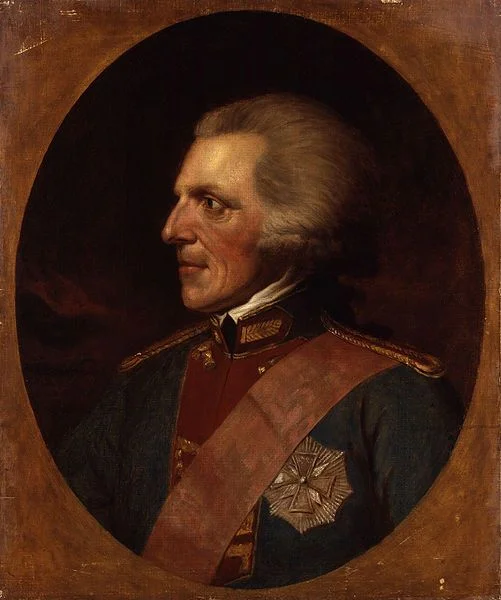
Colonel Sir Benjamin Thompson, Count Rumford
Born26 Mar, 1753
Died21 Aug, 1814
NationalityAmerican, British
Age at time of death61
Thomas Newcomen
Born28 Feb, 1664
Died05 Aug, 1729
NationalityEnglish
Age at time of death65
Joseph Pilates
Born09 Dec, 1883
Died09 Oct, 1967
NationalityGerman
Age at time of death83
Jack Welch
Born19 Nov, 1935
Died01 Mar, 2020
NationalityAmerican
Age at time of death84
Nils Bohlin
Born17 Jul, 1920
Died26 Sep, 2002
NationalitySwedish
Age at time of death82
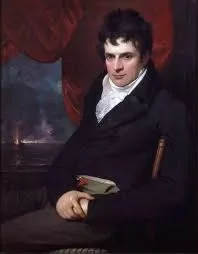
Robert Fulton
Born14 Nov, 1765
Died24 Feb, 1815
NationalityAmerican
Age at time of death49
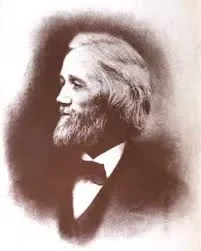
Christopher Latham Sholes
Born14 Feb, 1819
Died17 Feb, 1890
NationalityAmerican
Age at time of death71
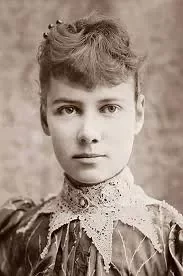
Nellie Bly
Born05 May, 1864
Died27 Jan, 1922
NationalityAmerican
Age at time of death57
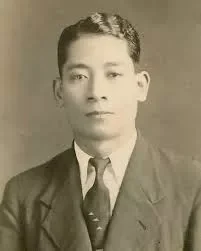
Momofuku Ando
Born05 Mar, 1910
Died05 Jan, 2007
Nationalityjapanese
Age at time of death96
Hedy Lamarr
Born09 Nov, 1914
Died19 Jan, 2000
NationalityAmerican
Age at time of death85
Alfred Carlton Gilbert
Born15 Feb, 1884
Died24 Jan, 1961
NationalityAmerican
Age at time of death76
Harriet Russell Strong
Born23 Jul, 1844
Died06 Sep, 1926
NationalityAmerican
Age at time of death82
Katharine Burr Blodgett
Born10 Jan, 1898
Died12 Oct, 1979
NationalityAmerican
Age at time of death81
Elijah McCoy
Born02 May, 1844
Died10 Oct, 1929
NationalityCanadian, American
Age at time of death85