Real Celebrities Never Die!
OR
Search For Past Celebrities Whose Birthday You Share
Died Age: 87
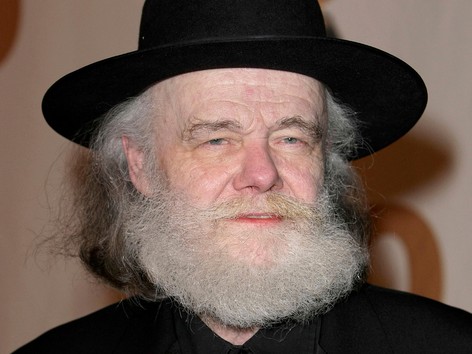
smartcdn.gprod.postmedia.digital
Garth Hudson
Birthday:
02 Aug, 1937
Date of Death:
21 Jan, 2025
Cause of death:
Declining health
Nationality:
Canadian
Famous As:
Composer
Age at the time of death:
87
Eric Garth Hudson CM's Quote's
“Silence is the space where music breathes”
Eric Garth Hudson CM
🔗 deadcelebrityhub.com
Early Life: Childhood Carved in Harmony
Garth Hudson was never the loudest member of the band, but he was, arguably, the most essential. With a beard like a sage and fingers that danced like poetry across the keys, he brought classical grandeur to rock and roll and helped shape the unmistakable soul of The Band. In a world of frontmen and flamboyance, Hudson was a genius in the background who transformed every note he touched into something transcendent.
Born Eric Garth Hudson on August 2, 1937, in Windsor, Ontario, music was less of a hobby in the Hudson household and more of a sacred calling. His father, a skilled musician and organist, and his mother, a pianist with a disciplined hand, turned their home into a living conservatory. Sundays echoed with hymns; evenings were filled with classical records and spirited debates about phrasing and tone.
But Garth wasn’t content just to play the notes, he wanted to understand their architecture. By age 10, he was dissecting Bach and improvising counterpoint. As a teenager, he built his own reel-to-reel tape machine just to better analyse harmonies and chord progressions. “He had the soul of an inventor and the ears of an angel,” a childhood friend once said.
Hudson was already playing professional gigs by the time he hit high school, sometimes sneaking into jazz clubs where he wasn’t technically old enough to be. He studied everything from Renaissance madrigals to bebop, forging a musical vocabulary that would later defy categorisation.
Education: A Classical Compass in a Rock ’n’ Roll World
After high school, Hudson pursued formal studies in music at the University of Western Ontario, immersing himself in theory, composition, and classical organ. Yet even in academia, his spirit resisted boundaries. Professors often noted his unconventional interpretations, once praising his organ arrangement of a Chopin prelude as “startlingly imaginative.”
He wasn’t chasing a diploma; he was chasing mastery.
Though he didn’t graduate in the traditional sense, his academic training made him a rare breed in the rock world: a classically trained virtuoso who could also improvise jazz licks and bend blues notes with gospel fervour. This eclecticism would become his signature.
Career: The Band Before The Band
Hudson’s early career began in the late 1950s, when he joined the Hawks, the backing band for rockabilly wild man Ronnie Hawkins. At first, he was reluctant to join what he saw as a "raucous" rock outfit, worried it might derail his classical ambitions. He negotiated his way in with a clever twist: he would join only if he could be paid extra as a “music consultant”, justifying the rock gig to his parents as educational work. It was a subtle sign of his eccentricity and quiet cunning.
Hudson’s addition to the Hawks was transformative. He brought a Lowrey organ to the stage (a departure from the Hammond norm), adding a haunting, church-like resonance to the group’s sound. This sonic distinction would become part of The Band’s DNA.
Ascension: The Band and the Magic of Sound
When the Hawks eventually broke free of Hawkins and rebranded themselves as The Band, Hudson became the group’s secret weapon. His playing was more than accompaniment; it was architecture. On Music from Big Pink (1968), his organ lines on “Chest Fever” became a kind of mystic overture which was neither rock nor classical, but something gloriously in-between.
Hudson's ability to fuse genres created moments that felt ancient and futuristic all at once. On songs like “The Night They Drove Old Dixie Down” and “I Shall Be Released,” his touches were delicate yet essential, his melodies curling around the vocals like ivy on old stone. Even Bob Dylan, famously guarded with his praise, once called Hudson “a genius.”
A fun fact of Hudson is that he often recorded in the dark, surrounded by candles, saying it helped him “hear more colours.” He also had a penchant for hiding microphones in odd places—inside pianos, under drums—to capture unique sounds others would miss.
Later Years: The Reclusive Innovator
As the years passed and The Band dissolved and reformed, Hudson remained a steadfast presence, though increasingly reclusive. He collaborated with artists ranging from Leonard Cohen to Neko Case, always bringing an air of quiet brilliance. He released solo work, including The Sea to the North (2001), a largely instrumental album that sounded like a musical map of his inner cosmos.
Despite his shyness and preference for shadows over the spotlight, Hudson occasionally appeared in interviews and documentaries, most notably Once Were Brothers (2019), where he was celebrated as the last surviving original member of The Band.
Personal Life: The Man Behind the Music
Garth Hudson has always been something of an enigma. Reserved off-stage, he often preferred the company of old books, vintage synthesisers, and his dogs to crowds or red carpets. He married his longtime partner Maud, a singer and collaborator, and the two lived a relatively quiet life immersed in art and sound. Friends describe him as a warm, wildly intelligent, and occasionally cryptic man who spoke through music more comfortably than through words.
A Lasting Legacy
To this day, musicians across genres cite Garth Hudson as a pivotal influence, not just for his technical prowess, but for his fearless genre-blending and textural sophistication. He didn’t just play notes; he painted with them.
In a world often obsessed with the visible and the loud, Hudson's story is a reminder of the quiet brilliance that powers revolutions. His fingerprints are all over the roots of Americana, rock, and folk, even if his name sometimes stayed in the credits rather than the headlines.
Garth Hudson is more than a keyboardist. He is the cathedral in The Band’s sound, the sonic alchemist who turned roots music into something mythic. And though he spoke softly, his music will echo for generations.
Profile Snapshot
Name:
Eric Garth Hudson CM
Popular Name:
Garth Hudson
Gender:
Male
Cause of Death:
Declining health
Spouse:
Maud Hudson
Place of Birth:
Windsor, Canada
Place of Death:
Woodstock, New York, United States
Occupation / Profession:
Composer
Multi-instrumentalist
Songwriter
Personality Type
Logistician Practical and fact-minded individuals, whose reliability cannot be doubted. A quiet genius who used music like a language, always searching for new ways to understand and shape the world through sound.
Eric Garth Hudson CM's Interesting Facts
Garth was the only member of the band with formal classical training, and he often wrote complex scores that baffled even seasoned musicians.
He was obsessed with vintage technology and kept an enormous collection of analogue keyboards, synthesisers, and reel-to-reel machines.
Hudson once helped design a custom organ console for a live tour, modifying it with hidden effects pedals and circuit tweaks that no one else fully understood.
Achievements & Awards
Garth Hudson was inducted into the Rock and Roll Hall of Fame in 1994 as a member of The Band, a testament to his profound influence on American music.
He also received multiple Juno nominations and was celebrated as one of the most innovative keyboardists in rock history.
He played a key role in crafting the sound of legendary albums like Music from Big Pink and The Band, which helped define the roots rock genre.
In 2002, he received the Canada South Blues Society Lifetime Achievement Award, honouring his contributions to music both in Canada and internationally.
Latest Profiles
People also viewed

Jimi Hendrix
Born27 Nov, 1942
Died18 Sep, 1970
NationalityAmerican
Age at time of death27

Irving Berlin
Born11 May, 1888
Died22 Sep, 1989
NationalityAmerican
Age at time of death101

George Harrison
Born25 Feb, 1943
Died29 Nov, 2001
NationalityBritish
Age at time of death58

Rabindranath Tagore
Born07 May, 1861
Died08 Aug, 1941
NationalityIndian
Age at time of death80

Olivia Newton-John
Born26 Sep, 1948
Died08 Aug, 2022
NationalityBritish, Australian
Age at time of death73

Jim Morrison
Born08 Dec, 1943
Died03 Jul, 1971
NationalityAmerican
Age at time of death27
Biz Markie
Born08 Apr, 1964
Died16 Jul, 2021
NationalityAmerican
Age at time of death57

Barry White
Born12 Sep, 1944
Died04 Jul, 2003
NationalityAmerican
Age at time of death58

Tina Turner
Born26 Nov, 1939
Died24 May, 2023
NationalityAfrican, American
Age at time of death83
Adam Yauch
Born05 Aug, 1964
Died04 May, 2012
NationalityAmerican
Age at time of death47

Nina Simone
Born21 Feb, 1933
Died21 Apr, 2003
NationalityAmerican
Age at time of death70

Tammi Terrell
Born29 Apr, 1945
Died16 Mar, 1970
NationalityAmerican
Age at time of death24

DMX
Born18 Dec, 1970
Died09 Apr, 2021
NationalityAmerican
Age at time of death50

Patsy Cline
Born08 Sep, 1932
Died05 Mar, 1963
NationalityAmerican
Age at time of death30

Keith Martin
Born22 Sep, 1966
Died25 Mar, 2022
NationalityAmerican
Age at time of death55

Waylon Jennings
Born15 Jun, 1937
Died13 Feb, 2002
NationalityAmerican
Age at time of death64

Chuck Berry
Born18 Oct, 1926
Died18 Mar, 2017
NationalityAmerican
Age at time of death90

Buddy Holly
Born07 Sep, 1936
Died03 Feb, 1959
NationalityAmerican
Age at time of death22

Bon Scott
Born09 Jul, 1946
Died19 Feb, 1980
NationalityAustralian
Age at time of death33
Syd Barrett
Born06 Jan, 1946
Died07 Jul, 2006
NationalityEnglish
Age at time of death60