Real Celebrities Never Die!
OR
Search For Past Celebrities Whose Birthday You Share
Died Age: 95
:max_bytes(150000):strip_icc():focal(669x349:671x351):format(webp)/gene-hackman-portrait-022725-1-a40ebde6f61848abb6d71d9e31e62966.jpg)
people.com
Gene Hackman
Birthday:
30 Jan, 1930
Date of Death:
18 Feb, 2025
Cause of death:
Heart disease
Nationality:
American
Famous As:
Actor
Age at the time of death:
95
Eugene Allen Hackman 's Quote's
“I don’t see myself as a brand. I see myself as an actor.”
Eugene Allen Hackman
🔗 deadcelebrityhub.com
Early Life: A Childhood Marked by Restlessness and Resolve
Gene Hackman never set out to be a star. In fact, for most of his early life, the odds seemed stacked against him. And yet, against those odds, Hackman became one of the most compelling and enduring actors of his generation. He wasn’t the handsome heartthrob or the charming leading man. He was something rarer: a truth-teller on screen, someone who brought an unflinching humanity to every role he touched. In a career spanning over four decades and more than 80 films, Hackman earned two Academy Awards, countless accolades, and the respect of an industry that doesn’t give it easily.
Eugene Allen Hackman was born on January 30, 1930, in San Bernardino, California, but his early years were anything but sunny. His father, a pressman for a local newspaper, walked out on the family when Gene was just a boy, an abandonment that left a deep imprint on him. His mother, a waitress, struggled to raise Gene and his brother, and the family eventually moved to Danville, Illinois. There, in a small Midwestern town, Hackman grew up in modest circumstances, a world away from the bright lights of Hollywood.
Hackman was not an ideal student. He was restless, often in trouble, and eager to escape the confines of a small-town life. At 16, he lied about his age to enlist in the U.S. Marine Corps. It was a bold move, one driven more by desperation than patriotism, but it offered the structure and distance he craved. During his time in the Marines, he served as a radio operator stationed in China, Japan, and Hawaii. This global journey planted the seeds of a lifelong curiosity and discipline.
An Unconventional Education: From Marines to Method Acting
When he returned from military service, Hackman dabbled in journalism and television production, eventually enrolling at the University of Illinois under the G.I. Bill. But school didn’t stick. Acting, however, did. Drawn to the stage, Hackman made his way to New York City and applied to the Pasadena Playhouse, a respected but staid acting school in California.
It was there that Hackman met another struggling actor: Dustin Hoffman. The two were infamously voted “least likely to succeed” by their peers. The irony, of course, is legendary. Both went on to become icons.
Hackman later studied at the famed Actors Studio under the tutelage of Lee Strasberg, where he immersed himself in method acting. These early years were marked by odd jobs—doorman, furniture mover, truck driver—and unshakable perseverance. He was already in his 30s when his first roles began to trickle in, a late bloomer in a youth-obsessed industry.
Career Journey
Climbing the Ranks
Hackman’s breakout role came in 1967 as Buck Barrow in Bonnie and Clyde. His portrayal of Clyde’s older brother (simultaneously brutal and broken) earned him an Oscar nomination and industry attention. Suddenly, the man once dismissed as too ordinary, too rough around the edges, was impossible to ignore.
But it was The French Connection (1971) that turned Hackman into a star. As Popeye Doyle, a tough, racist New York City cop obsessed with nailing a heroin smuggling ring, Hackman was raw, explosive, and utterly real. The role won him his first Academy Award for Best Actor and defined a new archetype in American film: the flawed, morally ambiguous antihero.
Throughout the '70s and '80s, Hackman became a fixture in serious, character-driven films. From The Conversation (1974), where he played a surveillance expert unravelling under paranoia, to Superman (1978), where he brought unexpected charisma to the villainous Lex Luthor, he showcased remarkable range. Whether a detective, a criminal, a military officer, or a suburban father, Hackman brought gravity to every role.
He won his second Oscar in 1993 for Unforgiven, Clint Eastwood’s revisionist western. As Little Bill Daggett, a brutal sheriff hiding behind a badge and a smile, Hackman was both terrifying and tragic; He was a villain who thought he was the hero. It was one of his finest performances, and it capped off a phase of career triumphs that few actors ever achieve.
Later Years and an Unexpected Exit
In the 2000s, Hackman began to slow down, though his performances never lost their edge. He charmed audiences in The Royal Tenenbaums (2001), delivering a career-defining performance as the dysfunctional family’s patriarch, Royal. It was a role both poignant and hilarious, a testament to his comedic timing and emotional depth.
Then, in 2004, Hackman quietly walked away from acting. No grand farewell tour, no Oscar-bait swan song, just a quiet exit. When asked why, he simply said he was tired. After nearly 50 years in the business, he had said what he needed to say.
Instead of acting, Hackman turned to writing. He co-authored several historical and crime novels, finding a new outlet for storytelling. True to form, he didn’t chase the spotlight.
Personal Life: A Private Man with a Quiet Life
Off-screen, Hackman was notoriously private. He married Fay Maltese in 1956, with whom he had three children, before divorcing in 1986. In 1991, he married pianist Betsy Arakawa. The couple settled in Santa Fe, New Mexico, far from the paparazzi glare.
He is a man of contradictions: intensely private but deeply expressive in his work, rugged but introspective, intense but never theatrical. Hackman loved cycling, painting, and the peace of the Southwest. He rarely gave interviews, preferring to let his work speak for itself.
Legacy: The Everyman Who Became a Giant
Gene Hackman is remembered not for a singular role or style but for a career defined by authenticity. He played men we recognised as flawed, complex, sometimes cruel, often courageous. He never seemed like he was performing; he seemed like he was. That ability to vanish into a character, to make you believe, made him one of the greatest actors of his time.
Hackman didn’t seek fame, and he didn’t chase awards. But he earned both, along with the admiration of generations of actors and filmmakers. His legacy is one of integrity, depth, and an unwavering commitment to the truth of the story.
In an industry that often rewards gloss over grit, Hackman stood apart. He didn’t shine like a star. He burned like a flame unforgetably.
Profile Snapshot
Name:
Eugene Allen Hackman
Popular Name:
Gene Hackman
Gender:
Male
Cause of Death:
Heart disease
Spouse:
Betsy Arakawa
Faye Maltese
Place of Birth:
San Bernardino, California, United States
Place of Death:
Santa Fe, New Mexico, United States
Occupation / Profession:
Actor
Personality Type
Architect Imaginative and strategic thinkers, with a plan for everything. A quiet, determined thinker who always had a plan and never stopped until he mastered his craft.
Eugene Allen Hackman 's Interesting Facts
Despite his commanding presence, Hackman has said he used to suffer from extreme stage fright early in his career.
Gene Hackman retired from acting in 2004 and became a novelist, co-authoring several historical and crime thrillers.
He once worked as a furniture mover and doorman in New York while pursuing acting.
Achievements & Awards
Gene Hackman won two Academy Awards—Best Actor for The French Connection (1971) and Best Supporting Actor for Unforgiven (1992).
Hackman’s versatility, intensity, and authenticity cemented his status as one of cinema’s most respected actors.
He also received four additional Oscar nominations and won four Golden Globes, a BAFTA, and a Screen Actors Guild Award.
Over a career spanning five decades, he starred in over 80 films, including The Conversation, Mississippi Burning, Hoosiers, and The Royal Tenenbaums.
External Links
Latest Profiles
People also viewed

James Dean
Born08 Feb, 1931
Died30 Sep, 1955
NationalityAmerican
Age at time of death24

Burt Reynolds
Born11 Feb, 1936
Died06 Sep, 2018
NationalityAmerican
Age at time of death82

Oliver Burgess Meredith
Born16 Nov, 1907
Died09 Sep, 1997
NationalityAmerican
Age at time of death89
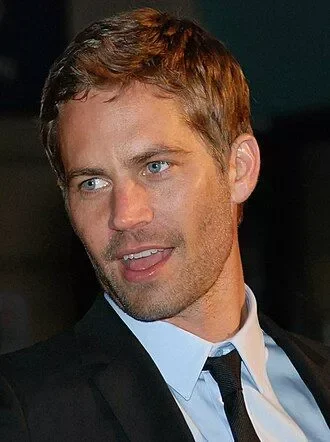
Paul Walker
Born12 Sep, 1973
Died30 Nov, 2013
NationalityAmerican
Age at time of death40

Jonathan Brandis
Born13 Apr, 1976
Died12 Nov, 2003
NationalityAmerican
Age at time of death27

Anton Yelchin
Born11 Mar, 1989
Died19 Jun, 2016
NationalityAmerican
Age at time of death27

Chester Bennington
Born20 Mar, 1976
Died20 Jul, 2017
NationalityAmerican
Age at time of death41

Peter Fonda
Born23 Feb, 1940
Died16 Aug, 2019
NationalityAmerican
Age at time of death79
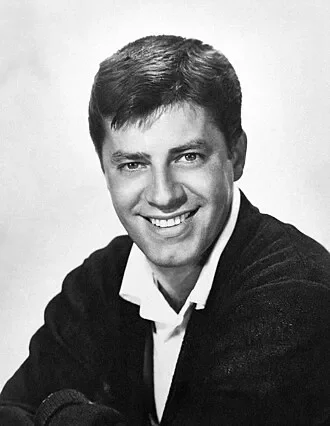
Jerry Lewis
Born16 Mar, 1926
Died20 Aug, 2017
NationalityAmerican
Age at time of death91
Marlon Brando
Born03 Apr, 1924
Died01 Jul, 2004
NationalityAmerican
Age at time of death80

James Stewart
Born20 May, 1908
Died02 Jul, 1997
NationalityAmerican
Age at time of death89

Cory Monteith
Born11 May, 1982
Died13 Jul, 2013
NationalityCanadian
Age at time of death31

Christopher Lee
Born27 May, 1922
Died07 Jun, 2015
NationalityBritish
Age at time of death93
Paul Mooney
Born04 Aug, 1941
Died19 May, 2021
NationalityAmerican
Age at time of death79

George Murphy
Born04 Jul, 1902
Died03 May, 1992
NationalityAmerican
Age at time of death89

Fred Ward
Born30 Dec, 1942
Died08 May, 2022
NationalityAmerican
Age at time of death79

Frank Sinatra
Born12 Dec, 1915
Died14 May, 1998
NationalityAmerican
Age at time of death82

Eric Morecambe
Born14 May, 1926
Died28 May, 1984
NationalityBritish
Age at time of death58
DMX
Born18 Dec, 1970
Died09 Apr, 2021
NationalityAmerican
Age at time of death50

Alfred Hitchcock
Born13 Aug, 1899
Died29 Apr, 1980
NationalityAmerican, British
Age at time of death80