Real Celebrities Never Die!
OR
Search For Past Celebrities Whose Birthday You Share
Died Age: 94
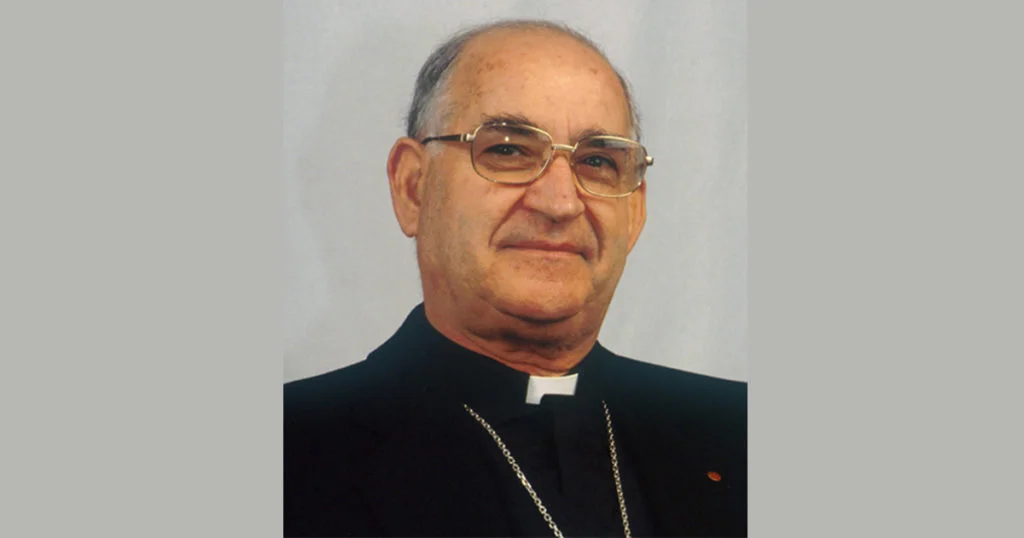
www.clessidra2021.it
Giuseppe Malandrino
Birthday:
11 Jul, 1931
Date of Death:
02 Aug, 2025
Cause of death:
Natural Causes
Nationality:
Italian
Famous As:
Italian Roman Catholic prelate
Age at the time of death:
94
Giuseppe Malandrino's Quote's

“The heart of the Church is the community of people who take responsibility for one another.”
Giuseppe Malandrino
🔗 deadcelebrityhub.com
Early Life: Humble Beginnings in Sicily
Giuseppe Malandrino was a devoted shepherd of his flock—a bishop whose life quietly blended humility, pastoral zeal, and intellectual depth. Though his name might not be known beyond his dioceses, his impact resonated deeply: through his love of Scripture, his commitment to social justice, and his unwavering care for ordinary people.
Giuseppe was born in the summer of 1931 in a small town in Sicily. Growing up in a place shaped by age-old traditions and sun-baked streets, he absorbed a sense of rootedness in both faith and community. His early years weren’t marked by privilege, but by curiosity—a young boy who watched life around him with sensitive eyes, quietly absorbing the rhythms of his town, its people, and its sacred practices.
As he matured, Giuseppe felt a calling—a deep, persistent nudge toward religious service. That call led him away from his hometown to Rome, where he underwent formal training for the priesthood, driven by a desire not just to understand theology, but to live it in the service of others.
Education: Formation in Faith and Word
In Rome, Giuseppe immersed himself in theological study, preparing for a life ordained to God and to people. He honed his mind in seminaries, refined his devotion in prayer, and shaped his heart in compassion. This period of formation laid the groundwork for his ministry—a ministry centered not on power, but on listening, teaching, and building bridges.
Early Career: Priesthood and Service
Returning to Sicily as a young priest, Giuseppe carried with him a gentle dedication. He served in parishes, cared for his community, and began to cultivate a reputation for being approachable and deeply faithful. He believed that the Church was not a distant institution, but a living family—and he lived that conviction every day, meeting people where they were: in their homes, in their struggles, in their joys.
Major Achievements: Bishop, Builder, and Pastor
In 1979, Giuseppe was appointed bishop of a diocese where he would serve for nearly two decades. As bishop, he showed remarkable pastoral imagination. He prioritized listening to his people—and not just through sermons, but through presence. He visited factories, met with workers, and entered the daily lives of his flock understanding that ministry meant solidarity.
He chose “Dei Verbum audiens” (“Listening to the Word of God”) as his episcopal motto, not as a slogan, but as a way of being: attentive to Scripture, attentive to his people, and attentive to the whisperings of grace in the world. That guiding principle shaped both his leadership and his pastoral letters, through which he encouraged catechesis, conversion, and communion.
Among his achievements was the founding of a central diocesan library—reflecting his belief in learning and reflection even in the local church.
Later, he was called to lead another diocese. There, even with limited resources, he focused on renewal. In his tenure, he championed a “permanent mission” for his community, inspired by a desire for ongoing spiritual engagement, not a one-off revival. He worked toward the social dimension of faith, caring deeply for the dignity of workers, the poor, and the marginalized.
He also strengthened the ties between his diocese and the wider world, promoting solidarity missions and cultural exchange with communities beyond Italy’s shores.
Later Life: Retirement and Reflection
When he retired, he didn’t simply disappear. He remained a spiritual anchor, continuing to speak, write, and mentor. He stayed close to the people he served, witnessing to simplicity, prayer, and love. In later years, he lived in a dedicated community, spending his days in quiet prayer, reading, and being a dignified presence to other clergy and faithful.
Personal Life: Humility and Heart
Even as a bishop, Giuseppe carried no airs. He was known for his humility, his ease in conversation, and his love for his home land. He loved the rural landscapes of his youth, the church bells at dawn, and the quiet strength of his people.
Though a public figure, he kept his private life modest, bringing to his ministry a genuine care for the vulnerable and a warm presence for everyone, regardless of status.
Legacy: A Pastor of the Word and a Servant of the People
Giuseppe Malandrino’s legacy is not written in headlines or flashy pronouncements, but in the lives he touched. He embodied a model of servant leadership — rooted in Scripture, animated by compassion, and focused on building community.
His commitment to “listening to the Word” became more than a motto—it was a way of being. He inspired priests, laypeople, and ordinary faithful to see ministry not as prestige, but as humble service.
Giuseppe Malandrino will be remembered as a wise shepherd, a lover of the Word, and a humble architect of community—a bishop whose quiet strength left a powerful imprint on the hearts of those he served.
Profile Snapshot
Name:
Giuseppe Malandrino
Popular Name:
Giuseppe Malandrino
Gender:
Male
Cause of Death:
Natural Causes
Spouse:
Place of Birth:
Pachino, Italy
Place of Death:
Aci Sant'Antonio, Italy
Occupation / Profession:
Italian Roman Catholic prelate
Personality Type
Defender: Giuseppe Malandrino appeared to be a compassionate, humble and visionary spiritual leader — an empathetic shepherd committed to nurturing community, faith and culture through decades of devoted service and thoughtful care.
Giuseppe Malandrino's Interesting Facts
Giuseppe Malandrino was ordained a priest on 19 March 1955.
He was appointed Bishop of Acireale by Pope John Paul II in November 1979 and consecrated in January 1980.
In 1987, he founded the Central Diocesan Library in Acireale by merging several smaller libraries.
As Bishop of Noto from 1998 to 2007, he personally oversaw the restoration of the city’s cathedral.
Achievements & Awards
Giuseppe Malandrino did not receive formal achievement awards.
His notable accomplishments include serving as Bishop of Acireale from 1979 to 1998 and as Bishop of Noto from 1998 to 2007.
He also founded the Central Diocesan Library in Acireale and was active in social‑justice initiatives within the Italian episcopal community.
External Links