Real Celebrities Never Die!
OR
Search For Past Celebrities Whose Birthday You Share
Died Age: 87
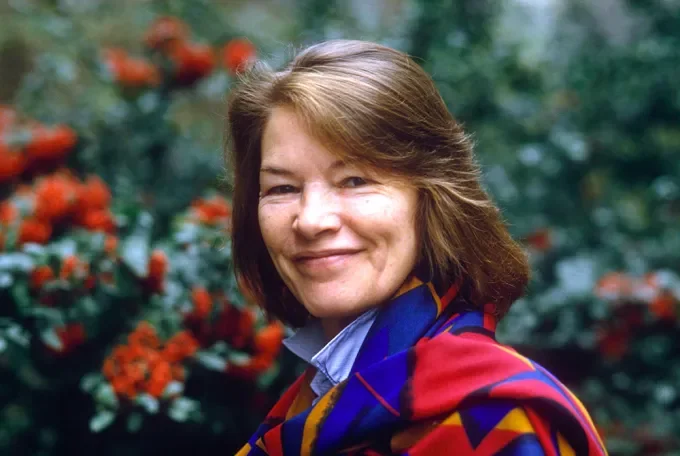
hollywoodlife.com
Glenda Jackson
Birthday:
09 May, 1936
Date of Death:
15 Jun, 2023
Cause of death:
Brief Illness
Nationality:
English
Famous As:
Actress
Age at the time of death:
87
Glenda May Jackson's Quote's

“You don’t have to be born to privilege to make a difference—you just have to refuse to be silenced.”
Glenda May Jackson
🔗 deadcelebrityhub.com
Early Life: A Working-Class Fire Ignites
Glenda Jackson was never one to follow the script others wrote for her. Whether commanding the screen with fierce intelligence or standing on the floor of Parliament with righteous conviction, she lived her life fearlessly and fiercely principled. Her journey wasn’t just about acting or politics; it was about truth, grit, and the uncompromising belief that art and action could shape the world. She didn’t just play roles—she inhabited them, whether as Queen Elizabeth I or as a Member of Parliament fighting for the vulnerable. To understand Glenda Jackson is to witness a life driven by purpose and radical authenticity.
Born on May 9, 1936, in Birkenhead, Cheshire (now part of Merseyside), Glenda May Jackson grew up in a working-class family that valued hard work and endurance. Her father was a bricklayer, her mother worked in shops and as a domestic cleaner. The family didn’t have much, but they had grit, and that gritty realism would become a hallmark of her acting.
Jackson’s early environment was not filled with glamour, but with resilience. She wasn’t drawn to acting through starry-eyed dreams but rather through sheer practicality and purpose. She once quipped that acting “was the only thing I could do,” a typically no-nonsense statement from a woman who never sought the spotlight—it found her.
After leaving school at 16, Jackson took a job at a Boots pharmacy while joining a local amateur dramatics group in her spare time. It was there that a drama teacher spotted her talent and encouraged her to apply to the Royal Academy of Dramatic Art (RADA). She auditioned and got in. It was the first of many turning points in a life shaped by instinct and integrity.
Education: Training the Flame
At RADA, Glenda Jackson didn't quite fit the mould of the traditional leading lady. She was intense, cerebral, and uncompromising. But those very qualities made her stand out. Her time at the academy wasn’t without friction, as she later described her RADA experience as “terrifying” and “rigid”, yet it gave her the discipline and technical foundation to harness her natural ferocity.
She wasn’t interested in superficial charm. She was building something more profound: a craft that could unearth both emotional truth and societal hypocrisy.
Career Journey: From Stage Royalty to Political Rebel
Early Career: A Star is Carved, Not Born
Jackson’s professional career began in the late 1950s, with early stints at the Liverpool Playhouse and later with the Royal Shakespeare Company. But it was in Peter Brook’s groundbreaking 1964 production of Marat/Sade that she truly broke through. Her portrayal of Charlotte Corday was very intellectual, passionate, and seething with intensity. The performance carried over to Broadway and then to film, earning her critical acclaim.
Her face—angular, expressive, impossible to ignore—defied Hollywood norms, and directors loved her for it. She didn’t play pretty; she played powerful.
Significant Achievements: Queen of the Screen
The 1970s were Jackson’s cinematic golden years. She won two Academy Awards for Best Actress: first for Women in Love (1970), directed by Ken Russell and based on D.H. Lawrence’s novel, where she delivered a raw and fearless performance; then for A Touch of Class (1973), a romantic comedy that revealed her surprising versatility.
Throughout the decade, she took on fiercely intelligent roles in Sunday Bloody Sunday, The Music Lovers, and Hedda. She turned down roles that didn’t challenge her, famously rejecting parts she found too conventional or decorative.
Fun fact: Jackson remains one of the few actresses to win an Oscar for a romantic comedy and for a deeply dramatic role, which testifies to her unparalleled range.
A Radical Turn: From Screen to Parliament
In 1992, at the peak of her acting career, Glenda Jackson made an audacious pivot—she left acting to enter politics. Elected as a Labour MP for Hampstead and Highgate, she brought her same no-nonsense resolve to Westminster. She served for over two decades, becoming a passionate advocate for social justice, public housing, and gender equality.
Jackson was never a backbencher in spirit, even when she sat on the backbenches. She fiercely opposed Tony Blair’s decision to go to war in Iraq, delivered blistering speeches against austerity, and fought relentlessly for the underprivileged.
Once asked why she left acting at the height of her fame, she replied: “I had to do something. I could no longer stand on stage and ignore what was happening in the country.”
Later Career: A Triumphant Return
After retiring from politics in 2015, many assumed she had left public life behind. But Jackson had one more act. In 2016, she returned to the stage at age 80, stunning audiences with a tour-de-force performance as King Lear at the Old Vic—gender-blind, ageless, and utterly commanding.
She won a BAFTA in 2020 for her role in Elizabeth Is Missing, playing a woman struggling with dementia. The performance was poignant, tender, and unflinchingly honest—everything Glenda Jackson always was.
Personal Life: A Private Flame
Glenda Jackson kept her personal life fiercely private. She married stage manager Roy Hodges in 1958 and had one son, Dan Hodges, a journalist and political commentator. The couple divorced in 1976. She never remarried and preferred a life of solitude and independence.
Despite her fame, she shied away from celebrity culture. She never owned a car, rarely gave interviews, and was known for taking the bus even while serving in Parliament. Fame never defined her—purpose did.
A vegetarian for much of her life, she also disliked small talk and once described parties as “torture.” She read voraciously, lived simply, and worked relentlessly.
Legacy: The Power of Unapologetic Truth
Glenda Jackson died on June 15, 2023, at the age of 87, leaving behind a legacy that defies easy categorisation. She wasn’t just an actress, or a politician, or a cultural icon; she was the whole package, and more. Her life was a testament to the power of conviction, the courage to change course, and the belief that art and activism are not mutually exclusive but deeply intertwined.
She is remembered not only for her fierce performances and bold political stands, but also for the way she lived: with integrity, intelligence, and an unflinching sense of justice.
Glenda Jackson didn’t just play queens but lived like one: proud, fearless, and utterly uncompromising.
Profile Snapshot
Name:
Glenda May Jackson
Popular Name:
Glenda Jackson
Gender:
Female
Cause of Death:
Brief Illness
Spouse:
Roy Hodges
Place of Birth:
Birkenhead, United Kingdom
Place of Death:
Blackheath, London, United Kingdom
Occupation / Profession:
Actress
Politician
Personality Type
Architect Imaginative and strategic thinkers, with a plan for everything. A fiercely intelligent and determined woman who always did things her way, never for attention but always for purpose.
Glenda May Jackson's Interesting Facts
Despite her fame, she never watched her films and considered acting a job, not a source of vanity.
During her time as an MP, she commuted to Parliament on public buses and was often seen reading dense political reports with no aides in sight.
Glenda Jackson famously refused a CBE (Commander of the Order of the British Empire), saying she didn’t believe in accepting titles.
Achievements & Awards
Glenda Jackson won two Academy Awards for Best Actress—for Women in Love (1970) and A Touch of Class (1973), making her one of the few to win Oscars in both drama and comedy.
Her return to acting after a 23-year political career culminated in a celebrated performance as King Lear, praised as one of the great Shakespearean interpretations of modern times.
In politics, she served as a Labour MP for over two decades, earning respect for her fierce advocacy on social justice, housing, and opposition to the Iraq War.
She earned a BAFTA, two Emmys, and a Tony nomination, showcasing her rare dominance across stage, screen, and television.
External Links
Latest Profiles
People also viewed
Sally Ann Howes
Born20 Jul, 1930
Died19 Dec, 2021
NationalityBritish, American
Age at time of death91
Olivia de Havilland
Born01 Jul, 1916
Died26 Jul, 2020
NationalityBritish, American
Age at time of death104
Jane Birkin
Born14 Dec, 1946
Died16 Jul, 2023
NationalityBritish, French
Age at time of death76
Lupe Vélez
Born18 Jul, 1908
Died14 Dec, 1944
NationalityMexican
Age at time of death36
Gerald Ford
Born14 Jul, 1913
Died26 Dec, 2006
NationalityAmerican
Age at time of death93
Vera-Ellen
Born16 Feb, 1921
Died30 Aug, 1981
NationalityAmerican German
Age at time of death60
Phyllis Diller
Born17 Jul, 1917
Died20 Aug, 2012
NationalityAmerican
Age at time of death95
Olivia Newton-John
Born26 Sep, 1948
Died08 Aug, 2022
NationalityBritish, Australian
Age at time of death73
Mary Martin
Born01 Dec, 1913
Died03 Nov, 1990
NationalityAmerican
Age at time of death76
Victor Hugo
Born26 Feb, 1802
Died22 May, 1885
NationalityFrench
Age at time of death83
Tina Turner
Born26 Nov, 1939
Died24 May, 2023
NationalityAfrican, American
Age at time of death83

Tawny Kitaen
Born05 Aug, 1961
Died07 May, 2021
NationalityAmerican
Age at time of death59
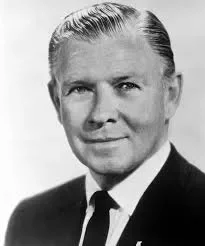
George Murphy
Born04 Jul, 1902
Died03 May, 1992
NationalityAmerican
Age at time of death89
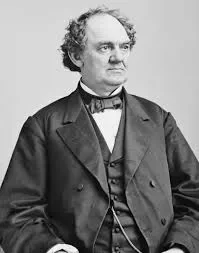
P. T. Barnum
Born05 Jul, 1810
Died07 Apr, 1891
NationalityAmerican
Age at time of death80
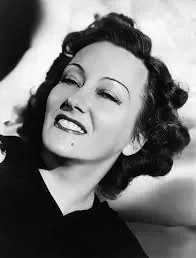
Gloria Swanson
Born27 Mar, 1899
Died04 Apr, 1983
NationalityAmerican
Age at time of death84
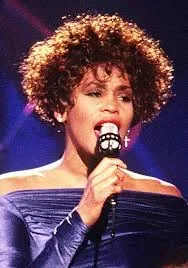
Whitney Houston
Born09 Aug, 1963
Died11 Feb, 2012
NationalityAmerican
Age at time of death48
Rajendra Prasad
Born03 Dec, 1884
Died28 Feb, 1963
NationalityIndian
Age at time of death78
Caroline Flack
Born09 Nov, 1979
Died15 Feb, 2020
NationalityBritish
Age at time of death40
Nelson Rockefeller
Born08 Jul, 1908
Died26 Jan, 1979
NationalityAmerican
Age at time of death70
Hedy Lamarr
Born09 Nov, 1914
Died19 Jan, 2000
NationalityAmerican
Age at time of death85