Real Celebrities Never Die!
OR
Search For Past Celebrities Whose Birthday You Share
Died Age: 84
www.britannica.com
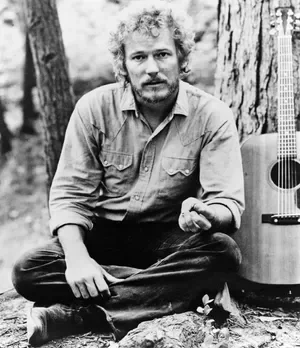
Gordon Lightfoot
Birthday:
16 Nov, 1938
Date of Death:
30 Apr, 2023
Cause of death:
Natural Causes
Nationality:
Canadian
Famous As:
Canadian singer-songwriter
Age at the time of death:
84
Gordon Meredith Lightfoot Jr's Quote's

“If you could read my mind, love, what a tale my thoughts could tell.”
Gordon Meredith Lightfoot Jr
🔗 deadcelebrityhub.com
Early Life: A Choirboy from Ontario
Gordon Lightfoot was the quiet giant of Canadian music—a songwriter whose melodies moved like rivers and whose words carried the weight of love, loss, history, and time itself. With a voice as steady as a heartbeat and a pen that captured both the intimate and the epic, he became one of the most respected and enduring troubadours in modern folk and popular music.
Gordon Meredith Lightfoot Jr. was born in 1938 in Orillia, Ontario, a small town nestled between lakes and pine trees. His childhood was shaped by the natural world—water, wind, and solitude—and by the steady encouragement of his mother, who recognized his musical gift early.
As a boy, he sang in church choirs and on local radio, absorbing hymns and folk songs that would later echo through his own compositions. Tall and shy, Lightfoot was not a natural showman. Instead, he listened more than he spoke, quietly gathering stories, moods, and landscapes that would one day form the backbone of his songwriting.
Education: Finding His Voice in the City
After high school, Lightfoot moved to Toronto to study at music college, where he trained in composition and jazz. Later, he traveled to California to study orchestration, soaking in the energy of the folk revival that was sweeping North America.
These years refined his craft. He learned discipline, arrangement, and musical storytelling—but most importantly, he learned that simplicity, when done right, could be more powerful than complexity.
Early Career: The Road That Shaped Him
Lightfoot returned to Canada in the early 1960s and began performing in coffeehouses and clubs, building a reputation as a serious songwriter with uncommon emotional depth. His earliest recordings showed promise, but success came slowly.
A breakthrough arrived when prominent artists began covering his songs. Suddenly, his work was everywhere—performed by voices across the folk and country worlds. Even before he was famous, his songwriting already was.
Major Achievements: Songs That Became anthems
By the late 1960s and 1970s, Gordon Lightfoot had become an international star. Songs like If You Could Read My Mind, Sundown, Carefree Highway, and Rainy Day People climbed the charts while retaining their poetic soul. He proved that introspection could survive inside popular music.
Then came the song that would define a legacy beyond the charts: The Wreck of the Edmund Fitzgerald. With haunting clarity, Lightfoot turned a real maritime disaster into modern folk mythology. The song didn’t just tell a story—it preserved one, ensuring the lost sailors would never fade from memory.
Unlike many of his contemporaries, Lightfoot avoided spectacle. No flashy reinventions. No dramatic scandals. Just album after album of carefully crafted songs, built on melody, restraint, and emotional truth.
Later Career: The Long, Steady Song
As decades passed, Lightfoot continued to write and tour relentlessly. Even as popular trends shifted, his audiences remained loyal. Younger listeners discovered him not through radio hits, but through parents, vinyl records, and quiet late-night listening sessions.
Health challenges later in life nearly silenced him, but he returned to the stage with visible determination. His voice changed—rougher, more fragile—but the songs only grew deeper with time.
Personal Life: Private, Complex, Human
Behind the music, Lightfoot lived a complicated human life. He married more than once, wrestled with personal struggles, and experienced the emotional costs of a life spent on the road. Yet those hardships fed directly into his greatest strength: his honesty as a songwriter.
Friends described him as reserved, courteous, and intensely focused on his work. Fame never altered his essential temperament—he remained, at heart, the quiet boy from Orillia with a guitar and a story to tell.
Legacy: Canada’s Voice to the World
Gordon Lightfoot’s legacy is woven into the cultural fabric of Canada and far beyond it. He showed the world that Canadian stories, landscapes, and emotions belonged on the global stage. His influence stretches across folk, country, rock, and pop, touching artists from intimate singer-songwriters to arena legends.
He left behind a catalog that feels timeless—songs that don’t age, but deepen. His music continues to comfort, haunt, and guide listeners through heartbreak, reflection, and quiet joy.
Gordon Lightfoot is remembered as a master storyteller, a poet of melody, and a national treasure whose songs will continue to travel the long highways of memory and meaning for generations to come.
Profile Snapshot
Name:
Gordon Meredith Lightfoot Jr
Popular Name:
Gordon Lightfoot
Gender:
Male
Cause of Death:
Natural Causes
Spouse:
Brita Ingegerd Olaisson
Elizabeth Moon
Kim Hasse
Place of Birth:
Orillia, Ontario, Canada
Place of Death:
Toronto, Ontario, Canada
Occupation / Profession:
Canadian singer-songwriter
Personality Type
Consul: Gordon Lightfoot seems to be a reflective, empathetic, and deeply introspective artist — a sensitive storyteller whose music channels emotion, idealism, and human insight with authenticity and enduring artistic vision.
Gordon Meredith Lightfoot Jr's Interesting Facts
Gordon Lightfoot’s song “If You Could Read My Mind” was inspired by the emotional collapse of his first marriage, making it one of his most personal hits.
He wrote “The Wreck of the Edmund Fitzgerald” after reading a magazine article about the real shipwreck, and the song went on to become his most famous storytelling ballad.
Gordon Lightfoot continued performing even after surviving a life-threatening abdominal aneurysm in 2002 that forced him into a six-week coma.
Elvis Presley once called Gordon Lightfoot one of his favorite songwriters and frequently covered his music.
Achievements & Awards
Gordon Lightfoot received numerous lifetime honors, including induction into the Canadian Music Hall of Fame (1986) and the Songwriters Hall of Fame (2012).
He was appointed a Companion of the Order of Canada, the country’s highest civilian honor, and won multiple Juno Awards for his lasting impact on music.
External Links