Real Celebrities Never Die!
OR
Search For Past Celebrities Whose Birthday You Share
Died Age: 98
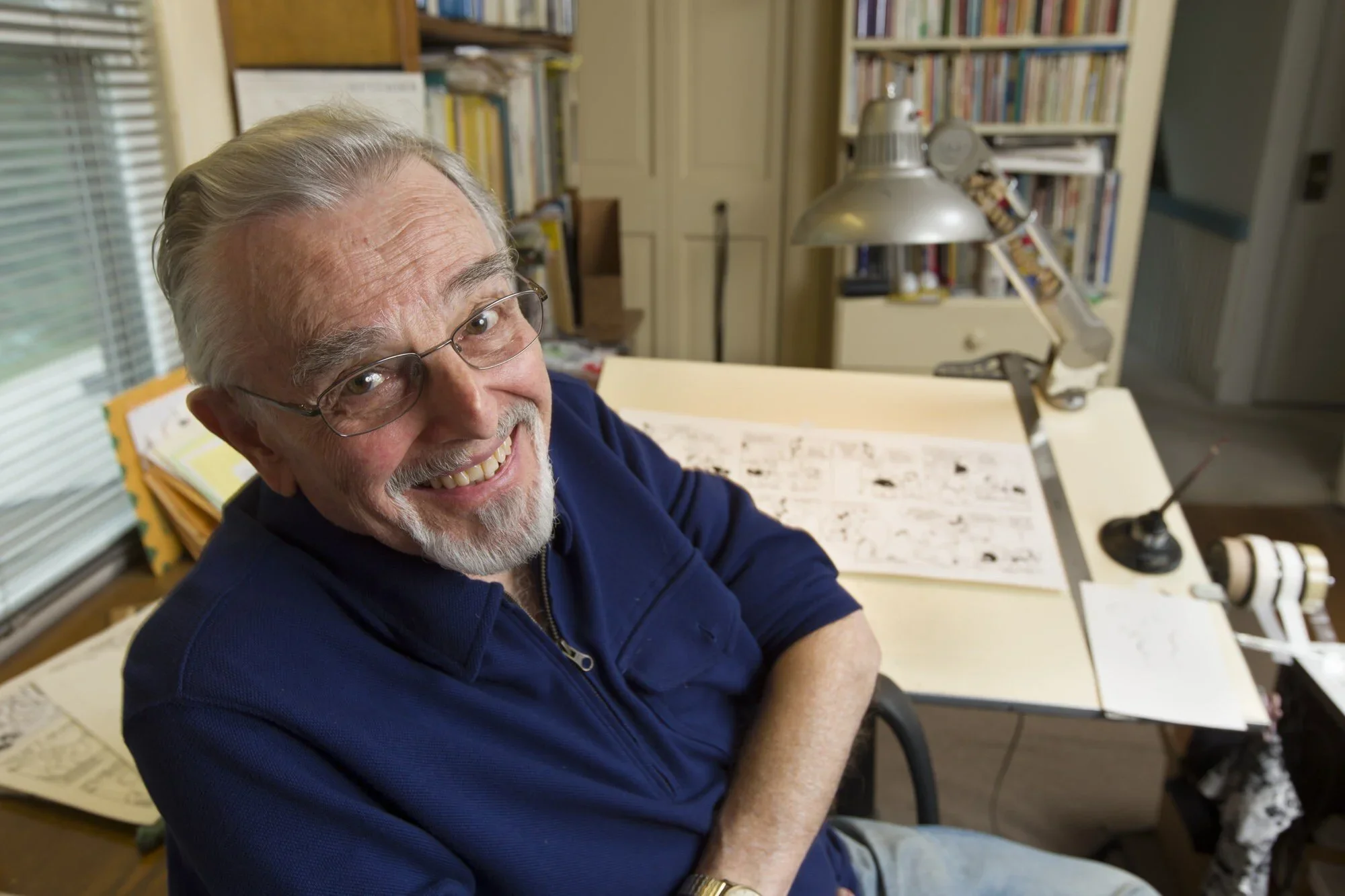
images.squarespace-cdn.com
Hy Eisman
Birthday:
26 Mar, 1927
Date of Death:
26 Mar, 2025
Cause of death:
Ruptured aneurysm in his aorta
Nationality:
American
Famous As:
Comics artist
Age at the time of death:
98
Hyman Eisman's Quote's

“If you can make somebody smile with a few lines on paper, that’s magic worth doing every day.”
Hyman Eisman
🔗 deadcelebrityhub.com
Early Life and Family Roots
There are artists who chase fame, and then there are artists who quietly define an art form. Hy Eisman belonged to the latter—a steady, prolific hand who kept the heart of American comic strips beating long after their golden age had passed. For over seven decades, Eisman’s pen carried on the traditions of humor, storytelling, and craftsmanship that shaped Sunday mornings for generations of readers.
Born on March 27, 1927, in Paterson, New Jersey, Hy Eisman grew up in a modest household that prized hard work and creativity. The son of Jewish immigrants, he discovered drawing as both a form of escape and expression during the lean years of the Great Depression. While other children might have collected marbles or baseball cards, young Hy collected images—cartoon panels clipped from newspapers, which he studied like treasure maps.
Art was not a luxurious pursuit in his family’s world; it was a quiet passion he nurtured between chores and school. Yet even then, there was a spark—a knack for humor and timing that would later define his work. As a teenager, he was already sketching caricatures of neighbors and teachers, a gift that hinted at his lifelong fascination with the quirks and rhythms of everyday life.
Education and Artistic Formation
After high school, Eisman enrolled at the School of Visual Arts in New York, a decision that set the course for his career. It was a postwar era pulsing with new energy, and New York was the capital of the comics universe. Under the tutelage of industry veterans, Eisman learned not just technique, but discipline—the unglamorous skill of producing work consistently, panel by panel, week after week.
Those lessons would prove essential. Comics were an art of endurance as much as imagination, and Eisman absorbed both with quiet determination.
Early Career: Finding a Place in the Comics World
Eisman began his professional career in the early 1950s, writing and drawing for various comic-book publishers during a period of explosive creativity and constant change. He worked on titles like Nancy and Sluggo and The Katzenjammer Kids, two venerable series that demanded both respect for tradition and fresh humor. His style—clean, expressive, and unpretentious—fit perfectly.
But his first big recognition came with The All-New Popeye, the comic strip he took over in 1994 and continued for nearly three decades. Eisman was already in his late sixties when he began chronicling the adventures of the spinach-powered sailor, and yet he brought youthful wit and warmth to the task. Few artists could so seamlessly merge a classic character’s legacy with a contemporary touch.
Before Popeye, Eisman had revitalized The Katzenjammer Kids, the world’s longest-running comic strip, which he drew for more than forty years. His run ensured that these mischievous twins—originally created in the 19th century—remained vibrant into the 21st. It was an extraordinary feat: a living bridge between the dawn of newspaper comics and the digital age.
Major Achievements and Influence
Beyond his prolific output, Eisman’s influence reached deeply into the next generation of artists. Since the 1970s, he taught cartooning at the Joe Kubert School of Cartoon and Graphic Art, mentoring hundreds of aspiring illustrators. His students recall not only his technical skill but also his humility—a teacher who led by example, who could make even a single ink stroke feel like a lesson in patience.
In recognition of his lifelong contributions, Eisman was honored with the National Cartoonists Society’s Reuben Award for Best Humor Comic Strip and received the society’s Silver T-Square Award for outstanding service to the profession. These accolades, though richly deserved, never changed his modest demeanor.
Personal Life: The Man Behind the Panels
Away from deadlines and drawing boards, Eisman was known for his quiet humor and gentle spirit. He married Florenz Eisman, with whom he shared a partnership rooted in warmth and mutual respect. Friends and students remember his steady laughter, his fondness for storytelling, and his deep affection for the simple pleasures of everyday life—coffee, conversation, and the rustle of Sunday papers.
Later Years
Even into his nineties, Eisman continued to draw Popeye, a testament to his remarkable dedication and love for the craft. When he finally put down his pen, he left behind more than just comic strips—he left a living archive of American humor and an example of steadfast artistry in a rapidly changing world.
Hy Eisman passed away in 2023 at the age of 96, closing a chapter that stretched from the golden era of newspaper comics to the digital dawn. Yet his influence lingers in every aspiring cartoonist who dreams of drawing a laugh from a simple line, and in every reader who still smiles at a Sunday strip.
Legacy
Eisman’s story is one of quiet perseverance—a man who kept the ink flowing through the veins of an art form long after others had moved on. He bridged generations, taught with generosity, and gave beloved characters new life with every stroke of his pen.
In the end, Hy Eisman’s legacy is simple yet profound: he proved that true artistry lies not in the kind of devotion that keeps the spirit of laughter alive, one panel at a time.
Profile Snapshot
Name:
Hyman Eisman
Popular Name:
Hy Eisman
Gender:
Male
Cause of Death:
Ruptured aneurysm in his aorta
Spouse:
Florenz Greenberg
Nathalie Adrienne "Adri" Abramson.
Place of Birth:
Paterson, New Jersey, United States
Place of Death:
USA
Occupation / Profession:
Comics artist
Personality Type
Entertainer: Hy Eisman’s discipline and loyalty kept the ink of classic American comics flowing for generations.
Hyman Eisman's Interesting Facts
Eisman began his professional cartooning career while still in high school, selling gag cartoons to magazines.
He was among the very first instructors at the Joe Kubert School when it opened in 1976 and taught there for more than 40 years.
Despite drawing some of the world’s most famous comic characters, he never owned a computer and continued inking by hand throughout his career.
Achievements & Awards
Hy Eisman’s career spanned over seventy years, during which he became one of the longest-working cartoonists in American history.
He revitalized The Katzenjammer Kids and carried Popeye into a new era, earning admiration for preserving two of the most enduring comic strips in print.
His contributions were recognized by the National Cartoonists Society with the Reuben Award for Best Humor Comic Strip and the Silver T-Square Award for outstanding service to the profession.
In addition to his creative work, his decades of teaching at the Joe Kubert School cemented his legacy as a mentor to countless cartoonists.
External Links