Real Celebrities Never Die!
OR
Search For Past Celebrities Whose Birthday You Share
Died Age: 64
britannica.com
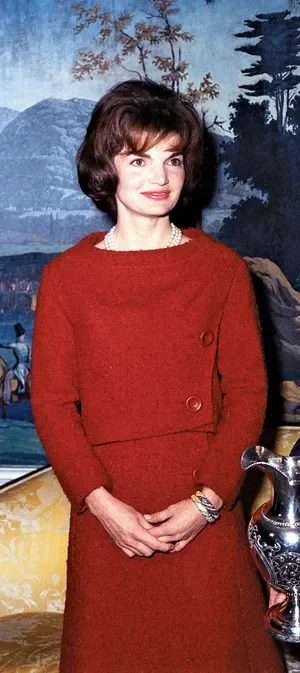
Jackie Kennedy
Birthday:
28 Jul, 1929
Date of Death:
19 May, 1994
Cause of death:
Cancer
Nationality:
American
Famous As:
American writer
Age at the time of death:
64
Jacqueline Lee Kennedy Onassis's Quote's

“I don't think there are any men who are faithful to their wives.”
Jacqueline Lee Kennedy Onassis
🔗 deadcelebrityhub.com
Early Life: The Making of a Cultural Icon
Jacqueline Kennedy was more than the picture of elegance and grace—she was a woman of intellect, resilience, and quiet power. As First Lady of the United States, she redefined the role, leaving an indelible mark on American culture.
Yet, her life was not defined solely by her years in the White House. From her early days as an inquisitive young woman to her later years as a respected editor, Jackie’s story is one of transformation, strength, and an unyielding pursuit of excellence.
Born Jacqueline Lee Bouvier on July 28, 1929, in Southampton, New York, she was the daughter of a wealthy stockbroker and a socially ambitious mother. From an early age, Jackie stood out—not just for her beauty but for her sharp mind and insatiable curiosity. She was an avid reader, a talented equestrian, and had a flair for languages and the arts.
She attended Vassar College before transferring to George Washington University, where she earned a degree in French literature. Her passion for writing led her to a brief career as a journalist, working as a photographer and columnist for the Washington Times-Herald. It was during this time that she met a rising political star—John F. Kennedy.
First Lady: Redefining White House Glamour
Jackie married John F. Kennedy in 1953, and when he became president in 1961, she embraced her role as First Lady with a distinct vision. She transformed the White House into a cultural and historical landmark, overseeing a restoration project that highlighted its rich history. Her televised tour of the White House in 1962 captivated millions, solidifying her place as an influential figure in American history.
But beyond aesthetics, she was a keen observer of politics and an unwavering supporter of her husband’s presidency. She accompanied him on diplomatic visits, where her command of French and Spanish impressed world leaders. Despite the personal challenges of life in the public eye, she remained poised and devoted to her family.
Tragedy and Reinvention
The assassination of John F. Kennedy on November 22, 1963, shattered the nation—and Jackie was at the center of its grief. Her composure in the aftermath, clad in her bloodstained pink suit as a symbol of national mourning, became an iconic image of strength. She orchestrated a funeral that honored her husband’s legacy, drawing parallels to Lincoln’s in its solemnity and grandeur.
In the years following JFK’s death, Jackie sought to protect her children from the relentless glare of public scrutiny. Her 1968 marriage to Greek shipping magnate Aristotle Onassis provided financial security and an escape from the pressures of American life, though it was met with controversy. Nevertheless, Jackie remained steadfast in her independence and pursuit of personal fulfillment.
A New Chapter: Jackie the Editor
After Onassis’ death in 1975, Jackie returned to New York and embarked on a new career as a book editor. She worked at Viking Press and later at Doubleday, proving that she was more than a symbol of the past—she was a woman of substance and intellect. She championed books on history, culture, and the arts, earning respect in the literary world. This phase of her life, often overlooked, was perhaps one of her most authentic expressions of self.
Legacy: A Timeless Icon
Jackie Kennedy Onassis passed away on May 19, 1994, but her influence remains as strong as ever. She was not just a First Lady—she was a curator of history, a patron of the arts, a devoted mother, and a woman who navigated immense personal loss with dignity. Her style, grace, and intellect continue to inspire generations.
In the end, Jackie was more than a symbol of an era. She was a woman who lived on her own terms, proving that true elegance is not just about appearance but about intellect, resilience, and an unwavering sense of purpose.
Profile Snapshot
Name:
Jacqueline Lee Kennedy Onassis
Popular Name:
Jackie Kennedy
Gender:
Female
Cause of Death:
Cancer
Spouse:
John F. Kennedy
Aristotle Onassi
Place of Birth:
Southampton, New York, U.S.
Place of Death:
New York City, U.S.
Occupation / Profession:
American writer
Book editor
Socialite
Personality Type
Consul: Jackie Kennedy combined deep empathy, cultural sophistication, and quiet strength to leave an enduring legacy in American history.
Jacqueline Lee Kennedy Onassis's Interesting Facts
After President John F. Kennedy’s assassination, she played a key role in shaping his legacy, including the establishment of the John F. Kennedy Library.
Jackie Kennedy was the stylish and cultured First Lady of the United States from 1961 to 1963, known for her grace, fashion, and White House restoration efforts.
Later in life, she became a successful book editor in New York, proving her intelligence and independence beyond her role as First Lady.
She spoke multiple languages, including French, Spanish, and Italian, which helped her charm world leaders during diplomatic visits.
Achievements & Awards
Her legacy was further honored with the Presidential Medal of Freedom (1999, posthumous).
Jackie Kennedy was an influential First Lady known for her elegance and dedication to historic preservation, leading the White House restoration.
She won a special Emmy Award (1962) for her televised White House tour and became a global fashion icon.
Latest Profiles
People also viewed
Maxwell Perkins
Born20 Sep, 1884
Died17 Jun, 1947
NationalityAmerican
Age at time of death62

Sophia Hutchins
Born31 Mar, 1996
Died01 Jul, 2025
NationalityAmerican
Age at time of death29