Real Celebrities Never Die!
OR
Search For Past Celebrities Whose Birthday You Share
Died Age: 53
britannica.com
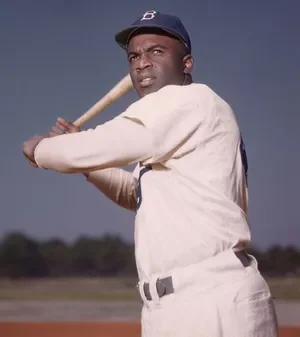
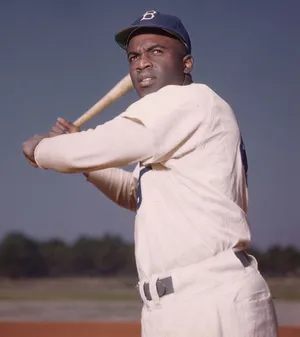
Jackie Robinson
Birthday:
31 Jan, 1919
Date of Death:
24 Oct, 1972
Cause of death:
Heart attack
Nationality:
American
Famous As:
American professional baseball player
Age at the time of death:
53
Jack Roosevelt Robinson's Quote's
“Civil rights is not by any means the only issue that concerns me - nor, I think any other Negro. As Americans, we have as much at stake in this country as anyone else. But since effective participation in a democracy is based upon enjoyment of basic freedoms that everyone else takes for granted, we need make no apologies for being especially interested in catching up on civil rights.”
Jack Roosevelt Robinson
🔗 deadcelebrityhub.com
Early Life: Strength Forged in Adversity
Jackie Robinson was more than a baseball player—he was a pioneer, a symbol of courage, and a force for social change. As the first African American to break Major League Baseball’s color barrier in the modern era, he carried the hopes of a generation on his shoulders. His talent, determination, and dignity in the face of adversity forever changed the sport and the nation. But Robinson’s legacy extends far beyond the baseball diamond; he was a relentless advocate for civil rights, a businessman, and an inspiration to millions.
Born on January 31, 1919, in Cairo, Georgia, Jack Roosevelt Robinson was the youngest of five children. His father abandoned the family when Jackie was just a year old, prompting his mother, Mallie, to move the family to Pasadena, California. There, she worked tirelessly to provide for her children, instilling in them values of perseverance and self-respect.
Growing up in a predominantly white neighborhood, Jackie experienced racial prejudice from an early age, but he refused to let discrimination define him. His athletic ability set him apart—he excelled in football, basketball, track, and baseball at John Muir High School. He continued his athletic dominance at Pasadena Junior College and later at UCLA, where he became the first student to letter in four sports. However, financial difficulties forced him to leave college before completing his degree.
From Soldier to Baseball Star
During World War II, Robinson served as a second lieutenant in the U.S. Army. He faced court-martial in 1944 for refusing to sit at the back of a segregated bus, an early sign of his commitment to racial justice. Though he was ultimately acquitted, the experience further cemented his resolve to challenge discrimination.
After his discharge, Robinson played in the Negro Leagues, where his talent caught the attention of Brooklyn Dodgers executive Branch Rickey. In 1945, Rickey sought a player who could not only excel on the field but also withstand the racial hostility of integrating Major League Baseball. Robinson was that man. He signed with the Dodgers’ minor league affiliate, the Montreal Royals, in 1946, and in 1947, he made history by stepping onto Ebbets Field as a Brooklyn Dodger.
Breaking the Color Barrier
On April 15, 1947, Jackie Robinson forever altered the course of baseball and American history. As the first Black player in the modern major leagues, he faced relentless racism from fans, opponents, and even some teammates. He endured taunts, threats, and segregation on the road, but he responded with the quiet strength that defined his character. Rickey had urged him to turn the other cheek, and for two years, Robinson played without retaliating—proving that his performance would speak louder than any insult.
Despite the obstacles, Robinson thrived. He won the inaugural Rookie of the Year award in 1947, led the Dodgers to multiple pennants, and won the National League MVP in 1949. A dynamic player with speed, power, and intelligence, he redefined the game with his aggressive baserunning and clutch hitting. His presence opened doors for future Black players, proving that talent, not skin color, should determine success.
Beyond Baseball: A Champion for Justice
Robinson retired from baseball in 1956, but his fight for equality was far from over. He became a vocal advocate for civil rights, using his platform to call for desegregation in schools, businesses, and sports. He worked with the NAACP, marched with Dr. Martin Luther King Jr., and challenged political leaders to take action against racial injustice.
He also made strides in business, becoming the first Black vice president of a major American corporation at Chock full o’Nuts. He later helped establish the Freedom National Bank, aimed at supporting Black communities.
Legacy: A Lasting Impact
Jackie Robinson passed away on October 24, 1972, at just 53 years old, but his influence endures. In 1997, Major League Baseball retired his iconic number 42 across all teams, ensuring no player would ever wear it again—a tribute reserved for a true trailblazer. Today, April 15 is celebrated as Jackie Robinson Day, a reminder of his courage and contribution to the game and society.
Robinson was not just a baseball legend; he was a man who changed the world. His strength, dignity, and unyielding fight for justice continue to inspire athletes, activists, and all those who believe in the power of perseverance and equality.
Profile Snapshot
Name:
Jack Roosevelt Robinson
Popular Name:
Jackie Robinson
Gender:
Male
Cause of Death:
Heart attack
Spouse:
Rachel Robinson
Place of Birth:
Cairo, Georgia, U.S.
Place of Death:
Stamford, Connecticut, U.S.
Occupation / Profession:
American professional baseball player
Personality Type
Protagonist: Jackie Robinson combined strength, integrity, and vision to challenge racial barriers and inspire generations.
Jack Roosevelt Robinson's Interesting Facts
Before his baseball career, he was a multi-sport athlete at UCLA, excelling in football, basketball, track, and baseball.
Despite facing intense racism, he won the MLB Rookie of the Year award in 1947 and later became the National League MVP in 1949.
His number 42 was permanently retired across all MLB teams, and his legacy is honored every year on April 15, known as Jackie Robinson Day.
Jackie Robinson made history in 1947 as the first African American to play in Major League Baseball, breaking the color barrier with the Brooklyn Dodgers.
Achievements & Awards
He led the Dodgers to a World Series victory (1955) and became a civil rights icon.
His legacy was honored with the Presidential Medal of Freedom (1984, posthumously), and his No. 42 jersey was retired across MLB (1997).
Jackie Robinson made history as the first African American in MLB (1947), winning Rookie of the Year and later the National League MVP (1949).