Real Celebrities Never Die!
OR
Search For Past Celebrities Whose Birthday You Share
Died Age: 91
janegoodall.org
Jane Goodall
Birthday:
02 Apr, 1934
Date of Death:
30 Sep, 2025
Cause of death:
Cardiac arrest
Nationality:
British
Famous As:
Primatologist
Age at the time of death:
91
Dame Valerie Jane Morris Goodall's Quote's

“Hope is contagious. Your actions will inspire others.”
Dame Valerie Jane Morris Goodall
🔗 deadcelebrityhub.com
Early Life: A Girl with a Toy Chimp and a Dream
From the moment she first set foot in the forests of Gombe, Jane Goodall seemed less an intruder in the wild than a long-lost friend returning home. Her life’s work—listening, observing, and ultimately redefining how humanity understands its kinship with animals—transformed her from a curious young woman with a notebook into one of the most respected voices for conservation on Earth. She redefined the relationship between humans and nature itself.
Valerie Jane Goodall was born on April 3, 1934, in London, England, and grew up in the seaside town of Bournemouth. Her mother, Vanne Morris-Goodall, was a novelist who nurtured her daughter’s boundless curiosity, while her father, Mortimer Goodall, was an engineer with the British Army. One of Jane’s earliest memories—often retold with a smile—is of receiving a toy chimpanzee named Jubilee, a gift from her father to mark the birth of a chimp at the London Zoo. Many children might have been frightened by the plush animal’s lifelike face; Jane adored it.
From a young age, she had a scientist’s patience and a storyteller’s wonder. At four, she hid for hours in a chicken coop to watch hens lay eggs, returning only after her worried family had nearly called the police. Rather than scolding her, her mother encouraged the curiosity that would one day take her to Africa.
Education: Learning Beyond the Classroom
Jane’s path to science was anything but traditional. She could not afford university immediately after finishing school, so she worked as a secretary, then as a waitress, saving money for a long-held dream: to visit Africa. Books like Tarzan of the Apes had ignited her imagination—though she often joked that she thought Tarzan “married the wrong Jane.”
In 1957, an opportunity arose that would change her life. She travelled to Kenya, where she met the renowned anthropologist Louis Leakey. Leakey, recognising her remarkable observational gifts and intuitive understanding of animals, hired her as his assistant. Despite her lack of formal training, he saw in her something more valuable: the curiosity of an explorer unclouded by scientific preconceptions. Leakey later arranged for her to study at the University of Cambridge, where she earned a PhD in ethology—remarkably, without having first obtained a bachelor’s degree.
Career Journey: From Forest Watcher to Global Advocate
The Gombe Years: Redefining Humanity
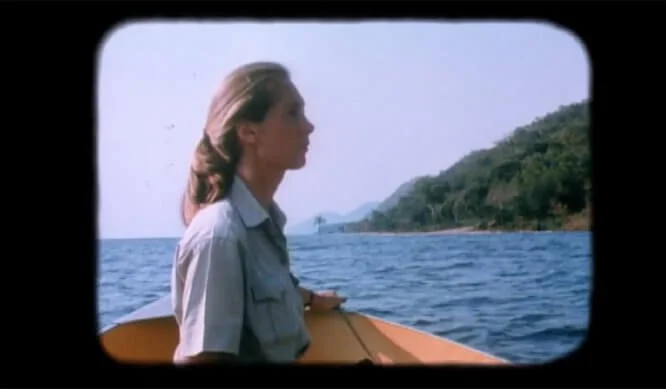
In 1960, 26-year-old Jane Goodall arrived on the shores of Lake Tanganyika, Tanzania, to study wild chimpanzees at Gombe Stream National Park. Her research began with simple observation, binoculars in hand, as she camped in solitude—something nearly unheard of for a young woman at the time.
Then came the discovery that shook the scientific world. She observed a chimpanzee, later named David Greybeard, stripping leaves off a twig to use it as a tool for catching termites. Until then, toolmaking had been considered an exclusively human trait. Leakey famously quipped, “Now we must redefine ‘tool,’ redefine ‘man,’ or accept chimpanzees as human.”
Her observations went beyond tools. She saw tenderness, rivalry, grief, and even war among the chimpanzees. Goodall’s decision to name her subjects rather than assign them numbers broke with scientific convention, but it reflected her conviction that animals are sentient individuals, not data points.
Expanding the Mission: From Scientist to Activist
By the 1980s, Goodall had shifted from research to advocacy. Witnessing deforestation and the threats facing chimpanzees, she began travelling the world to raise awareness. She founded the Jane Goodall Institute in 1977 to support conservation and community-led development. Later, she launched Roots & Shoots, a youth program encouraging environmental activism, which has since spread to over 100 countries.
A lesser-known fact: despite her quiet demeanour, Goodall became one of the most tireless travellers of her generation, often spending more than 300 days a year on the road. Her packed schedule, handwritten notes, and well-worn notebooks became symbols of her relentless mission—to awaken compassion for all living beings.
Personal Life: Solitude, Love, and Resilience
Though she spent much of her life in remote forests, Goodall’s personal journey was rich with human connections. She married Dutch filmmaker Hugo van Lawick in 1964, and their partnership—both romantic and professional—produced stunning wildlife documentaries and a son, Hugo Eric Louis, affectionately known as “Grub.” After their divorce, she later married Derek Bryceson, a Tanzanian parliamentarian and park director, who passed away in 1980.
Away from the public eye, Jane found peace in quiet reflection, birdwatching, and simple routines. Even as her fame grew, she retained an almost childlike wonder for nature—once saying that every dawn in the forest felt like “a prayer made visible.”
Legacy
Jane Goodall’s legacy reaches far beyond the chimpanzees of Gombe. She changed how science views animals—recognising them as emotional, intelligent beings—and how humans see their place in nature. Her life’s message, delivered in her soft-spoken yet commanding voice, is simple but urgent: “Every individual matters. Every individual has a role to play.”
Today, she is not only a scientist but a symbol of hope, reminding the world that curiosity, compassion, and courage can alter the course of history. From the forests of Tanzania to the halls of the United Nations, Jane Goodall continues to inspire generations to listen—to the earth, to each other, and to the quiet wisdom of the wild.
Profile Snapshot
Name:
Dame Valerie Jane Morris Goodall
Popular Name:
Jane Goodall
Gender:
Female
Cause of Death:
Cardiac arrest
Spouse:
Derek Bryceson
Hugo van Lawick
Place of Birth:
Hampstead, London, United Kingdom
Place of Death:
Los Angeles, California, United States
Occupation / Profession:
Primatologist
Anthropologist.
Personality Type
Virtuoso: Jane Goodall is a thoughtful, compassionate, and quietly determined person whose deep love for animals and nature has guided everything she’s done. Her calm presence and unwavering dedication have inspired millions to care more deeply for the planet and its creatures.
Dame Valerie Jane Morris Goodall's Interesting Facts
Jane Goodall is a lifelong vegetarian and outspoken advocate for veganism, linking diet to environmental protection.
She has a fondness for tea and often travels with her own cup wherever she goes.
Despite her global fame, she still prefers handwritten notes over digital communication and keeps meticulous journals from her travels.
Achievements & Awards
Jane Goodall has received numerous honours for her groundbreaking work in primatology and conservation, including being named a Dame Commander of the Order of the British Empire (DBE) and a United Nations Messenger of Peace.
She was awarded the Kyoto Prize, the Templeton Prize, and the Hubbard Medal from the National Geographic Society.
Her more than six decades of research in Gombe revolutionised primatology and inspired global conservation and animal welfare movements.
External Links