Real Celebrities Never Die!
OR
Search For Past Celebrities Whose Birthday You Share
Died Age: 89
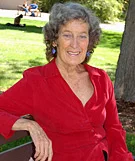
anthropology.unm.edu
Jane Lancaster
Birthday:
19 Dec, 1935
Date of Death:
02 Aug, 2025
Cause of death:
Unknown
Nationality:
American
Famous As:
Anthropologist
Age at the time of death:
89
Laura Jane Beckman Lancaster's Quote's

“I decided that I would live in New Mexico and be an anthropologist in 1944 — but it took me until 1985 to actually get here.”
Laura Jane Beckman Lancaster
🔗 deadcelebrityhub.com
Early Life and Foundations
From the quiet introspection of primate behaviour to the sweeping questions of human nature, Jane B. Lancaster carved out a scientific legacy built on curiosity, rigour, and compassion. She was more than an anthropologist — she was a storyteller of evolution, a bridge between biology and social life, and a mentor whose influence reshaped how we understand parenthood, life history, and human behaviour itself.
Jane Beckman Lancaster was born on December 20, 1935. From her earliest days, she carried within her a subtle but persistent fascination with the patterns of life — not just human, but animal, social, biological. Although details about her childhood remain private, what shines through is her passion for understanding the living world, a commitment that would guide her journey across continents and into the heart of human evolutionary anthropology.
Education: From Wellesley to Berkeley — Setting the Stage for Discovery
In 1958, Jane graduated cum laude from Wellesley College, a foundational milestone that marked the first formal turn in a life built on inquiry. That early academic success presaged a deeper intellectual journey. She later pursued her PhD in Anthropology at the University of California, Berkeley, completing it in 1967 with a dissertation titled “Primate Communication Systems and the Emergence of Human Language.” It was a bold, ambitious topic — one that sought to trace the roots of what makes us uniquely human: language, communication, and social bonds. Her doctoral advisor was the eminent primatologist Sherwood Washburn, under whose mentorship Jane honed her skills in primate fieldwork, biology, and evolutionary theory.
Even at this early stage, Jane was not content with narrow specialisation — she was laying the groundwork for a lifetime of interdisciplinary study.
Career Journey: From Fieldwork to Foundational Insights
Early Career: Primates in Africa and Early Academic Roles
Following her PhD, Jane did postdoctoral field research on the social behaviour of free-ranging monkeys in Zambia. These field observations — watching vervet monkeys interact, raise offspring, communicate — would form the empirical backbone of her later work. Between 1964 and 1969, she held teaching and research roles at Berkeley, then moved on to positions at Rutgers University (1969–1972), the University of New Orleans (1973–1977), and the University of Oklahoma (1977–1985), where she even served as acting Chair of the Anthropology Department for a time.
These years were not just about climbing academic ranks; they were about experimentation — testing ideas about primate behaviour, sex roles, social structures, and what those might mean for understanding human evolution.
Major Achievements: From Primate Behaviour to Human Nature
In 1985, Jane joined the University of New Mexico (UNM) — a move that ushered in the most influential chapter of her career. At UNM, she taught courses like Primate Social Behaviour and Human Reproductive Biology and Ecology, instilling in students the same sense of wonder that had propelled her own inquiries. Over the next decades, she transitioned from studying nonhuman primates to exploring human behaviour — particularly in areas like reproductive biology, parental investment, life history, intelligence, and lifespan.
Her work was not only broad in scope but deeply integrative, combining biology, anthropology, demography, and psychology. One of her crowning achievements came in 1990, when she founded Human Nature: An Interdisciplinary Biosocial Perspective, a journal dedicated to exploring how biology and environment intertwine to shape behaviour. With that act, she created a space for a new generation of scholars to bridge disciplines and challenge conventional boundaries.
Her scholarship — including influential papers on parental investment, fertility, mating strategies, and the evolution of human life history — helped establish what is today called human evolutionary anthropology. She dissected complex questions: How do humans differ from other primates? How have intelligence, lifespan, and fertility evolved under ecological pressures? What roles do social, environmental, and biological factors play in shaping human reproduction and parenting?
In 2012, the Human Behaviour and Evolution Society recognised her impact with a Lifetime Career Award for Distinguished Scientific Contributions. That same year, she was named a Distinguished Professor at UNM. And in 2021, her peers honoured her election to the American Academy of Arts and Sciences — a testament to the breadth and depth of her influence.
Later Career: Mentorship, Stewardship, and Sustaining Dialogue
Even as her research matured, Jane never stopped being a teacher and mentor. Colleagues and students remember her not only for her brilliance but for her generosity: she supported promising scholars without pedigrees, welcomed interdisciplinary approaches, and nurtured fields that had once been marginalised. Through her editorial work — not just with Human Nature, but also in the SpringerBriefs series in Human Behaviour and Biology — she helped shape the intellectual conversations around human behaviour, parenting, fertility, and social ecology for decades.
Personal Life and Human Touches
Though Jane’s public life was devoted to science, she was deeply human in her approach. Colleagues recall her “radiating presence” — a woman whose scientific insights were matched by warmth, mentorship, and a genuine care for people. She was not an ivory tower academic; she engaged meaningfully with students, supported mental health initiatives, and cared about real-world issues such as how evolutionary perspectives on fertility, family, and behaviour connect to modern social challenges.
One lesser-known detail about her: even after formal retirement, she remained intellectually active. She edited new volumes, engaged with younger scholars, and continued to champion a biosocial approach to human behaviour — giving what many described as “an enduring gift to our field.”
Legacy: A Beacon in Human Evolutionary Science
When Jane B. Lancaster passed away on August 3, 2025, at the age of 89, the academic world lost not just a pioneering scientist but a visionary who redefined how we understand ourselves. Her work reshaped anthropology by insisting that human behaviour, reproduction, and social life cannot be understood without acknowledging biology, ecology, and history — all interacting in complex ways.
Today, scholars cite her research on parental investment, life history, fertility, and human development. Human Nature, the journal she founded, continues to be a leading platform for interdisciplinary work. Generations of anthropologists, evolutionary biologists, and social scientists trace their intellectual lineage to her.
But beyond academia, her story matters because it reminds us that to grasp what it means to be human, we must look to our closest cousins in the primate world, to our evolutionary past, and to the social worlds we build. Jane Lancaster didn’t just study primates and humans — she wove together the biological and the social, the ancient and the modern, the individual and the collective.
In the final analysis, her legacy is not only in papers and journals, but in a profound shift in how we understand human nature itself — as a rich tapestry of biological heritage, social environment, and evolutionary history. And in doing so, she left the world a little wiser about who we are.
Profile Snapshot
Name:
Laura Jane Beckman Lancaster
Popular Name:
Jane Lancaster
Gender:
Female
Cause of Death:
Unknown
Spouse:
Not married
Place of Birth:
United States
Place of Death:
United States
Occupation / Profession:
Anthropologist
Personality Type
Logistician: Jane Lancaster embodied a rare blend of relentless curiosity and compassionate mentorship, approaching both the mysteries of human evolution and the people around her with equal warmth and rigour.
Laura Jane Beckman Lancaster's Interesting Facts
She served as the faculty sponsor for a zoo’s Primate Enrichment Program, showing her dedication to animal welfare alongside research.
She often described herself as a “primatologist at heart,” even while focusing on human evolution.
Even after retirement, she continued editing journals and book series because she couldn’t imagine stepping away from her work.
Achievements & Awards
Jane B. Lancaster was a pioneering figure in human evolutionary anthropology, founding the influential journal Human Nature in 1990 and transforming the study of parental investment, fertility, life history, and human social behaviour.
She was named Distinguished Professor at the University of New Mexico in 2012 and received the Human Behaviour and Evolution Society’s Lifetime Career Award for Distinguished Scientific Contributions that same year.
In 2021, she was elected to the American Academy of Arts and Sciences, recognising her as one of the leading scholars in her field. Her work bridged biology, anthropology, and social science, leaving a lasting mark on human evolutionary studies.
External Links
Latest Profiles
People also viewed
Zora Neale Hurston
Born07 Jan, 1891
Died28 Jan, 1960
NationalityAmerican
Age at time of death69
Cheikh Anta Diop
Born29 Dec, 1923
Died07 Feb, 1986
NationalitySenegalese
Age at time of death62