Real Celebrities Never Die!
OR
Search For Past Celebrities Whose Birthday You Share
Died Age: 95
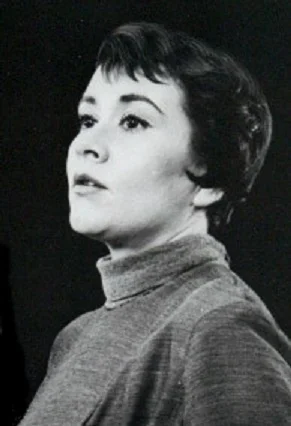
wikimedia.org
Joan Plowright
Birthday:
28 Oct, 1929
Date of Death:
16 Jan, 2025
Cause of death:
Unknown
Nationality:
British
Famous As:
Advocate
Age at the time of death:
95
Joan Ann Olivier, Baroness Olivier's Quote's

“The theatre was my first love, and it shall be my last.””
Joan Ann Olivier, Baroness Olivier
🔗 deadcelebrityhub.com
Early Life: Roots in the Ordinary, Dreams in the Wings
Joan Plowright's presence on the stage was both an act and a surrender. With a voice like warm smoke and a gaze that could flick from steely authority to tender vulnerability, she brought not just characters to life, but entire worlds. A pillar of British theatre and a commanding force in film, she defied the stereotype of the starlet, instead carving her legacy as an actor of gravity, grace, and resolute integrity. Behind the accolades and the honorific, Joan was a woman who found her calling in the quiet poetry of the theatre and never stopped listening for its rhythm.
Born in Brigg, Lincolnshire, on October 28, 1929, Joan Ann Plowright was the daughter of a newspaper editor and a teacher. Her father, William Ernest Plowright, was an outspoken local figure with a strong sense of social justice, a trait that would seep into Joan’s worldview. Her childhood was provincial and post-war, marked by ration books and grey skies, but also by books, music, and long evenings where storytelling was a family affair. She once recalled acting out plays with her brother in the back garden, casting herself as everything from a queen to a milkmaid. Her imagination was restless, vivid, and already theatrical.
But it was her mother, Daisy, who first recognised Joan’s gift for performance. After watching a particularly emotive school play, she told her daughter, “You were made for this.” That simple affirmation planted a seed that would bloom into one of the most enduring acting careers of her generation.
Education: Training the Fire
Plowright’s path to the stage was both deliberate and determined. She trained at the Bristol Old Vic Theatre School, a crucible for raw talent that emphasised discipline and craft over glamour. There, she honed her voice, her posture, and her ability to disappear into a role. It wasn’t enough to act—she had to become. She immersed herself in Shakespeare and Chekhov, taking to the classics with the kind of reverence most reserve for scripture. Her teachers noted her restraint, her emotional intelligence, and the quiet ferocity she brought to every role.
It was also during this time that she formed an abiding belief: the theatre was a sacred space, one that demanded both vulnerability and valour. That belief would guide her through decades of performances, both triumphant and trying.
Career Journey: From Ingenue to Icon
The Early Career: Building the Foundation
Joan Plowright’s early years in repertory theatre were a blur of backstage nerves and curtain calls. She made her London stage debut in 1954 in Golden Girl, but it was her performance in Ibsen’s The Doll’s House that caught the attention of critics. The role of Nora was bold for a young actress, but Plowright infused it with emotional complexity that set her apart.
Her breakout came in 1956 with John Osborne’s The Entertainer, where she starred opposite Laurence Olivier. The production crackled with electricity, and it was not just on stage. Her performance as Jean Rice, the emotionally bruised daughter of a fading music-hall star, was a masterclass in controlled anguish. That role not only earned her rave reviews but also began a relationship with Olivier that would shape her life and career.
Major Achievements and Turning Points
The 1960s were a golden decade. In 1961, she won a Tony Award for her role in A Taste of Honey, bringing raw honesty to the part of Jo, a working-class girl struggling with unplanned pregnancy and racial prejudice. Her portrayal was quietly revolutionary as she didn’t posture or perform hardship, but lived it. She followed it with roles in Saint Joan, Uncle Vanya, and The Seagull, often under the banner of the National Theatre, where she became a leading light.
Her marriage to Olivier in 1961 didn’t eclipse her career but complicated it. She became Lady Olivier when he was knighted, and later, Baroness Olivier, yet she was never content to be merely his consort. Their collaborations, like The Merchant of Venice and Long Day’s Journey Into Night, were artistic high-wire acts. Joan wasn’t just Olivier’s wife but his equal on stage, challenging and elevating him in every shared scene.
Later Work: Wisdom and Wit
In later years, Plowright turned increasingly to film and television, bringing her theatre-bred nuance to a wider audience. She charmed in Enchanted April (1991), playing a wistful English widow in Italy, and earned new fans as Mrs. Fisher in Tea with Mussolini (1999), where she held her own alongside Maggie Smith and Judi Dench. Her portrayal of women with inner steel and outer gentleness became a signature of her work.
A lesser-known gem? She voiced Ant Island’s Queen in Pixar’s A Bug’s Life (1998), which was a surprising, delightful footnote in a career built largely on Shakespearean gravitas.
Sadly, deteriorating eyesight led to her retirement from acting in the mid-2000s. Yet even as her vision dimmed, her presence remained luminous.
Personal Life: Between the Curtains
Plowright’s personal life was marked by both quiet joys and public scrutiny. Her marriage to Olivier was a fusion of genius and volatility, like two towering figures navigating love, art, and ego. They had three children together, including actor Richard Olivier, and Joan often spoke of the joys of motherhood, even as she balanced it with the demands of a storied career.
She was famously private, more comfortable backstage than at soirées, preferring books to banquets. Friends and colleagues admired her dry wit, her loyalty, and her refusal to trade substance for stardom.
Legacy: A Lasting Grace
Joan Plowright’s legacy is stitched into the fabric of British theatre. She wasn’t the loudest or most flamboyant actress of her time, but she was among the most respected. She championed intelligent roles for women, lent depth to every character she portrayed, and remained steadfast in her belief that art was a mirror to humanity.
She was made a Dame Commander of the Order of the British Empire in 2004, not just for her acting, but for a lifetime of cultural contribution. That same year, the Plowright Theatre opened in her hometown of Scunthorpe, a tribute to the girl who once recited lines in her garden and grew up to own the stage.
In the world of performance, where the spotlight is often fleeting, Joan Plowright endures not because she sought fame, but because she served the craft. With every line she delivered, she reminded us that the most powerful performances come not from performance, but from truth.
Profile Snapshot
Name:
Joan Ann Olivier, Baroness Olivier
Popular Name:
Joan Plowright
Gender:
Female
Cause of Death:
Unknown
Spouse:
Laurence Olivier
Roger Leonard Gage
Place of Birth:
Brigg, United Kingdom
Place of Death:
Denville Hall, Northwood, United Kingdom
Occupation / Profession:
Advocate
Personality Type
Advocate Quiet and mystical, yet very inspiring and tireless idealists. A thoughtful and principled artist who used quiet strength and deep feeling to bring truth to the stage.
Joan Ann Olivier, Baroness Olivier's Interesting Facts
Despite her dignified stage presence, she had a great love for comedy, often praising actors like Peter Sellers and Robin Williams for their brilliance.
Joan Plowright is one of the very few actresses to have won two Golden Globes in the same year (1993).
She was legally known as The Right Honourable The Lady Olivier after her marriage to Laurence Olivier.
Achievements & Awards
Her influence extended beyond acting, helping shape the Royal National Theatre alongside her husband, Laurence Olivier.
In 2004, she was honoured as a Dame Commander of the Order of the British Empire (DBE) for her services to drama, cementing her legacy as one of Britain’s most respected actresses.
Joan Plowright earned widespread acclaim for her powerful stage and screen performances, winning a Tony Award for A Taste of Honey in 1961 and earning two Golden Globe Awards for her work in Enchanted April and Stalin.
She was nominated for an Academy Award for Enchanted April and received multiple BAFTA nominations throughout her career.
External Links