Real Celebrities Never Die!
OR
Search For Past Celebrities Whose Birthday You Share
Died Age: 75
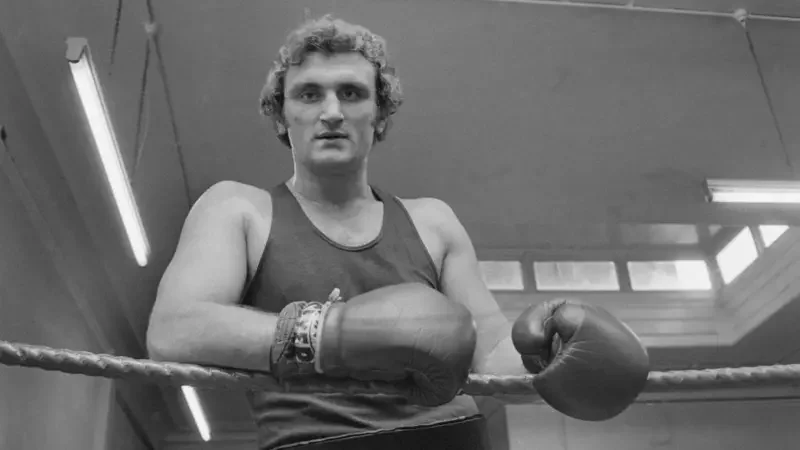
bbc.com
Joe Bugner
Birthday:
12 Mar, 1950
Date of Death:
31 Aug, 2025
Cause of death:
Cancer
Nationality:
Hungarian, British, Australian
Famous As:
British–Australian professional boxer
Age at the time of death:
75
József Kreul Bugner's Quote's

“Boxing isn’t just about strength — it’s about timing, patience, and the will to keep getting up.”
József Kreul Bugner
🔗 deadcelebrityhub.com
Early Life: From War-Torn Hungary to English Soil
Few men have lived as many lives as Joe Bugner — heavyweight boxer, actor, entrepreneur, and eternal underdog turned survivor. To some, he was the fighter who dared to go the distance with Muhammad Ali; to others, the immigrant boy who rose from wartime Hungary to the glittering lights of the boxing world. Yet beneath the headlines and hard punches lay a story of determination, pride, and an unrelenting will to defy expectation.
József Kreul Bugner was born on March 13, 1950, in Szeged, Hungary, into a world still reeling from the aftermath of World War II. His early childhood was marked by hardship — scarcity, political unrest, and the quiet fear that defined life behind the Iron Curtain.
In 1956, when Soviet forces crushed the Hungarian Revolution, the Bugner family made a daring escape. Joe was just six years old when his parents fled to Britain, settling in St. Ives, Cambridgeshire. The transition was anything but easy. The young immigrant spoke little English, towered over his classmates, and often found himself on the receiving end of playground fights. But even then, there was a stubbornness in him — a refusal to back down.
That toughness would one day make him a champion.
Education and Early Passion: Discovering His Power
Though academics never captivated him, Bugner found purpose in sport. By his teens, he had grown into a formidable physical presence — tall, broad, and gifted with natural athleticism. He excelled at football and athletics before discovering boxing at the age of 16.
Trained by Andy Smith, Bugner showed immediate promise. His footwork was light, his jab precise, and his endurance remarkable. Within a few years, he was competing at national level — and by 1967, at just 17, he had turned professional.
Early Career: The Making of a Contender
Bugner’s rise through the British boxing ranks was meteoric. Tall, lean, and tactical, he wasn’t the brawler type; he preferred to outthink his opponents, relying on strategy and stamina. By 1970, he had already captured the British and Commonwealth heavyweight titles, and in 1971, at just 21 years old, he did the unthinkable: he defeated Henry Cooper, Britain’s beloved boxing hero, in a controversial points decision that split the nation.
The victory made him a household name — and a lightning rod for criticism. Many fans saw him as the “foreign” upstart who had dethroned their national idol. The jeers stung, but they also steeled him. “I knew then I’d have to fight for respect,” he later said.
That fight — not just in the ring, but in the public imagination — would define much of his career.
Major Achievements and Turning Points: The Battles with Ali and Frazier
Bugner’s career hit its global peak in the 1970s, when he stepped into the ring with two of boxing’s immortals: Joe Frazier and Muhammad Ali.
In 1973, he faced Frazier in London. The bout was brutal and unrelenting, but Bugner went the distance — proving his mettle against one of the fiercest punchers in the sport. Two years later, in 1975, he squared off against Muhammad Ali in Kuala Lumpur for the world heavyweight title. Ali, then in his prime, won on points — but not before Bugner had earned the champion’s respect.
Ali would later call him “one of the toughest men I ever fought.”
Though he never captured the world title, Bugner’s ability to endure — physically and mentally — became legendary. His fights were less about conquest and more about courage: proof that a man could lose and still emerge unbroken.
Later Career: Reinvention and Return
After a period of semi-retirement in the late 1970s, Bugner shocked fans by returning to the ring — first in 1982, and again in the 1990s, long after most of his peers had hung up their gloves. By then, he had relocated to Australia, where he would eventually become a citizen and a national favorite.
In his second act, Bugner won the Australian heavyweight title and even captured the WBF heavyweight championship in 1998 at the age of 48 — a testament to his remarkable longevity. Few fighters could boast a career spanning four decades; fewer still could remain competitive in their late forties.
Between fights, Bugner dabbled in acting, appearing in films such as Mad Max Beyond Thunderdome (1985) alongside Mel Gibson, and Crocodile Dundee in Los Angeles (2001). His rugged charm and self-deprecating humor translated easily from the ring to the screen.
Personal Life: Strength, Struggle, and Self-Reliance
Behind the public bravado, Joe Bugner’s personal life was marked by resilience. He married Marion Clark, with whom he had two sons, Joe Jr. and James, both of whom followed in his athletic footsteps.
His transition from Britain to Australia mirrored his personal philosophy — a constant reinvention, a search for belonging. In interviews, Bugner spoke candidly about the loneliness of fame, the scrutiny of fans, and the difficulty of being respected as an outsider. Yet even in his later years, he retained a sharp wit and an iron will.
Trivia fans love to note: despite facing Ali twice, Bugner never once hit the canvas. He prided himself on that fact — a small but telling detail of a man whose entire life was about staying on his feet.
Legacy: The Fighter Who Outlasted Time
Joe Bugner’s legacy cannot be measured by belts or trophies alone. He was, and remains, a symbol of endurance — a man who fought not just opponents, but public perception, national identity, and time itself.
He stood with legends, survived criticism, and carved his own path across continents and careers. Whether in the boxing ring or in front of a movie camera, Bugner embodied the timeless spirit of the fighter: the one who refuses to stay down.
Today, he is remembered not merely as a boxer, but as a story of resilience — of a refugee boy who became a champion, an actor, and a living testament to grit. His life reminds us that victory isn’t always about triumph; sometimes it’s about tenacity.
And if there was one thing Joe Bugner never lacked, it was the courage to keep getting up
Profile Snapshot
Name:
József Kreul Bugner
Popular Name:
Joe Bugner
Gender:
Male
Cause of Death:
Cancer
Spouse:
Marlene
Melody
Place of Birth:
Szőreg, Hungary
Place of Death:
Brisbane, Queensland, Australia
Occupation / Profession:
British–Australian professional boxer
Personality Type
Campaigner: Joe Bugner was a bold, determined heavyweight whose resilience and ambition drove him to challenge the very best, build new lives across continents, and refuse to settle for second-place—not just in the ring, but in his life.
József Kreul Bugner's Interesting Facts
Joe Bugner was one of the few boxers to fight both Muhammad Ali and Joe Frazier, taking both heavyweight legends the full distance.
Born in Hungary, Bugner became a naturalized British citizen and later represented both the United Kingdom and Australia in boxing.
Beyond the ring, he also had a career in acting, appearing in several films and television shows in Australia.
Known for his remarkable longevity, Bugner fought professionally across five decades before finally retiring in his 50s.
Achievements & Awards
Joe Bugner was a successful heavyweight boxer who won the British, Commonwealth, and European titles in 1971 after defeating Henry Cooper. He is well known for going the full distance in matches against boxing legends Muhammad Ali and Joe Frazier, showcasing his endurance. Later in his career, he won the Australian heavyweight title in 1995 and the World Boxing Federation (WBF) heavyweight title at the age of 48, proving his remarkable longevity in the sport.
External Links