Real Celebrities Never Die!
OR
Search For Past Celebrities Whose Birthday You Share
Died Age: 82
www.britannica.com
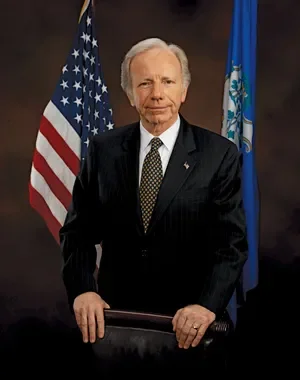
Joe Lieberman
Birthday:
23 Feb, 1942
Date of Death:
26 Mar, 2024
Cause of death:
Complications from a fall
Nationality:
American
Famous As:
Author
Age at the time of death:
82
Joseph Isadore Lieberman's Quote's

“The bond that links your true family is not one of blood, but of respect and joy in each other's life.”
Joseph Isadore Lieberman
🔗 deadcelebrityhub.com
Early Life: Roots of Conviction
Joe Lieberman was a man of paradoxes. He was a devoutly observant Jew who became the first of his faith on a major U.S. presidential ticket, a Democrat who crossed the aisle with ease, and a politician who often stood alone, guided not by popularity but by principle. In an age of political tribalism, Lieberman’s legacy lies in his steadfast commitment to conscience over party. His conviction earned him both admiration and ire, but never indifference.
Born on February 24, 1942, in Stamford, Connecticut, Joseph Isadore Lieberman grew up in a modest household that prized faith, education, and public service. His father, Henry, ran a liquor store; his mother, Marcia, was a homemaker who instilled in young Joe the value of decency and humility. The Liebermans weren’t wealthy, but their home was rich in tradition. Sabbath dinners, Hebrew school, and synagogue formed the rhythm of his early life.
Joe’s moral compass began forming early. As a teenager during the civil rights era, he was deeply moved by the struggle for justice, a cause he would later champion from the Senate floor. But it was the assassination of John F. Kennedy in 1963, during his college years, that marked a turning point. It wasn’t just grief but also a calling. Public service, he realised, was more than a career; it was a moral obligation.
Education: A Scholar of Law and Leadership
Lieberman’s intellectual path was marked by excellence. He attended Yale University, graduating in 1964, then went on to earn his law degree from Yale Law School in 1967. At Yale, he not only sharpened his legal mind but also found a sense of purpose. He was editor of the Yale Daily News, and his early writings already revealed a young man grappling with justice, leadership, and ethics.
It was during these years that he honed his speaking style, which was often measured, deliberate, and often sermon-like. Friends would joke that Joe sounded more like a rabbi than a lawyer, but it was a style that would later resonate deeply with voters looking for integrity in politics.
Career Journey: From State Politician to National Trailblazer
Early Career: Stepping into the Arena
Lieberman’s political journey began in the Connecticut State Senate, where he served from 1971 to 1981. He quickly gained a reputation for his thoughtful, bipartisan approach, and at just 38, he made a bold move: running for and winning the office of Connecticut Attorney General.
He approached the role with vigour, taking on consumer rights, environmental protection, and corporate malpractice. His legal acumen, coupled with his moral earnestness, made him a rising star.
National Stage: A Senator of Substance
In 1988, Lieberman ran for the U.S. Senate, defeating incumbent Republican Lowell Weicker in a stunning upset. His campaign slogan, “Change, not just for the sake of change, but for the sake of progress,” captured his ethos.
Once in the Senate, Lieberman built a reputation as a thoughtful centrist. He chaired the Governmental Affairs Committee, led investigations into government waste and national security lapses, and played a critical role in legislation ranging from clean air policy to cybersecurity.
But it was his moral stance on national issues that defined his tenure. In 1998, during the Clinton impeachment crisis, Lieberman gave a searing speech on the Senate floor, denouncing the president’s behaviour while opposing his removal from office. It was a masterclass in moral nuance, and it marked Lieberman as a man unwilling to bend to party lines.
Vice Presidential Nominee: Breaking Barriers
In 2000, Al Gore selected Lieberman as his running mate, making history as the first Jewish candidate on a major party presidential ticket. Observant of the Sabbath, Lieberman would refrain from campaign events from sundown Friday to Saturday night but made exceptions in emergencies, balancing faith and duty with quiet grace.
Though the Gore-Lieberman ticket won the popular vote, the election was ultimately decided in favour of George W. Bush by a razor-thin margin. Lieberman’s composure during the Florida recount chaos became a symbol of stability amid turmoil.
Later Career: Maverick and Independent Voice
Lieberman’s support for the Iraq War strained his relationship with the Democratic base. In 2006, he lost the Democratic primary in Connecticut but ran as an independent and won, a rare feat in modern politics. “I may have lost a party,” he said, “but I found my purpose.”
He became a critical swing vote in the Senate, often siding with Republicans on issues of national security, while still backing Democratic priorities like climate legislation and health care reform, though he famously opposed the public option in the Affordable Care Act.
In 2008, he endorsed Republican John McCain for president, further cementing his maverick status. Some called him a traitor; others saw a man who placed country above party.
He retired from the Senate in 2013, but his voice remained active through op-eds, think tanks, and public service, most recently as chair of a committee overseeing police reform proposals.
Personal Life: Faith, Family, and Ritual
Away from politics, Lieberman was deeply devoted to his family and faith. He married Hadassah Freilich Tucker in 1983, blending their families into a close-knit unit. A proud father and grandfather, he often spoke of the joys of parenting in his trademark reflective tone.
An observant Orthodox Jew, Lieberman carried his religious identity not as a political symbol, but as a personal foundation. He walked to Capitol Hill on Saturdays and kept kosher, even on the campaign trail. He once described the Torah as his “manual for public service,” blending civic duty with spiritual humility.
Legacy: A Statesman of Conscience
Joe Lieberman passed away in March 2024, leaving behind a complex but deeply principled legacy. He is remembered not just as a senator or a vice presidential nominee, but as a public servant who consistently chose conviction over conformity.
He paved the way for greater religious diversity in American politics, showing that faith and public life can not only coexist but also enrich one another. He championed bipartisanship when it was out of fashion, and integrity when it was inconvenient.
Perhaps his most enduring contribution was not any single vote or speech, but the example he set: that in a time of division, one could still be guided by a higher calling, not of ideology, but of conscience.
In the end, Joe Lieberman wasn’t just a politician but a moral compass, reminding us that leadership is less about power and more about purpose.
Profile Snapshot
Name:
Joseph Isadore Lieberman
Popular Name:
Joe Lieberman
Gender:
Male
Cause of Death:
Complications from a fall
Spouse:
Hadassah Lieberman
Elizabeth Haas
Place of Birth:
Stamford, Connecticut, United States
Place of Death:
New York, New York, United States
Occupation / Profession:
Author
Lawyer
Politician
Personality Type
Architect: Imaginative and strategic thinkers, with a plan for everything. Joe Lieberman was a thoughtful, principled planner who followed his convictions, even when it meant walking alone.
Joseph Isadore Lieberman's Interesting Facts
Lieberman once made headlines for walking several miles to the Capitol on a Saturday due to his Sabbath observance, showing his commitment to both faith and duty.
He authored several books, including The Gift of Rest, which reflects on the spiritual importance of the Sabbath.
Despite being a politician, he had a deep love for poetry and often quoted biblical texts in speeches.
Achievements & Awards
Joe Lieberman served four terms in the U.S. Senate, where he became known for his leadership on national security, government reform, and environmental protection.
As the Democratic nominee for Vice President in 2000, he made history as the first Orthodox Jew on a major party ticket.
He played a key role in shaping post-9/11 homeland security policy and co-sponsored the legislation that created the Department of Homeland Security.
In recognition of his public service, Lieberman received several honours, including the Henry M. Jackson Distinguished Service Award and honorary degrees from Yale, the University of New Haven, and others.
Latest Profiles
People also viewed
Eva Crane
Born12 Jun, 1912
Died06 Sep, 2007
NationalityBritish
Age at time of death95
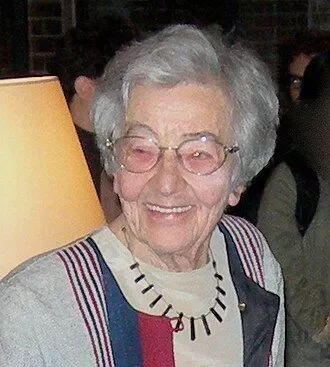
Ursula Franklin
Born16 Sep, 1921
Died22 Jul, 2016
NationalityGerman, Canadian
Age at time of death94
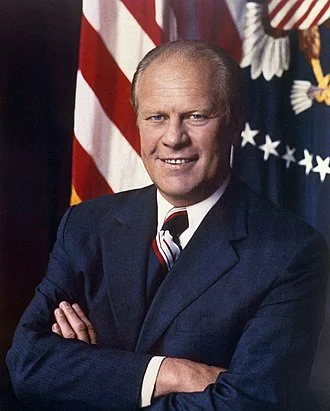
Gerald Ford
Born14 Jul, 1913
Died26 Dec, 2006
NationalityAmerican
Age at time of death93
Phyllis Diller
Born17 Jul, 1917
Died20 Aug, 2012
NationalityAmerican
Age at time of death95

Lily Ebert
Born29 Dec, 1923
Died09 Oct, 2024
NationalityHungarian, British
Age at time of death100
Jonas Cohn
Born01 Dec, 1869
Died28 Jan, 1947
NationalityGerman
Age at time of death77
Richard Feynman
Born11 May, 1918
Died15 Feb, 1988
NationalityAmerican
Age at time of death69
Victor Hugo
Born26 Feb, 1802
Died22 May, 1885
NationalityFrench
Age at time of death83
Marshall Brain
Born17 May, 1961
Died20 Nov, 2024
NationalityAmerican
Age at time of death63

Tina Turner
Born26 Nov, 1939
Died24 May, 2023
NationalityAfrican, American
Age at time of death83
George Murphy
Born04 Jul, 1902
Died03 May, 1992
NationalityAmerican
Age at time of death89
Eric Morecambe
Born14 May, 1926
Died28 May, 1984
NationalityBritish
Age at time of death58
A. W. Tozer
Born21 Apr, 1897
Died12 May, 1963
NationalityAmerican, Canadian
Age at time of death66
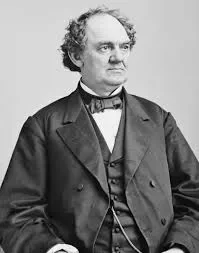
P. T. Barnum
Born05 Jul, 1810
Died07 Apr, 1891
NationalityAmerican
Age at time of death80
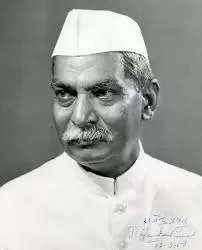
Rajendra Prasad
Born03 Dec, 1884
Died28 Feb, 1963
NationalityIndian
Age at time of death78
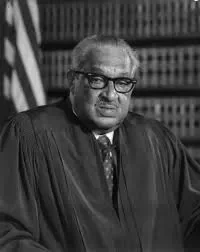
Thurgood Marshall
Born02 Jul, 1908
Died24 Jan, 1993
NationalityAmerican
Age at time of death84
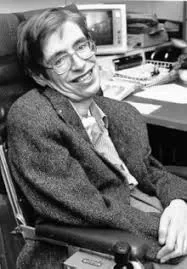
Stephen Hawking
Born08 Jan, 1942
Died14 Mar, 2018
NationalityEnglish
Age at time of death76
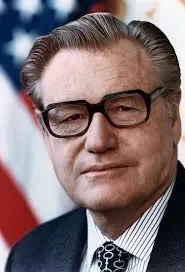
Nelson Rockefeller
Born08 Jul, 1908
Died26 Jan, 1979
NationalityAmerican
Age at time of death70
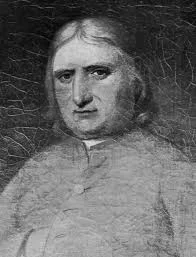
George Fox
Born04 Jul, 1624
Died13 Jan, 1691
NationalityEnglish
Age at time of death66

Ethan Allen
Born21 Jan, 1738
Died12 Feb, 1789
NationalityAmerican
Age at time of death51