Real Celebrities Never Die!
OR
Search For Past Celebrities Whose Birthday You Share
Died Age: 68
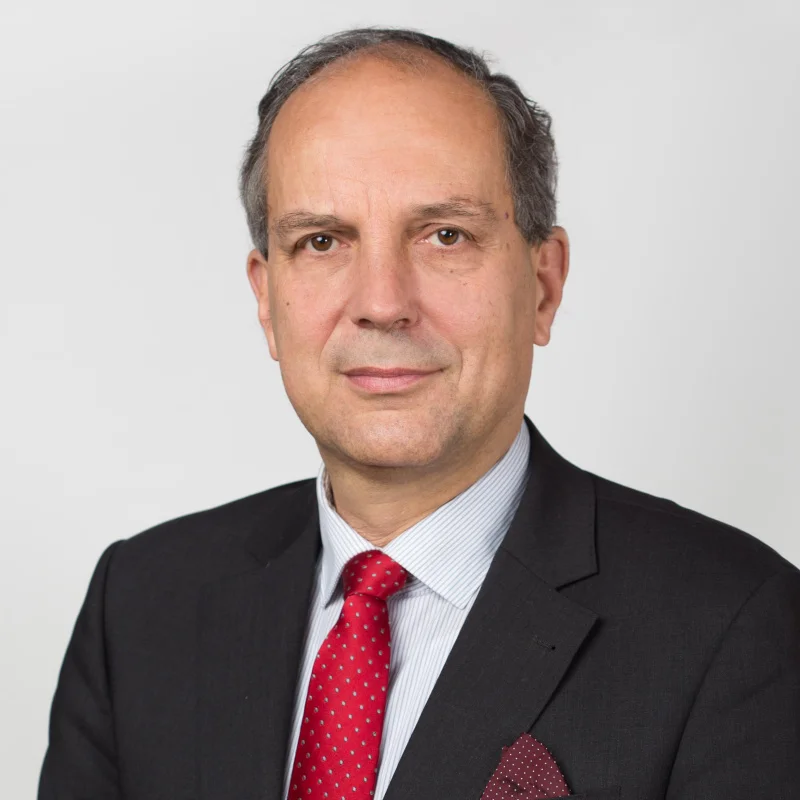
www.parlament.gv.at
Johannes Hübner
Birthday:
06 Oct, 1956
Date of Death:
01 Feb, 2025
Cause of death:
Unknown
Nationality:
Austrian
Famous As:
Austrian politician
Age at the time of death:
68
Early Life: Roots in a Rebuilding Nation
Johannes Hübner lived a life defined by intellect, conviction, and controversy — a man who bridged the worlds of law and politics with equal measures of precision and passion. Trained as a lawyer and known for his sharp analytical mind, Hübner became one of the most recognizable figures in Austria’s Freedom Party (FPÖ), where he championed causes rooted in national sovereignty, legal clarity, and foreign policy realism. His story is that of a disciplined thinker who entered the storm of politics determined to make his mark — and who, for better or worse, succeeded.
Born in Vienna in 1956, Johannes Hübner grew up in a country still finding its postwar footing. Austria in the 1950s was a place of reconstruction — physically, politically, and morally — and young Hübner came of age in an environment where order, structure, and civic duty were deeply valued. Those qualities would later define his career, both in the courtroom and in parliament.
From an early age, Hübner showed an interest in logic and debate. The atmosphere of postwar Vienna, steeped in both history and rebirth, nurtured in him a curiosity about governance and justice — questions that would follow him throughout his life.
Education: Forging a Legal Mind
Hübner’s academic journey led him to study law at the University of Vienna, one of Europe’s oldest and most prestigious institutions. He graduated with a doctorate in law in the late 1970s, distinguishing himself through a meticulous approach to legal reasoning and a fascination with constitutional order.
Law appealed to him not just as a profession, but as a philosophy — a framework for understanding how societies organize themselves, balance freedom with responsibility, and hold power to account. It was this grounding that would later shape his political worldview, where legality and national interest often intertwined.
Early Career: From the Courtroom to the Council Chamber
After completing his legal training, Hübner worked as a practicing attorney, quickly gaining a reputation for discipline and rigor. But his ambitions soon reached beyond the courtroom. In the mid-1980s, he entered local politics as a district councillor in Vienna, representing the Freedom Party (FPÖ).
For Hübner, politics was an extension of his legal calling — a chance to shape the systems he had spent years studying. His early years in the FPÖ were marked by an unwavering commitment to national policy, legal reform, and Austria’s role in an evolving Europe.
Major Achievements and Turning Points: The FPÖ’s Foreign Voice
Hübner’s national breakthrough came when he was elected to Austria’s National Council in 2008, representing Vienna. Over the next decade, he served as one of the party’s key voices on foreign affairs, bringing a lawyer’s precision to debates that often strayed into ideology and emotion.
He was known for his measured speaking style — calm, articulate, and deeply grounded in fact. Whether discussing Austria’s relationship with the European Union or the complexities of global trade and diplomacy, Hübner stood out for his insistence on legal consistency and national self-determination.
At the same time, he was not a stranger to controversy. His outspoken positions on international sanctions and his calls for a more independent Austrian foreign policy often placed him at odds with the political mainstream. To his supporters, he was principled and unflinching; to his critics, he was contrarian and provocative.
Yet even those who disagreed with him acknowledged his intellect and integrity. In an era when political discourse often relied on slogans, Hübner brought substance — citing law, precedent, and historical context to support his views.
Later Career: From Politics to Reflection
After nearly a decade in the National Council, Hübner transitioned to Austria’s Federal Council, representing Vienna in the early 2020s. Though less visible to the public, his influence remained strong within the FPÖ’s policy circles. He served as a mentor to younger members, encouraging intellectual rigor over populist soundbites — a stance that earned him both respect and resistance.
Even as public scrutiny intensified in his later years, Hübner continued to view politics as a calling rooted in civic responsibility rather than personal ambition. He remained a firm believer that Austria’s strength lay in its independence and in the moral weight of its laws.
Personal Life: Discipline and Devotion
Beyond politics, Johannes Hübner was a devoted husband and father, known for his loyalty to family and his deep sense of order. Friends described him as private, composed, and somewhat austere — yet capable of dry humor and great kindness in quieter moments.
He was passionate about history and art, often spending his free time reading or attending cultural events in Vienna. Those who worked with him said that even in personal conversation, his mind tended to circle back to structure and principle — traits that made him a formidable debater and an unwavering colleague.
Legacy: A Complex and Enduring Figure
Johannes Hübner’s legacy is one of complexity and conviction. He was a man who sought to reconcile the discipline of law with the turbulence of politics, and in doing so, he embodied both the promise and peril of principled leadership. His career spanned decades of political transformation in Austria, from postwar stability to the polarized landscape of the twenty-first century.
Supporters remember him as an intellectual within a populist movement — a figure who grounded fiery debate in legal reasoning and national duty. Detractors recall the controversies that shadowed his career. Both are part of the same truth: Johannes Hübner was never content to stand in the middle.
In the end, his life reflects the paradox of public service itself — the tension between ideals and realities, between the clarity of law and the chaos of politics. Whether admired or contested, Johannes Hübner’s story stands as a testament to the enduring struggle to bring reason, principle, and integrity to the public stage.
Profile Snapshot
Name:
Johannes Hübner
Popular Name:
Johannes Hübner
Gender:
Male
Cause of Death:
Unknown
Spouse:
Unknown
Place of Birth:
Vienna, Austria
Place of Death:
Austria
Occupation / Profession:
Austrian politician
Personality Type
Logistician: Johannes Hübner appears to be a deeply reflective and systematic thinker, driven by ideas and theoretical clarity, who approaches questions with foresight and intellectual rigour.
Johannes Hübner's Interesting Facts
Johann Hübner’s book Kurtze Fragen aus der alten und neuen Geographie was one of the first geography textbooks used in schools in the late 17th century.
In 1714, Hübner published Biblische Historien—a children’s Bible containing over 100 woodcuts—that was translated into more than fifteen European languages and went through hundreds of editions.
Hübner served as rector of the gymnasium in Merseburg for 17 years before becoming head of the Johanneum in Hamburg in 1711.
He worked with the renowned cartographer Johann Baptist Homann in producing school atlases, helping to bring geographical maps into academic teaching.
Achievements & Awards
He served as a Member of the Federal Parliament for Vienna South-West from 2008 to 2017.
He held the role of Foreign Affairs Spokesman for the FPÖ until October 2017
External Links