Real Celebrities Never Die!
OR
Search For Past Celebrities Whose Birthday You Share
Died Age: 92
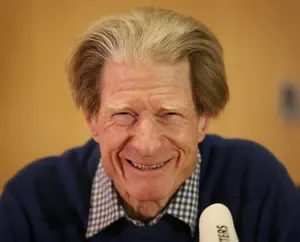
www.britannica.com
John Gurdon
Birthday:
01 Oct, 1933
Date of Death:
06 Oct, 2025
Cause of death:
Natural Causes
Nationality:
John Gurdon
Famous As:
British developmental biologist
Age at the time of death:
92
Sir John Bertrand Gurdon's Quote's

“Science is about finding out what is true, even if it is uncomfortable.”
Sir John Bertrand Gurdon
🔗 deadcelebrityhub.com
Early Life: A Curious Child in England
John Gurdon is a pioneering developmental biologist whose groundbreaking experiments transformed our understanding of cellular identity and regenerative medicine. Through meticulous curiosity and daring experimentation, he demonstrated that even mature cells could revert to a pluripotent state, laying the foundation for modern stem cell research.
John Bertrand Gurdon was born in 1933 in Dippenhall, Surrey, England, into a family that valued education, curiosity, and a connection to nature. From a young age, he displayed a keen interest in the natural world—observing tadpoles in ponds, dissecting small animals, and asking questions that often exceeded the capacity of teachers and peers to answer.
This early fascination with life in its many forms was coupled with a patient, methodical mindset. While other children played games, Gurdon immersed himself in the mysteries of biology, laying the foundation for a lifetime of scientific inquiry.
Education: Nurturing a Scientific Mind
Gurdon attended Eton College, where his interests in science were encouraged alongside a broader classical education. Later, he studied natural sciences at the University of Oxford, developing the experimental skills and theoretical background that would define his career.
Though he encountered early setbacks—his first attempts at lab work were often messy and uncertain—he displayed resilience and creativity, qualities that would become crucial for the bold experiments to come.
Early Career: Challenging Assumptions
In the 1950s and 60s, Gurdon focused on developmental biology, studying frogs and their embryonic cells. At a time when the scientific consensus held that cell differentiation was irreversible, he dared to question the status quo.
In a series of elegant experiments, he replaced the nucleus of a frog egg cell with that of a mature intestinal cell. Astonishingly, the egg developed into a normal tadpole. This single experiment demonstrated that mature cells retain the genetic information necessary to form an entire organism—a concept that challenged long-held assumptions in biology.
Major Achievements: Unlocking Cellular Potential
Gurdon’s work was a milestone in biology. His experiments showed that cell differentiation is reversible and that genetic information remains intact throughout development. This insight laid the conceptual foundation for cloning and modern stem cell research.
In 2012, he shared the Nobel Prize in Physiology or Medicine with Shinya Yamanaka, who had discovered methods to reprogram adult cells into pluripotent stem cells. The prize recognized not only Gurdon’s historic experiments but also their lasting impact on regenerative medicine, disease modeling, and potential therapies for previously untreatable conditions.
Later Career: Mentorship and Leadership in Science
After his breakthrough work, Gurdon continued to contribute to science as a mentor, leader, and advocate for research. He held positions at the University of Oxford, where he guided new generations of scientists, encouraging them to challenge assumptions and pursue bold experiments.
He also became a vocal supporter of ethical, responsible scientific innovation, emphasizing that curiosity must be balanced with consideration of societal impact.
Personal Life: Humble and Dedicated
Outside the lab, Gurdon has been described as modest, approachable, and deeply committed to nurturing talent. He enjoys observing nature, reading widely, and reflecting on the philosophical implications of scientific discovery. His humility and kindness have made him a respected figure both in and beyond the scientific community.
Legacy: A Pioneer of Cellular Biology
John Gurdon’s legacy is profound. He transformed our understanding of cellular plasticity, challenged entrenched scientific dogma, and opened doors to therapies that were once unimaginable. His work continues to inspire researchers, doctors, and students worldwide, highlighting the power of curiosity, courage, and rigorous experimentation.
John Gurdon is remembered as a visionary scientist whose daring experiments not only changed biology but also offered hope for the future of medicine and human health.
Profile Snapshot
Name:
Sir John Bertrand Gurdon
Popular Name:
John Gurdon
Gender:
Male
Cause of Death:
Natural Causes
Spouse:
Jean Elizabeth Margaret Curtis
Place of Birth:
Dippenhall, Surrey, England
Place of Death:
England
Occupation / Profession:
British developmental biologist
Personality Type
Adventurer: John Gurdon was a quietly determined, fiercely analytical visionary — a pioneering “mastermind” whose intellectual boldness and disciplined rigor reshaped biology by revealing that specialization isn’t permanent, unlocking the door to cloning and regenerative medicine.
Sir John Bertrand Gurdon's Interesting Facts
John Gurdon was famously told as a student that his scientific ambitions were “quite ridiculous,” yet he later became a Nobel Prize–winning biologist.
He pioneered nuclear transfer experiments in frogs, proving that mature cells still contain all the genetic information needed to form an entire organism.
His groundbreaking work laid the foundation for cloning technologies, including the science that eventually made Dolly the sheep possible.
The Gurdon Institute at the University of Cambridge is named in his honor and focuses on developmental biology and cancer research.
Achievements & Awards
John Gurdon was awarded the Nobel Prize in Physiology or Medicine in 2012 for showing that mature cells can be reprogrammed to become pluripotent, which revolutionized developmental biology.
He also received the Albert Lasker Basic Medical Research Award in 2009 for his groundbreaking work in nuclear transplantation and cloning. These awards recognize his pioneering contributions to understanding cell development and regenerative medicine.
External Links