Real Celebrities Never Die!
OR
Search For Past Celebrities Whose Birthday You Share
Died Age: 86
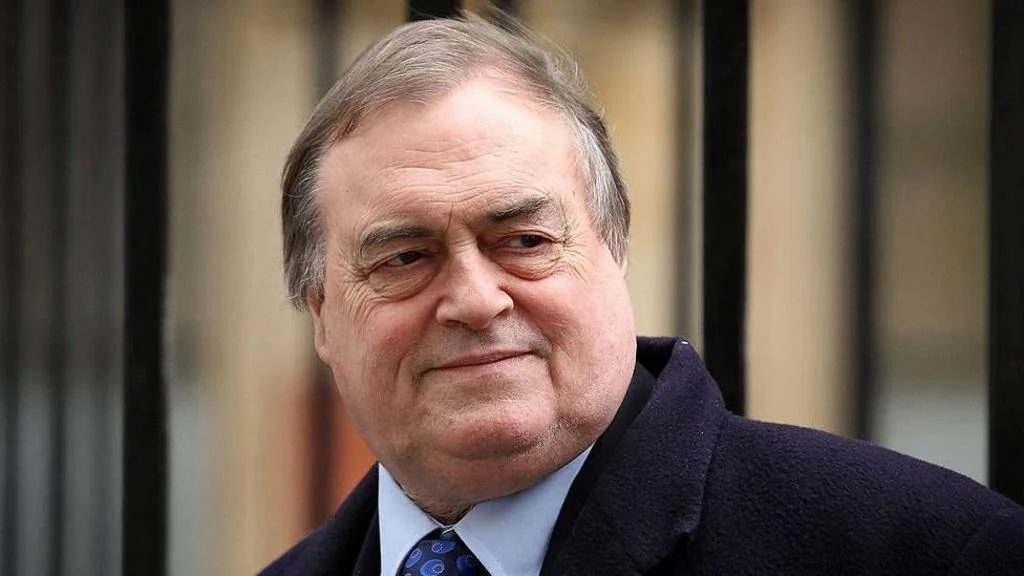
ichef.bbci.co.uk
John Prescott
Birthday:
31 May, 1938
Date of Death:
20 Nov, 2024
Cause of death:
Alzheimer’s disease
Nationality:
British
Famous As:
British politician
Age at the time of death:
86
John Leslie Prescott, Baron Prescott 's Quote's

“I know there's a media storm against me. They don't like me and to be quite honest I don't like them.”
John Leslie Prescott, Baron Prescott
🔗 deadcelebrityhub.com
Early Life: From Merchant Ships to Hull Streets
John Prescott wasn’t polished. He didn't adhere to political scripts. But as Britain’s Deputy Prime Minister under Tony Blair from 1997 to 2007, his raw honesty, tenacity, and unwavering working-class ethos defined a generation of UK politics. Prescott stood at the crossroads of tradition and transformation—crude yet compassionate, blunt yet deeply principled.
He was the union steward turned national figure who refused to let his roots get lost in power.
Born on May 31, 1938, in Prestatyn, Wales, Prescott was the son of a railway signalman and a domestic worker. He left school at 15 and worked as a steward on Cunard cruise liners, where he boxed to entertain passengers—and learned early lessons about class, dignity, and grit.
He later studied at Ruskin College in Oxford and at the University of Hull, returning to Hull in 1970 as the Labour MP for East Hull—a seat he would hold for four decades. He remained rooted in the city’s working-class community throughout his life.
Career Journey
Phase One: Labour Activist to Shadow Cabinet
Active in the National Union of Seamen, Prescott rose through Labour’s ranks in the 1980s as part of Neil Kinnock’s team. He became deputy leader of the party in 1994—a symbolic and strategic choice, balancing Blair’s centrist reforms with working-class legitimacy.
Phase Two: Deputy Prime Minister and the Kyoto Moment
When Labour won the 1997 election, Prescott was appointed Deputy Prime Minister—often with responsibility for environment, transport, and regional development. He played a key role in negotiating the Kyoto Protocol, making climate politics part of his global portfolio.
Locally, he championed city regeneration, social housing refurbishment, and the creation of regional assemblies—visionary plans that often faltered, but signaled his belief in devolving power beyond Whitehall.
Phase Three: Enforcer, Mediator, Everyman Politician
One of his most infamous moments came during the 2001 general election, when he punched a protester who had thrown an egg at him. Instead of apology, Prescott quipped that he was simply following Blair’s instruction to “connect with the electorate” — a moment that earned him broad public approval and cemented his image as the Labour enforcer.
Privately, Prescott served as the tension-fixer between Blair and Chancellor Gordon Brown. Their often fraught partnership needed someone neither totally Blairite nor wholly Brownite—and Prescott became that stabilizer.
Personal Life: Storms, Silences, and Courage
Prescott’s personal life was no stranger to headlines. In 2006 he admitted to a long affair with a much younger aide, causing scandal—but his marriage to his wife Pauline endured. Around the same time, press scrutiny emerged over croquet at Dorneywood and media missteps.
Yet perhaps most courageous was his public admission of battling bulimia nervosa over many years—a condition he attributed to political stress. His openness sparked broader conversations about men's mental health and pressures in public life.
Final Chapter and Passing
Prescott retired from Parliament in 2010 and was appointed to the House of Lords. In later years he battled Alzheimer’s and withdrew from public life. He died peacefully on November 20, 2024, aged 86, in a care home in Hull, surrounded by family and “the jazz music he loved,” as his family shared.
Legacy: Labour’s Bridge Between Past and Future
Prescott’s legacy is as much symbolic as substantive: the working-class man at the heart of modernizing Labour, giving voice to forgotten communities. He helped secure the UK’s first international climate agreement, pushed forward transport and devolution plans, and embodied a kind of authenticity rare in Westminster.
He was referred to by colleagues as Labour’s glue—holding together the party’s old and new wings, the city and the suburb, the future and the past.
He didn’t speak with polish—but he spoke with conviction. And that, for many, is what made him one of the most memorable politicians of his era.
John Prescott taught Britain that power could be wielded with common sense and compassion. He carried the pulse of working-class life into Whitehall, proving that politics grounded in place—and in people—matters, now and ever.
Profile Snapshot
Name:
John Leslie Prescott, Baron Prescott
Popular Name:
John Prescott
Gender:
Male
Cause of Death:
Alzheimer’s disease
Spouse:
Pauline Tilston
Place of Birth:
Prestatyn, Wales
Place of Death:
United Kingdom
Occupation / Profession:
British politician
Personality Type
Executive Excellent administrators, unsurpassed at managing things – or people. John Prescott is a practical, outspoken, and decisive leader who values structure, tradition, and getting things done — with a no-nonsense approach to public service and leadership.
John Leslie Prescott, Baron Prescott 's Interesting Facts
Before politics, Prescott worked as a ship’s steward and a trade union organizer.
He survived a serious car crash in 2006 that left him with a broken rib and other injuries.
John Prescott was the first Deputy Prime Minister of the UK to officially use a red box for carrying documents.
Prescott was known for his trademark flat cap, which became a symbol of his working-class roots.
Achievements & Awards
He was also made a Companion of Honour in 2022 for his significant contributions to politics and public service during his long career.
John Prescott, a prominent British politician and former Deputy Prime Minister, was awarded a life peerage in 2010, becoming Baron Prescott.
External Links