Real Celebrities Never Die!
OR
Search For Past Celebrities Whose Birthday You Share
Died Age: 56
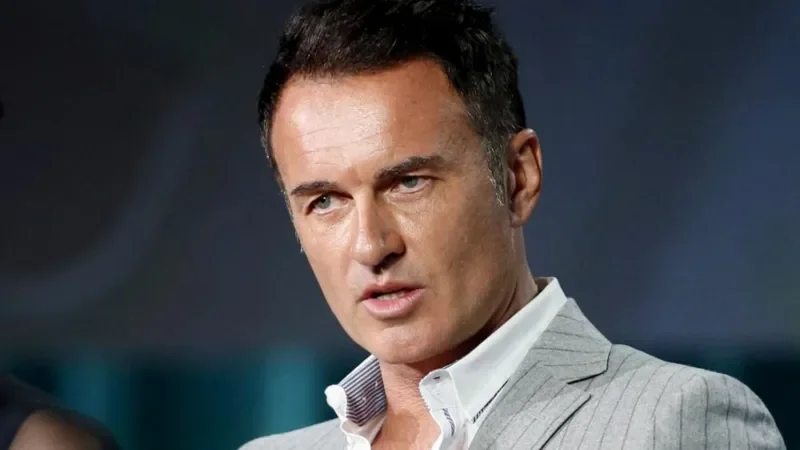
www.bbc.co.uk
Julian McMahon
Birthday:
26 Jul, 1968
Date of Death:
03 Jul, 2025
Cause of death:
Cancer
Nationality:
Australian, American
Famous As:
American film
Age at the time of death:
56
Julian Dana William McMahon's Quote's

“A lot of times you just go through life and forget to stop and say: 'This is cool.' Or: 'I'm lucky, I love the people in my life and I love what I'm doing.”
Julian Dana William McMahon
🔗 deadcelebrityhub.com
Early Life
Julian McMahon was a charismatic actor who seemed equally at ease as a villain, a romantic lead, and a man confronting his own inner contradictions. He crossed continents and genres—rising from Australian television to Hollywood blockbusters—and created roles that combined glamour, danger, irony, and human fragility. In his final years, he faced illness privately, even as the public rediscovered him through new work. His life is a story of legacy, risk, transformation, and a love for craft that carried him until the end.
Julian Dana William McMahon was born on July 27, 1968, in Sydney, Australia, the only son of Sir William “Billy” McMahon—a prominent Australian politician who would become Prime Minister—and his wife, Lady Sonia McMahon. Growing up in a household that was part public service, part pageantry, Julian was surrounded by political expectation and social visibility—but also by his own longing to make different kinds of stories.
He attended Sydney Grammar School, a private boys' school, the same one his father once attended. As a child he was athletic, drawn to sports like rugby, and also curious about performing and fashion. After high school he briefly studied law and economics at university—but it wasn’t long before he felt the pull toward modeling, storytelling, and acting. His early exposure to modeling in his late teens, including work in Europe, planted the first seeds of a career that would oscillate between glamour and gravitas.
Education & Formative Influences
McMahon’s education was part formal, part experiential. Schooling instilled discipline, but his real growth came from real world exposure: modeling jobs, adapting to being in front of the camera, traveling internationally, absorbing different cultures, and watching how profile and publicity could shape perception. The world of fashion and modeling taught him about image, presence—about how to command a frame. And the early experience of having a father in high office taught him both the power and the scrutiny that come with public life—a tension he carried into his acting.
Career Journey
Julian McMahon’s professional journey unfolds in several phases: beginnings in Australian media; building a foothold in American TV; landmark roles and action/genre work; and later career resurgence amid private struggle.
Phase One: Australian Beginnings
He began his show business life as a model, in his late teens, traveling, doing advertisement work. One of those early jobs—Australia Levi’s commercials—became unexpectedly important: when his father died, and Julian returned home, the visibility of those campaigns helped him land his first TV roles. He joined Home and Away in 1990, playing Ben Lucini for many episodes—a chance to learn the rhythms of acting in serial drama, to develop discipline, to understand the mass-audience frame.
Phase Two: Breaking Into U.S. Television
Wanting to reach larger stages, McMahon moved into American television. He landed roles in soaps and crime dramas—Another World, Profiler—some of which cast him as detective or morally complex figures. His charm and screen presence turned heads. He learned how to play both hero and something darker; roles began to play with shades of obsession, betrayal, desire, rather than black-and-white morality.
Phase Three: Defining Roles & Genre Success
The early 2000s were pivotal. On Charmed, he played Cole Turner, a character part demon, part love interest—a role that let Julian explore dangerous charisma, romance, and internal struggle. That performance cemented his position as someone who could be alluring even when dangerous. Soon after came Nip/Tuck, where as Dr. Christian Troy he played a hedonistic plastic surgeon: ambitious, flawed, beautiful, self-destructive. That role earned him wider recognition and award nominations. Parallel to his television work, he took on film roles—including playing Doctor Doom in the Fantastic Four movies—villainous parts that allowed him to blend menace with polish.
Phase Four: Later Work, Reinvention, and Private Battles
As his star rose, Julian didn’t stop evolving. He took roles in film and television of many kinds: dramas, genre films, crime shows. In recent years he starred in FBI: Most Wanted, embodied characters with weight and history, sometimes with physical or emotional edges. He also faced illness—secretly, away from public view—and in his final year worked while carrying private struggles, even earning renewed critical attention for his role in The Surfer. He died on July 2, 2025, in Clearwater, Florida, at age 56, from cancer that had metastasized—his illness kept largely out of the spotlight, his farewell as quietly dignified as many of his performances.
Personal Life
Julian’s personal life combined glamour, love, disappointment, and care. He married three times: first to singer/actress Dannii Minogue in the mid-1990s, then to Brooke Burns—with whom he had a daughter—and finally to Kelly Paniagua in 2014, who was his partner until the end. Despite often playing larger-than-life roles, friends and colleagues recall his kindness, his warmth, his professionalism on set, and a wry sense of humor that gave him levity even in intense scenes.
Though he lived much of his adult life in the U.S., he remained deeply connected to Australia—its landscapes, its culture, and his roots. He was proud of being Australian, even when much of his career demanded American accents, Hollywood schedules, and navigating a culture of celebrity that often felt complicated. He maintained dual citizenship and spoke about missing home, yet embraced the transitions and challenges of working internationally.
Legacy
Julian McMahon’s legacy is rich and layered—not only in what he played, but in how he embraced complexity, vulnerability, and reinvention.
He showed audiences that a villain can be seductive, a flawed hero magnetic—and that roles with moral ambiguity often reveal more about human desire and insecurity than straight heroics.
His characters—Cole Turner, Christian Troy, Doctor Doom—remain iconic not just for their dramatic arcs, but because he brought emotional depth to them: their flaws, their charm, their cost.
He crossed geographic, genre, and cultural boundaries: from Australian soaps to U.S. dramas to big screen comic book antagonists; from modeling to acting; from romantic leads to damaged souls.
In battling illness privately, continuing to work, continuing to care about craft until the end, he left an example of dedication beyond the glare of publicity.
Conclusion
Julian McMahon’s life was a blend of contrasts: public and private, hero and villain, success and struggle. From Sydney modeling to Hollywood stardom, from youthful ambition to seasoned performance, he carried both confidence and fragility. His roles often asked us to root for—and fear—the same man; his performances made us reflect on what it means to be ambitious, beautiful, flawed. In death, as in much of his work, he chose dignity, craft, passion. He will be remembered not just for his striking roles or flashy villains, but for the actor who let his characters be human—and for the man who kept doing voices, scenes, shows, even when the journey was hard. His legacy goes beyond memorability; it lives in the moments when his gaze cracked, when his smile faltered, when you believed in the danger and in the longing. Julian McMahon is someone audiences will miss—but also someone whose work will endure.
Profile Snapshot
Name:
Julian Dana William McMahon
Popular Name:
Julian McMahon
Gender:
Male
Cause of Death:
Cancer
Spouse:
Dannii Minogue
Brooke Burns
Kelly Paniagua
Place of Birth:
Sydney, New South Wales, Australia
Place of Death:
Clearwater, Florida, U.S.
Occupation / Profession:
American film
Television actor
Personality Type
Entertainer: Julian McMahon was a deeply introspective and artistically driven actor, combining emotional sensitivity and a sense of inner values with a preference for complex, meaningful roles — often choosing substance over spotlight, and crafting a public presence that’s striking yet quietly authentic.
Julian Dana William McMahon's Interesting Facts
Julian McMahon is the son of famous Australian politician Sir William McMahon, who served as Prime Minister.
Before acting, he worked as a fashion model in Europe, including campaigns for Versace.
He is best known for his roles as Cole Turner in Charmed and Dr. Christian Troy in Nip/Tuck.
Julian is an accomplished surfer and often enjoys spending time at the beach.
Achievements & Awards
Julian McMahon earned a Golden Globe nomination in 2005 for his role in Nip/Tuck. Throughout his career, he has also been recognized with nominations from organizations like the Saturn Awards, Satellite Awards, Gold Derby TV Awards, and Australia’s AFI International Awards.
External Links
Latest Profiles
People also viewed
Diana Barrymore
Born03 Mar, 1921
Died25 Jan, 1960
NationalityAmerican
Age at time of death38

Hesham Selim
Born26 Jan, 1958
Died21 Sep, 2022
NationalityEgyptian
Age at time of death64
Joey D. Vieria
Born07 Apr, 1944
Died06 Apr, 2025
NationalityAmerican
Age at time of death80