Real Celebrities Never Die!
OR
Search For Past Celebrities Whose Birthday You Share
Died Age: 92
www.bbc.com
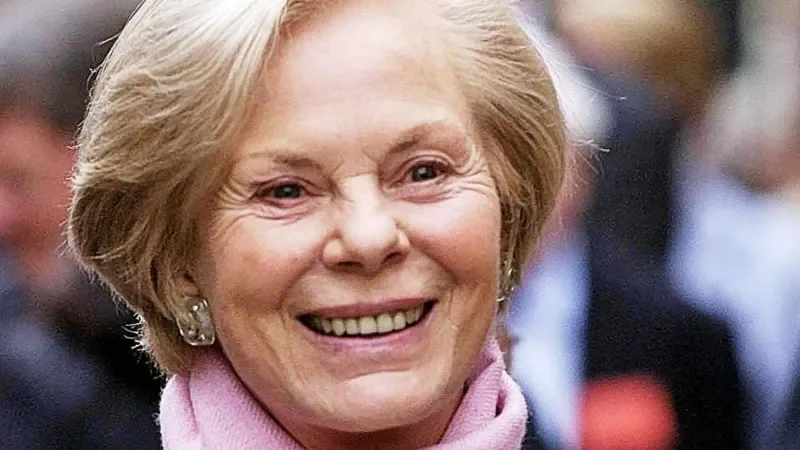
Katharine, Duchess of Kent
Birthday:
21 Feb, 1933
Date of Death:
03 Sep, 2025
Cause of death:
Natural Cause
Nationality:
British
Famous As:
Member of the British royal family
Age at the time of death:
92
Katharine Lucy Mary Worsley's Quote's

“I was just known as Mrs Kent. Only the head knew who I was. The parents didn’t know and the pupils didn’t know. No one ever noticed. There was no publicity about it at all—it just seemed to work.”
Katharine Lucy Mary Worsley
🔗 deadcelebrityhub.com
Early Life
Katharine, Duchess of Kent, was royalty who traded ceremony for classroom, titles for teaching, and privilege for purpose. Born into Yorkshire aristocracy, she entered public life as a Duchess, but later chose a quieter calling: music, education, empathy. Her legacy isn’t just in royal weddings and duty, but in the voices of children she taught, the music charities she built, and the example of humility and service she lived by.
Katharine Lucy Mary Worsley was born on 22 February 1933 at Hovingham Hall, Yorkshire, the fourth child and only daughter of Sir William Worsley, 4th Baronet, and Joyce Morgan Brunner. Her childhood was bound up with the English countryside, early rhythms of aristocratic life, and times of both companionship and solitude—especially during the war years, when her brothers were away and many of her earlier years were shaped by the quiet of home, walks on the moors, and the emotional space of rural England.
She didn’t begin formal schooling until she was 10, attending first Queen Margaret’s School in York, then Runton Hill School in Norfolk. It was at these schools that she discovered her passions: music (piano, organ, violin) and literature. She served as music secretary in her final year, organising school recitals and finding early joy in bringing music to people. After school she worked in children’s homes and a nursery and then attended a finishing school in Oxford, following in her brothers’ footsteps, continuing her music studies.
Education & Formative Influences
Though her formal education began later than many, Katharine’s training in music was deep and tenacious. Her early instruction in piano, violin, and organ were more than hobbies—they became her refuge and anchor. Music became her language of expression. Her parents’ home, with its heritage, her love of nature, and her sensibility for literature, all contributed to a sense that beauty mattered, but also that service and humility had equal weight.
Her upbringing instilled not just appreciation for the arts but awareness of duty: her family’s history, her father’s role, her surroundings in Yorkshire. She absorbed both the privileges of aristocracy and the responsibilities it brought. Those formative years laid the groundwork for later choices—ones that would surprise people used to seeing royalty in grand settings.
Career Journey
Katharine’s public life moves through phases: royal duties and family life; gradual shift; service and teaching; charitable work and legacy.
Phase One: Royal Duties & Family Life
In 1961, Katharine married Prince Edward, Duke of Kent. With her marriage she became a working royal, representing the monarchy, attending countless public engagements, taking on patronages, embracing duty. She was present at major events—ceremonies, charitable functions, Wimbledon, official tours—and lived much of her life in the public eye.
This phase, though filled with ceremony, also held personal challenges: balancing visibility with privacy, royal expectations with personal inclinations toward music and service, and sorrow—most notably the stillbirth of one of her children. These experiences deepened her empathy, shaped her faith, and informed her view that sometimes the most meaningful work is done quietly.
Phase Two: Quiet Shift & Teaching
Around the mid-1990s Katharine began to step away from full-time royal duties. In 1996 she started teaching music at a primary school in Hull, each week traveling to teach children under the name “Mrs Kent”—not using her royal titles in that classroom, not seeking publicity. For more than a decade she continued in that role, teaching children from deprived areas, often from single-parent households, helping choirs, arranging school concerts, nurturing dreams. The anonymity of the role was part of what she valued: there were no royal airs in those classrooms, just music, voices, and learning.
In 2002 she formally relinquished her use of the nearby working royal style (“Her Royal Highness”) for herself, signaling that this quiet, relational work would be central to her life going forward. She maintained her passion for music, teaching, and children rather than visibility.
Phase Three: Charitable Work & Legacy Projects
Alongside teaching she invested in causes that used her lifelong loves: music, youth, opportunity. She co-founded or led charities aimed at giving children access to musical education, instruments, and opportunities—especially those from less privileged backgrounds. She served in leadership roles in music-oriented education institutions, volunteering, supporting apprenticeships. Even when she was no longer performing regular royal duties, she could often be seen gently championing programs, attending musical performances, speaking of the power of music not just as entertainment, but as transformation.
She also undertook a significant personal transformation in faith: in 1994 she converted to Roman Catholicism, a decision few among the royal families of recent generations had taken, adding another layer to how her identity shifted away from tradition and toward personal conviction.
Personal Life
Katharine’s personal life was marked by deep love, complexity, grief, and loyalty. Her marriage to the Duke of Kent lasted decades. She was mother to three children, and endured the sorrow of loss—a child stillborn—and also the quiet trials of public expectation, private grief, and evolving identity.
She was said to prefer the modest, the genuine: teaching in state schools rather than endless events; living nearer to home than always in grand settings; being better known to children she taught than to headline headlines. She maintained her interests—music, literature, nature—and was often described by friends and colleagues as compassionate, humble, a person for whom small moments of kindness mattered more than status.
Legacy
Katharine, Duchess of Kent, passed away recently at age 92. Her legacy is multi-faceted—but among the brightest threads are:
An example of royalty lived with humility: choosing to teach, to serve, to step back from inherited privilege in order to align life with passion and purpose.
A lifelong champion of music and youth: creating opportunities for children, particularly from disadvantaged backgrounds, to experience music—both as creative expression and as source of solace.
A transformational figure in royal life: in faith, in public role, in image—her conversion, her stepping down from full duties, her renunciation of the HRH style for herself mark her as someone willing to reshape tradition.
A lasting impact through charity and education: institutions she founded or supported continue; students she taught and communities she touched will carry the echo of her kindness, her teaching, her belief in music.
Conclusion
Katharine, Duchess of Kent, lived two lives in one: the one expected of her, the one chosen by her. From aristocratic birth in Yorkshire through royal wedding, public duties, loss and love, to a shift toward classrooms and quiet service, she followed a path defined less by privilege than by heart. She did not seek to be a headline; she sought to be useful. Her legacy is in the children who learned to sing, the students who discovered joy in music, in the quiet impact of a royal who became Mrs Kent. In a world often dazzled by grandeur, she reminds us that sometimes the most profound change comes from humility, consistency, and kindness.
Profile Snapshot
Name:
Katharine Lucy Mary Worsley
Popular Name:
Katharine, Duchess of Kent
Gender:
Female
Cause of Death:
Natural Cause
Spouse:
Prince Edward
Duke of Kent
Place of Birth:
Hovingham Hall, North Riding of Yorkshire, England
Place of Death:
Kensington Palace, London, England
Occupation / Profession:
Member of the British royal family
Personality Type
Virtuoso: Katharine, Duchess of Kent, seemed to be a deeply caring and humble figure, quietly devoted to service and music, who found more fulfilment in personal connection and moral integrity than in prestige, balancing the weight of tradition with compassion and a preference for a modest, meaningful life
Katharine Lucy Mary Worsley's Interesting Facts
Katharine, Duchess of Kent, is known for her deep interest in religion and is a practicing Roman Catholic.
She is an accomplished pianist and has performed in public for charity events.
Katharine has written several books on spirituality and religious topics.
She has been actively involved in numerous charitable organizations, particularly those focused on children and education.
External Links