Real Celebrities Never Die!
OR
Search For Past Celebrities Whose Birthday You Share
Died Age: 80
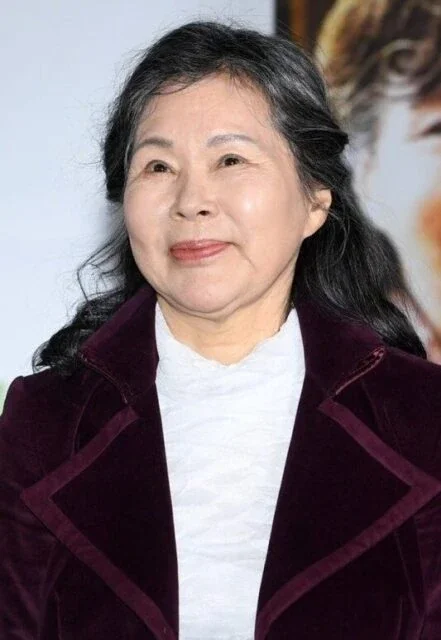
squid-game.fandom.com
Lee Joo-sil
Birthday:
07 Mar, 1944
Date of Death:
01 Feb, 2025
Cause of death:
Stomach Cancer
Nationality:
Korean
Famous As:
South Korean Actress
Age at the time of death:
80
Lee Joo-sil's Quote's

“Grace is not about being perfect; it’s about staying kind even when the world isn’t.”
Lee Joo-sil
🔗 deadcelebrityhub.com
Early Life
Lee Joo-sil was a towering presence of South Korean theatre, film, and television whose quiet strength and emotional honesty coloured a career spanning six decades. From her early days on the stage to her later work that reached global audiences, she embodied resilience—both in life and on screen. Her final performance in the second season of Squid Game brought her renewed recognition, but her cultural legacy goes far deeper: one of craft, survival, and artistic reinvention.
Born on 8 March 1944 in Bucheon (then under Japanese occupation), Lee Joo-sil’s childhood was shaped by the turbulence of a nation still in flux. Growing up in the waning years of colonial rule and the aftermath of war, she absorbed early on the power of narrative—of what it meant to live through transitions, loss and renewal.
Her pathway to the arts was not pre-ordained. Instead, it emerged from a combination of curiosity, determination and the impulse to express what words alone could not. In the mid-1960s, she embarked on her acting journey, stepping into theatre not simply as a learner of craft, but as a student of human character.
Education
While many of her peers pursued more conventional paths, Lee Joo-sil chose to deepen her understanding of life by later pursuing academia: in 2010 she obtained a doctorate in public health from Wonkwang University. This pursuit speaks to the inner seriousness she carried—an artist who did not rest on performance alone, but sought meaning in healing, identity and social concern.
Her early training in theatre came through the rigorous world of South Korean stage productions, where discipline, voice and presence were honed night after night. It was in that realm that she built the foundation for her long screen career.
Career Journey
Early Career: Theatre Roots
Lee’s professional debut dates back to 1965, when she took to the stage in productions such as Death of a Salesman and Macbeth. In the 1970s and 1980s she became a familiar figure in South Korea’s theatre scene, known for her ability to carry large emotional weight with economical gestures. Her work earned a Baeksang Arts Award for Best Theatre Actress, cementing her reputation as a serious performer.
Major Achievements & Screen Transition
As the decades progressed, Lee steadily expanded into television and film. Her screen presence brought the same depth she exhibited on stage—quiet, contemplative, powerful. Among her memorable film work was her role in Train to Busan (2016), which introduced her to global audiences. Her television career also included standout roles in dramas such as The Uncanny Counter.
A significant turning point arrived when she joined the cast of Squid Game season 2, playing Park Mal-soon—mother to Hwang Jun-ho and step-mother to The Front Man—bringing her artistry to one of the world’s most-watched series. Her performance, though late in her career, reminded the world of her sustained mastery.
Later Career & Final Chapters
Even as she faced serious health battles—she once survived a diagnosis of stage-4 breast cancer and later was diagnosed with stomach cancer—Lee continued to act. Her determination to work despite illness reflects the same resilience she brought to her characters. Her final screen appearances thus carry a poignancy: an artist still connecting, still present, even as time advanced.
Personal Life
Lee’s personal journey mirrored the arcs of many of the roles she played: endurance, vulnerability, regeneration. She spoke candidly of her cancer battles, noting that in the darkest moments, art and family gave her reasons to keep going. Her scholarly pursuit of public health showed her belief that an actor’s work need not be separate from the world’s larger struggles.
Off-screen she was known for warmth and humility. Colleagues remember her as generous to younger actors, respectful of craft, and modest in success. A bit of interesting trivia: despite her decades in front of audiences, she often remarked that the biggest risk she took was stepping into the unknown—choosing roles that challenged rather than comforted.
Legacy
Lee Joo-sil leaves behind a legacy that transcends titles and awards. She is remembered as a storyteller who understood both stage and screen, as a veteran who refused to fade away, and as a human being whose path through illness and triumph echoed the emotional currents of her art.
Her body of work offers not just performances, but a map of changing Korean culture—from post-war theatre to global streaming giants. For many viewers around the world, she became one of the faces that represented Korean drama’s reach and depth.
In the end, Lee’s promise was simple yet profound: to reflect humanity in all its complexity. Her characters showed strength and fragility, and her life mirrored that balance. She will be remembered as a quiet force—ever present, ever evolving—a performer who turned the act of surviving into the act of art.
Profile Snapshot
Name:
Lee Joo-sil
Popular Name:
Lee Joo-sil
Gender:
Female
Cause of Death:
Stomach Cancer
Spouse:
Unknown
Place of Birth:
Bucheon, Korea, Empire of Japan
Place of Death:
Uijeongbu, South Korea
Occupation / Profession:
South Korean Actress
Personality Type
Consul: Lee Joo-sil was a quietly resolute and deeply empathetic performer whose enduring idealism and lifelong devotion to craft and community left a profound and subtle influence.
Lee Joo-sil's Interesting Facts
Lee Joo-sil began her acting career in live theatre in 1965 and appeared in about 200 stage works including classics like Death of a Salesman and Macbeth.
She earned a doctorate in public health from Wonkwang University in 2010, in addition to her long acting career.
In 1993 she was diagnosed with stage 4 breast cancer and was given one year to live, yet she ultimately survived the illness for over a decade.
Lee Joo-sil passed away on 2 February 2025 from stomach cancer, only three months after her diagnosis.
Achievements & Awards
Lee Joo-sil earned the Best Theatre Actress award at the 24th Baeksang Arts Awards for her remarkable stage performances. Later in her career, she was honored with the Best Supporting Actress award at the Wildflower Film Festival in 2023, recognizing her excellence in film acting.
External Links
Additional Links
Latest Profiles
People also viewed
Kim Sae-ron
Born31 Jul, 2000
Died16 Feb, 2025
NationalitySouth Korean
Age at time of death24