Real Celebrities Never Die!
OR
Search For Past Celebrities Whose Birthday You Share
Died Age: 73
www.rollingstone.com
Les Binks
Birthday:
07 Aug, 1951
Date of Death:
14 Mar, 2025
Cause of death:
Natural Cause
Nationality:
Irish
Famous As:
Drummer
Age at the time of death:
73
James Leslie Binks's Quote's

“Drumming isn’t just about keeping time — it’s about giving the music its heartbeat.”
James Leslie Binks
🔗 deadcelebrityhub.com
Early Life: Rhythm in the Blood
Les Binks is one of those rare musicians whose impact far exceeds his fame. For a few brief, explosive years in the late 1970s, he sat behind the drum kit for Judas Priest, helping to define the sound that would come to symbolise heavy metal’s golden age. His crisp precision, musical intelligence, and dynamic playing made him more than just a drummer — he was a craftsman who could turn rhythm into architecture.
Though his tenure with the band was short, the music he recorded during that period continues to reverberate through generations of metal drummers. Yet Binks’s story is not only about those thunderous fills and iconic albums — but it’s also about artistry, humility, and a lifelong devotion to the pure joy of drumming.
Leslie “Les” Binks was born on April 7, 1948, in Belfast, Northern Ireland, a city alive with the hum of industry, rebellion, and music. Growing up in the postwar years, Binks was surrounded by change — cultural, political, and musical. Belfast in the 1950s and 60s was a hotbed of musical experimentation, with skiffle, jazz, and rock 'n' roll bleeding into one another.
From an early age, Les was drawn to rhythm. While other kids were fixated on guitars, he was mesmerised by the pulse of the drum. Family members recall him tapping constantly — on tables, walls, anything that made a sound. His fascination soon turned to dedication; he began formal lessons and absorbed everything from jazz syncopation to blues shuffle and hard rock drive.
Music, for Binks, was both an escape and a vocation — a means to channel energy and precision into something transcendent.
Education and Musical Formation
Though not formally schooled in classical music, Binks was a relentless learner. In his teens, he played in local bands across Northern Ireland, cutting his teeth in smoky clubs and learning how to control timing and tempo under pressure.
He was heavily influenced by the drummers who defined the British rock and jazz fusion scene — Ginger Baker, Mitch Mitchell, and Ian Paice, among them. What set Binks apart, however, was his meticulous attention to detail. While others played for flair, he played for form — for the structure of sound.
By the late 1960s, he had begun working as a session musician, a role that demanded both versatility and discipline. Those years would quietly prepare him for the breakthrough to come.
Career Journey
Early Career: From Sessions to Stage
Before fame struck, Binks was a working drummer, moving between projects and tours with various acts, including Roger Glover’s Butterfly Ball — a collaborative rock opera organised by the Deep Purple bassist. That gig would later prove pivotal: it was Roger Glover who recommended Binks when Judas Priest began searching for a drummer in 1977.
Major Achievements: The Judas Priest Years
In 1977, Binks joined Judas Priest during a period of rapid ascent. The band had just begun to find its sound — a fusion of metal’s weight and hard rock’s velocity — and Binks became the rhythmic engine that propelled them into the stratosphere.
His first recording with the band, Stained Class (1978), remains one of the genre’s defining albums. On tracks like “Exciter,” Binks delivered a performance that many credit as a blueprint for modern speed metal — his double-bass technique and fluid transitions influencing everyone from Lars Ulrich to Dave Lombardo.
He also played on Killing Machine (released in the U.S. as Hell Bent for Leather) and the live album Unleashed in the East, both of which cemented Priest’s place as metal’s vanguard.
Beyond sheer power, Binks brought musicality. He wasn’t content to simply keep time — his drumming complemented the twin guitar harmonies of Glenn Tipton and K.K. Downing, elevating the band’s sound to symphonic intensity. His playing was architectural, constructing space for melody to thrive within aggression.
But the relationship was short-lived. After Unleashed in the East, creative and financial disagreements led Binks to part ways with Judas Priest in 1979. His departure marked the end of an era, but the legacy of his contributions was already sealed.
Later Career: The Studio Craftsman and Mentor
After leaving Judas Priest, Binks continued to record and tour with a variety of artists, including Lionheart, Axis Point, and Tzar. He became a respected studio musician, prized for his precision and adaptability.
In the 2000s, he embraced his place in metal history, performing at festivals and fan events, occasionally reuniting with former bandmates. In 2019, he joined the Les Binks’ Priesthood, a project that celebrated the music of Judas Priest’s classic years, allowing him to revisit his defining era with a new sense of ownership.
That same year, he briefly appeared on stage with Judas Priest once more, to fans’ delight — a moment of full-circle recognition between artist and legacy.
Personal Life: Rhythm Beyond the Spotlight
Away from the stage, Les Binks is known for his quiet intelligence and grounded nature. He has often spoken about his love for the technical side of drumming — the mechanics, tuning, and craftsmanship that most listeners never see.
He’s a passionate advocate for the artistry of percussion, emphasising that drumming is as much about listening as it is about playing. His humility is striking; despite influencing generations of metal musicians, he remains modest about his legacy, more likely to discuss groove and feel than fame.
Fun fact: long before the age of digital samples, Binks would spend hours experimenting with the acoustics of different drum kits — even using unorthodox materials like sheet metal and wooden panels to test resonance.
Legacy: The Architect of Metal’s Pulse
Les Binks’s legacy can be measured not just in the albums he played on, but in the ripple effect of his style. His drumming on Stained Class and Hell Bent for Leather helped define the sonic identity of British heavy metal — sharp, fast, and impeccably controlled.
To this day, modern metal drummers cite him as a foundational influence, particularly for the way he bridged finesse and fury. He was among the first to make metal drumming not just aggressive, but musical.
More than anything, Les Binks represents the often-unsung truth of rock history: that behind every great anthem lies a heartbeat — steady, exact, and alive. His playing was that heartbeat, and its echo continues to drive the music he helped shape.
Profile Snapshot
Name:
James Leslie Binks
Popular Name:
Les Binks
Gender:
Male
Cause of Death:
Natural Cause
Spouse:
Unmarried
Place of Birth:
Portadown, Northern Ireland
Place of Death:
London, England
Occupation / Profession:
Drummer
Personality Type
Entertainer: Les Binks was a quietly fearless drummer-craftsman — ever-ready to tackle complex rhythms and sonic challenges, mastering his instrument with a blend of technical clarity and bold execution.
James Leslie Binks's Interesting Facts
Les Binks was the drummer for Judas Priest from 1977 to 1979, playing on the iconic albums Stained Class and Killing Machine (Hell Bent for Leather).
He co-wrote the fan-favourite Judas Priest track “Beyond the Realms of Death,” which became one of the band’s signature songs.
Binks was instrumental in defining Judas Priest’s classic twin-guitar heavy metal sound through his precise and powerful drumming style.
After leaving Judas Priest, he performed with several other metal acts and later formed his own project, Les Binks’ Priesthood, to celebrate his legacy with the band.
Achievements & Awards
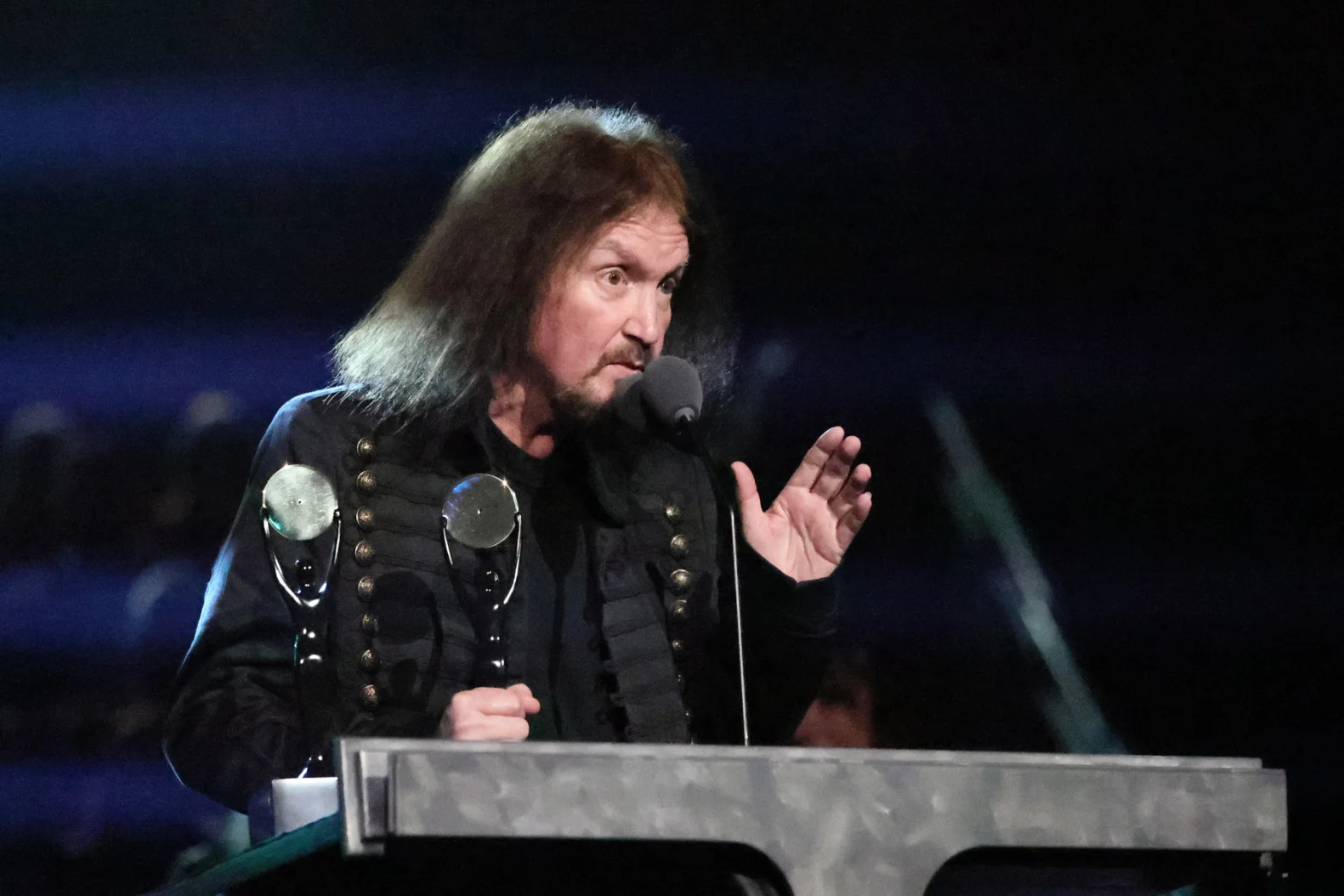
In 2022, Les Binks was honoured with induction into the Rock & Roll Hall of Fame as part of Judas Priest, receiving the Award for Musical Excellence. He also reunited with the band to perform a special three-song set during the ceremony, marking one of his final live appearances.
External Links