Real Celebrities Never Die!
OR
Search For Past Celebrities Whose Birthday You Share
Died Age: 71
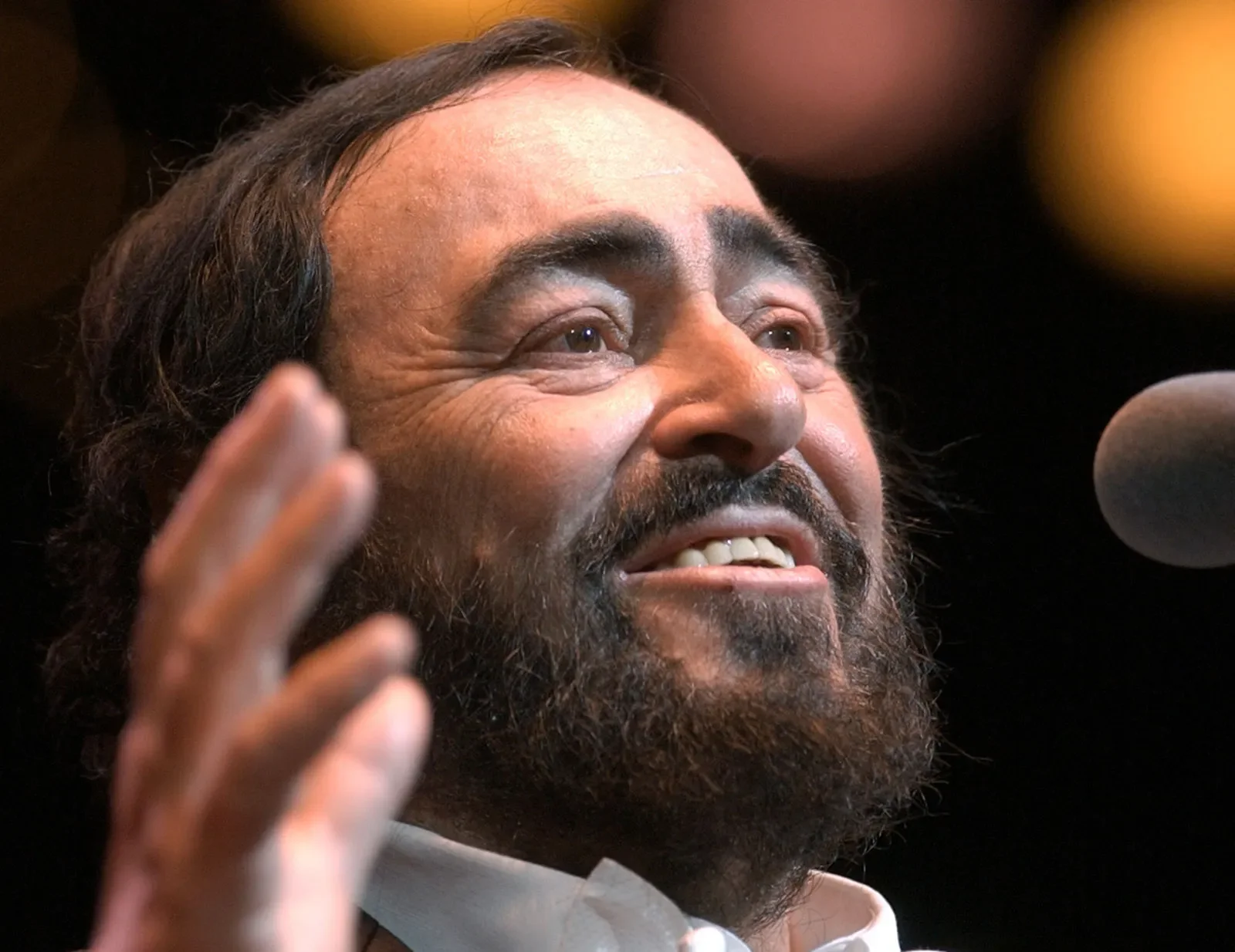
cdn.britannica.com
Luciano Pavarotti
Birthday:
12 Oct, 1935
Date of Death:
06 Sep, 2007
Cause of death:
Pancreatic Cancer
Nationality:
Italian
Famous As:
Italian operatic tenor
Age at the time of death:
71
Luciano Pavarotti's Quote's

“One of the very best things about life is the way we must regularly stop whatever it is we are doing and devote our attention to eating.”
Luciano Pavarotti
🔗 deadcelebrityhub.com
Early Life: From Modena With Music
Luciano Pavarotti wasn’t just an opera singer—he was a global force, a tenor whose voice could melt hearts in the grandest opera house or echo across an open-air stadium. With his signature handkerchief, wide smile, and a voice of breathtaking clarity and emotional weight, he made opera accessible to millions. His life was one of passion—for music, for people, for life itself—and he became not just a virtuoso performer, but a cultural icon whose influence transcended borders and genres.
Born on October 12, 1935, in the city of Modena, Italy, Luciano Pavarotti was the son of a baker and amateur tenor. His father’s record collection—filled with voices like Caruso and Gigli—filled their modest home and stirred a young Luciano’s love for singing. Though money was scarce, music was abundant. As a boy, he joined his father in a small local choir, and by age nine, Pavarotti was already performing in church and community events.
A defining moment came when he and his father traveled with their choir to an international competition in Wales—and won. The experience, his first time abroad, awakened in him a dream: to bring Italian opera to the world.
Education: A Leap from Teaching to Technique
Pavarotti initially trained to become a schoolteacher and even taught elementary school for a time. But music tugged at him more deeply. He began formal vocal studies in his early twenties under Arrigo Pola, who taught him free of charge. Later, he studied with the demanding but effective Ettore Campogalliani. These years were not easy—he supported himself through odd jobs and struggled financially—but his patience and discipline paid off.
Unlike some prodigies, Pavarotti’s voice matured gradually. He worked on perfecting his technique, paying close attention to breathing, legato phrasing, and tonal clarity. His studies were as much about control as they were about power—a lesson that would define his sound.
Career Journey
Phase One: A Star in the Making
Pavarotti’s professional debut came in 1961 in Reggio Emilia, singing Rodolfo in La Bohème. His breakout moment, however, arrived in 1963 when he stood in for Giuseppe Di Stefano at Covent Garden—wowing audiences and critics with a fresh, pure tone and dramatic flair.
By the late 1960s, he was performing in the world’s great opera houses: La Scala, the Vienna State Opera, and the Metropolitan Opera in New York. His high C’s were crystalline, his charisma magnetic. Critics dubbed him the “King of the High C’s,” a nod to his effortless command of this notoriously difficult register.
Phase Two: From Opera Houses to Global Arenas
The 1970s and 1980s saw Pavarotti rise to international superstardom. His performances in Rigoletto, Turandot, and Tosca became legendary. But what made him truly unique was his willingness to bring opera beyond its traditional audience. In 1990, The Three Tenors—Pavarotti, Plácido Domingo, and José Carreras—performed at the World Cup in Rome. The broadcast reached an estimated 1.5 billion viewers, igniting global interest in opera.
His collaborations with pop artists—from Bono to Sting to Celine Dion—on the Pavarotti & Friends series further broadened his appeal. These benefit concerts raised millions for humanitarian causes, proving that Pavarotti wasn’t just a great singer—he was a man of the world.
Phase Three: A Generous Final Act
Even as his health declined in the early 2000s, Pavarotti continued to perform. His final operatic appearance was in Tosca at the Met in 2004. Diagnosed with pancreatic cancer in 2006, he gave his last public performance at the 2006 Winter Olympics in Turin—singing Nessun Dorma with a grandeur and poignancy that silenced the world.
He passed away on September 6, 2007, at his home in Modena, surrounded by family and music.
Personal Life: Warmth, Whimsy, and Humanity
Pavarotti was larger than life in every way—his appetite for food, laughter, and company was legendary. He married twice and had four daughters. Friends and collaborators often spoke of his generosity and humor. He collected paintings, loved horses, and never shied from expressing emotion, whether in song or in conversation.
Despite his fame, he remained devoted to his roots. He frequently returned to Modena, spoke proudly of his humble beginnings, and gave generously to educational and humanitarian causes.
A little-known fact: Pavarotti initially dreamed of becoming a football goalkeeper, and remained an avid fan throughout his life. Even as his fame soared, he’d chat animatedly about the latest matches with local fans.
Legacy: The Man Who Gave Opera to the Masses
Luciano Pavarotti changed what it meant to be an opera singer. He brought the art form out of gilded theaters and into the hearts of people across the world. His recordings have sold over 100 million copies, and his Nessun Dorma remains an anthem of triumph and beauty.
He won Grammy Awards, a Kennedy Center Honor, and a place in the Gramophone Hall of Fame. But his truest legacy lies in the millions who heard opera—really heard it—for the first time because of him.
Luciano Pavarotti wasn’t just a voice. He was a bridge—between old and new, elite and everyday, Italy and the world. His passion, humanity, and extraordinary gift live on in every aria, every rising note, and every moment someone dares to sing boldly, as if the world is listening.
Profile Snapshot
Name:
Luciano Pavarotti
Popular Name:
Luciano Pavarotti
Gender:
Male
Cause of Death:
Pancreatic Cancer
Spouse:
Adua Veroni
Nicoletta Mantovani
Place of Birth:
Modena, Italy
Place of Death:
Modena, Italy
Occupation / Profession:
Italian operatic tenor
Personality Type
Protagonist Charismatic and inspiring leaders, able to mesmerize their listeners. Luciano Pavarotti was a charismatic and inspiring figure whose passion for music and deep emotional connection with audiences made him a beloved global icon.
Luciano Pavarotti's Interesting Facts
He earned the nickname “The King of High Cs” for his incredible ability to hit powerful high notes effortlessly.
He popularized opera worldwide by blending classical music with pop culture and charity concerts.
Luciano Pavarotti was one of the “Three Tenors,” performing alongside Plácido Domingo and José Carreras.
Pavarotti started his career as a teacher before becoming a world-famous opera singer.
Achievements & Awards
He was also honored with the Kennedy Center Honors and multiple international recognitions for his incredible contributions to opera and music worldwide.
Luciano Pavarotti received many prestigious awards, including Grammy Awards and honorary knighthood from the UK.
External Links