Real Celebrities Never Die!
OR
Search For Past Celebrities Whose Birthday You Share
Died Age: 52
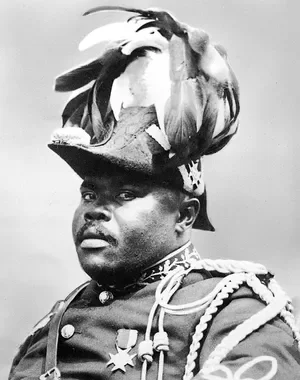
britannica.com
Marcus Garvey
Birthday:
16 Aug, 1887
Date of Death:
10 Jun, 1940
Cause of death:
Stroke
Nationality:
Jamaican
Famous As:
Jamaican political activist
Age at the time of death:
52
Marcus Mosiah Garvey Jr.'s Quote's

“A people without the knowledge of their past history, origin and culture is like a tree without roots”
Marcus Mosiah Garvey Jr.
🔗 deadcelebrityhub.com
Early Life: A Childhood in Colonial Chains
Before there was Malcolm or Martin, there was Marcus. With a towering voice and regal bearing, Marcus Garvey was a man who dared to dream of Black greatness at a time when the world refused to imagine it. A visionary and provocateur, he called for self-reliance, racial pride, and the return of the African diaspora to its ancestral homeland. To his supporters, he was a liberator. To his critics, a dangerous radical. But to history, Garvey remains one of the earliest and most enduring architects of Black consciousness—a man whose words still echo across continents.
Marcus Mosiah Garvey was born on August 17, 1887, in St. Ann’s Bay, Jamaica, to a deeply literate but economically struggling family. His father, a stone mason with an extensive personal library, taught Marcus the power of words. But in British-ruled Jamaica, young Garvey quickly learned that education alone wouldn’t shield him from racism or poverty.
As a boy, he watched as Black Jamaicans were treated as second-class citizens in their own homeland. When a white employer fired him from a printing job for organizing a strike, Garvey began asking bigger questions—not just about wages, but about power, history, and identity.
Trivia: Garvey was the youngest of eleven children, though most of his siblings died in childhood. His survival, coupled with his parents’ emphasis on learning, gave him a fierce sense of destiny.
Education: Lessons in Books and Borders
Garvey's formal education ended in his early teens, but his real learning began afterward. He worked as a printer’s apprentice and devoured books—especially about African history and global politics. In 1912, he traveled to London, where he attended lectures at Birkbeck College and worked for an African newspaper.
It was in London, surrounded by colonial arrogance and pan-African literature, that his ideological framework began to form. He read about Ethiopian resistance, Booker T. Washington’s economic philosophy, and the global subjugation of people of African descent. The question haunted him: Where is the Black man’s government, his king, his flag?
By the time he returned to Jamaica in 1914, he had an answer—and a movement.
Career Journey: From Island Spark to Global Flame
The Birth of a Movement
In July 1914, Garvey founded the Universal Negro Improvement Association (UNIA) with the motto: “One God! One Aim! One Destiny!” Its goal? To unite all people of African descent, economically, culturally, and politically. At first, the movement was small and local—but Garvey had global ambitions.
In 1916, he moved to Harlem, New York, then a burgeoning hub of Black culture and radical politics. Within months, Garvey became one of its most magnetic voices.
The Harlem Renaissance and Garvey’s Empire
By 1920, the UNIA had grown into a mass movement. Garvey drew tens of thousands to rallies where he delivered thunderous speeches in military-style uniforms. His message was simple but electrifying: Black people were not inferior. They were royal, descended from kings and queens, and entitled to dignity, power, and their own destiny.
At its peak, the UNIA claimed over 4 million members across the Americas, Caribbean, and Africa. Garvey established the Black Star Line, a shipping company designed to promote Black-owned trade and eventual repatriation to Africa. He even created a UNIA military corps and a newspaper, The Negro World, which spread his message globally—even in colonies where it was banned.
Trivia: In 1920, Garvey held the first International Convention of the Negro Peoples of the World at Madison Square Garden, where he was proclaimed the “Provisional President of Africa.”
Challenges and Decline
Garvey’s meteoric rise also drew enemies—both from outside and within the Black community. His clashes with W.E.B. Du Bois, who called him a "dangerous demagogue," split the Black intellectual world. Government agencies, including the FBI under J. Edgar Hoover, began monitoring him closely.
In 1923, Garvey was convicted of mail fraud relating to the Black Star Line and sentenced to five years in prison. Though many saw the charges as politically motivated, he was imprisoned in Atlanta. Two years later, President Calvin Coolidge commuted his sentence—but deported him back to Jamaica.
Personal Life: The Man Behind the Movement
Garvey was charismatic, eloquent, and deeply disciplined. In 1922, he married Amy Jacques, who became a powerful intellectual partner and the editor of his speeches. They had two sons together.
Though fiercely proud, Garvey was also deeply burdened by the expectations he placed on himself and his people. Friends described him as both warm and intense—often obsessed with the long arc of Black history and his place within it.
Legacy: The Prophet Who Planted Seeds
Marcus Garvey died in London on June 10, 1940, largely forgotten and in financial difficulty. But like all prophets, his impact bloomed after his death.
Garvey’s message of Black pride and African unity inspired countless leaders, including Malcolm X (whose father was a UNIA minister), Kwame Nkrumah of Ghana, and even Bob Marley, who immortalized him in song.
His red, black, and green Pan-African flag became a global symbol of Black liberation. In 1964, Jamaica named him a national hero and reinterred his body in Kingston.
Trivia: The Rastafari movement, which emerged in the 1930s, considers Garvey a prophet who foretold the coming of a Black king—Haile Selassie I of Ethiopia.
Conclusion: Before the Movement Had a Name, It Had a Voice
Marcus Garvey didn’t wait for history to grant him permission. He seized the megaphone of his time and declared a vision so audacious it shook empires: a unified, dignified, self-reliant Black world. Though derided in his day, Garvey’s words and symbols would outlive his enemies, inspire revolutions, and become pillars of modern Pan-Africanism.
In a world that tried to silence him, he built a global echo that still resonates: “Up, you mighty race! You can accomplish what you will.”
Garvey didn’t just start a movement. He started a mindset.
Profile Snapshot
Name:
Marcus Mosiah Garvey Jr.
Popular Name:
Marcus Garvey
Gender:
Male
Cause of Death:
Stroke
Spouse:
Amy Ashwood
Amy Jacques
Place of Birth:
Saint Ann's Bay, Colony of Jamaica
Place of Death:
London, England
Occupation / Profession:
Jamaican political activist
Personality Type
Commander: Marcus Garvey was a visionary and charismatic leader, deeply committed to empowering Black people worldwide through strong leadership, strategic thinking, and a bold, unapologetic pursuit of social justice.
Marcus Mosiah Garvey Jr.'s Interesting Facts
Garvey was a powerful orator and writer, using his newspaper The Negro World to spread his message of empowerment and self-determination.
He is best known for his "Back to Africa" movement, which encouraged African Americans to return to their ancestral homeland and build their own independent nation.
Marcus Garvey was a Jamaican political leader and activist who founded the Universal Negro Improvement Association (UNIA) to promote black pride and unity.
Though his ideas were controversial, his legacy as a pan-Africanist leader continues to influence global movements for racial equality and social justice.
Achievements & Awards
He was posthumously honored in Jamaica as a national hero, and his legacy continues to influence global movements for Black empowerment and civil rights.
Marcus Garvey didn’t receive many formal awards during his lifetime, but he was a pioneering Black nationalist leader and founder of the Universal Negro Improvement Association (UNIA)
External Links