Real Celebrities Never Die!
OR
Search For Past Celebrities Whose Birthday You Share
Died Age: 81
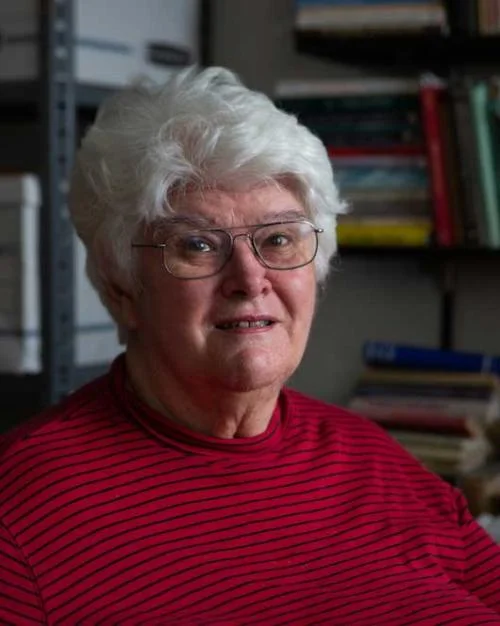
as.cornell.edu
Margaret W. Rossiter
Birthday:
30 Jun, 1944
Date of Death:
02 Aug, 2025
Cause of death:
Infection
Nationality:
Margaret W. Rossiter
Famous As:
Historian of science
Age at the time of death:
81
Margaret Walsh Rossiter's Quote's

“The history of science is not complete until the contributions of women are recognized.”
Margaret Walsh Rossiter
🔗 deadcelebrityhub.com
Early Life
Margaret W. Rossiter is a trailblazer in the history of science, a scholar whose meticulous research and unwavering curiosity brought to light the hidden narratives of women in science. Known for her groundbreaking work on the “Matilda Effect”—the systematic undervaluing of women’s contributions in science—Rossiter transformed how historians and scientists alike perceive the role of gender in scientific achievement. Her career has been a testament to the power of inquiry, persistence, and the courage to challenge long-held assumptions.
Born in 1933 in New York City, Rossiter grew up in a world recovering from the Great Depression, shaped by a family that valued education and intellectual curiosity. Her parents encouraged her inquisitive mind, and she developed an early fascination with stories of scientific discovery and historical exploration. This blend of curiosity and appreciation for the human stories behind knowledge would become a defining feature of her career.
Education
Rossiter’s academic path reflected her deep intellectual ambition. She earned her undergraduate degree in history from Wellesley College, a setting that nurtured both her analytical rigour and her commitment to women’s intellectual advancement. She went on to complete her PhD in history at Harvard University, where she began to focus on the intersection of science, society, and gender—a subject that would come to define her professional life. Her education provided her not just with knowledge, but with the tools to uncover the invisible contributions of women who had long been ignored in scientific discourse.
Her career unfolded in distinct and impactful phases. In her early work as a historian, Rossiter began documenting the overlooked achievements of women in science, publishing articles that challenged conventional narratives. The publication of her seminal book, Women Scientists in America: Struggles and Strategies to 1940, marked a turning point. With exhaustive research, compelling storytelling, and rigorous analysis, she brought attention to the systemic barriers women faced and the creative strategies they employed to succeed.
Career Journey
Throughout her career, Rossiter encountered challenges that mirrored the very issues she studied: scepticism from colleagues, the difficulty of gaining recognition in a male-dominated academic field, and the painstaking effort required to uncover neglected historical records. Yet these obstacles never deterred her. In fact, they seemed to fuel her determination, resulting in decades of scholarship that reshaped the historiography of science. Her later work continued to expand the narrative, covering women scientists through the mid-20th century and solidifying her reputation as a leading authority on gender in science.
Personal Life
Beyond her professional achievements, Rossiter is known for her warmth, intellectual generosity, and keen sense of humour. Colleagues remember her not only for her sharp insight but also for her ability to mentor and inspire a new generation of scholars. She has spoken openly about the joys and frustrations of historical research, often noting the thrill of discovering a story that had been hidden in plain sight for decades.
Legacy
Margaret W. Rossiter’s legacy is profound. She transformed the way the history of science is understood, ensuring that the contributions of women are recognised and celebrated. Her meticulous research, her storytelling skill, and her advocacy for equity have left an indelible mark on both scholarship and society. Today, she is remembered not only as a pioneering historian but as a tireless champion for truth, recognition, and the voices too often overlooked in the chronicles of scientific achievement.
Profile Snapshot
Name:
Margaret Walsh Rossiter
Popular Name:
Margaret W. Rossiter
Gender:
Female
Cause of Death:
Infection
Spouse:
Unmmarried
Place of Birth:
Malden, Massachusetts, United States
Place of Death:
Salem, Massachusetts, United States
Occupation / Profession:
Historian of science
Personality Type
Adventurer: Curious, tenacious, and fiercely committed to uncovering hidden truths, Rossiter approaches history with the heart of a detective and the passion of an advocate.
Margaret Walsh Rossiter's Interesting Facts
Rossiter often emphasises the thrill of archival detective work, describing it as uncovering “hidden treasures” of history.
She has a habit of meticulously cataloguing women scientists’ career paths, sometimes creating massive handwritten charts before digital tools were common.
Despite her focus on history, she once described herself as a “science enthusiast at heart,” fascinated by experiments and discoveries across disciplines.
Achievements & Awards
Margaret W. Rossiter revolutionised the study of women in science through her groundbreaking research and publications, most notably her Women Scientists in America series.
She coined the term “Matilda Effect,” highlighting the systematic undervaluing of women’s contributions in science, which became a foundational concept in gender studies and the history of science.
Rossiter received numerous honours for her work, including the prestigious History of Science Society’s Margaret W. Rossiter Prize, named in her honour, celebrating excellence in research on women in science.
Her scholarship not only reshaped academic discourse but also influenced science policy and public awareness of gender equity.
External Links