Real Celebrities Never Die!
OR
Search For Past Celebrities Whose Birthday You Share
Died Age: 81
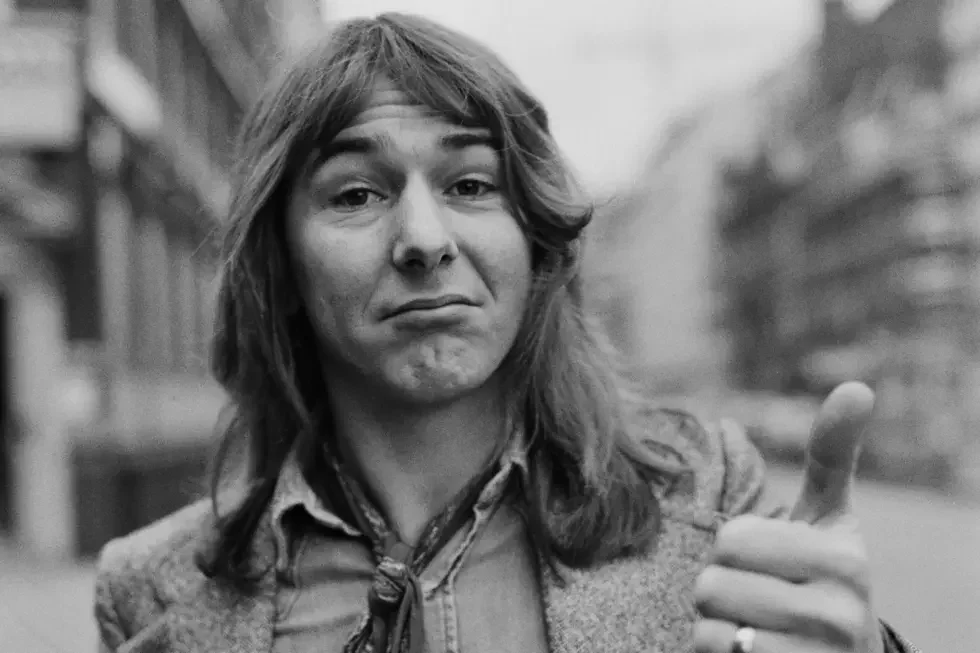
ultimateclassicrock.com
Mick Ralphs
Birthday:
30 Mar, 1944
Date of Death:
22 Jun, 2025
Cause of death:
Major Stroke
Nationality:
British
Famous As:
English guitarist
Age at the time of death:
81
Michael Geoffrey Ralphs's Quote's

“I’ve always believed that the song should do the talking — the guitar is just the voice”
Michael Geoffrey Ralphs
🔗 deadcelebrityhub.com
Early Life: Music in the Midlands
Mick Ralphs has never been the loudest man in the room — but his guitar has spoken volumes for over half a century. From the swaggering blues of Mott the Hoople to the sleek power of Bad Company, Ralphs helped shape the sound of British rock in its most electrifying era. His riffs were clean, muscular, and unmistakable — songs that felt both effortless and eternal.
Behind the understated demeanour was an artist with an ear for melody and a heart for simplicity — a man who believed that the best music didn’t shout; it spoke.
Michael Geoffrey Ralphs was born on March 31, 1944, in Herefordshire, England, and grew up in the small market town of Stoke Lacy. His childhood was steeped in postwar modesty — quiet landscapes, rationed sweets, and radio melodies that flickered with hope.
By his teens, he had fallen under the spell of early American rock ‘n’ roll. The raw vitality of Chuck Berry and Buddy Holly lit a fire in him. He picked up a guitar at age 16, teaching himself by ear — a hallmark that would define his instinctive playing style.
Unlike the flamboyant London scene, Ralphs’ beginnings were provincial and grounded. He practiced obsessively in bedrooms and village halls, finding beauty in rhythm and restraint. His approach to music was never about technical showmanship — it was about feel.
Education and Early Influences
Though Ralphs attended Hereford Cathedral School, his true education came from the music he absorbed. British skiffle and American blues records were his textbooks; the Beatles’ arrival his turning point.
In the early 1960s, Ralphs began performing in local groups, cutting his teeth on covers and learning stage craft the hard way — through trial and sweat. One early band, The Buddies, marked his first foray into semi-professional touring, setting the stage for a career built on persistence rather than luck.
He would later recall:
“I never wanted to be a guitar hero. I just wanted to write good songs that sounded honest.”
That ethos would carry him through the most successful phases of his life.
Career Journey
Phase 1: The Rise with Mott the Hoople
In 1969, Ralphs joined a new band forming under producer Guy Stevens — Mott the Hoople. The group fused hard rock with glam’s theatrical flair, and Ralphs’ crisp, no-nonsense guitar provided its backbone.
Their early albums — Mott the Hoople (1969), Mad Shadows (1970), and Brain Capers (1971) — hinted at greatness but never quite broke through. That changed in 1972 when David Bowie gave them “All the Young Dudes,” a song that became a generational anthem.
Ralphs’ guitar cut through that song like steel and silk — tight, elegant, unforgettable. Yet even as Mott ascended, he felt confined by its chaotic energy and stylistic drift. “I wanted to play something simpler, more soulful,” he later said.
By 1973, Ralphs made a bold move: he left Mott the Hoople to start something new.
Phase 2: Bad Company and the Birth of a Sound
Ralphs teamed up with ex-Free vocalist Paul Rodgers, drummer Simon Kirke, and bassist Boz Burrell to form Bad Company — one of the first bands signed to Led Zeppelin’s Swan Song label.
Their debut, Bad Company (1974), was a revelation: tight, bluesy, and radio-ready. Ralphs’ songwriting and guitar defined its tone — notably on the hit “Can’t Get Enough,” which he wrote before the band even formed.
His minimalist riff on that track remains one of rock’s most recognizable openings — proof that power and simplicity can coexist.
The next albums — Straight Shooter (1975) and Run With the Pack (1976) — solidified Bad Company as one of the premier rock acts of the decade. Ralphs’ rhythm guitar was the glue between Rodgers’ voice and the band’s soulful swagger.
But fame, as always, brought fatigue. By the early 1980s, Ralphs stepped away, preferring the quieter craft of studio work and songwriting.
Phase 3: Later Career and Reflection
Ralphs returned intermittently to Bad Company through the 1980s and 1990s, contributing to reunions and tours but remaining largely out of the spotlight. He released a solo album, Take This! (1984), that showcased his more introspective, blues-rooted side.
In 2016, after suffering a stroke, Ralphs retired from touring — but the music never left him. Fellow musicians, from Joe Bonamassa to Slash, have cited him as a formative influence. His riffs, lean and lyrical, continue to inspire new generations of players seeking that elusive mix of muscle and melody.
Personal Life: The Man Behind the Music
Offstage, Mick Ralphs was as understated as his guitar tone. Known for his dry wit and gentle humor, he was never one to chase celebrity. Friends describe him as meticulous and soft-spoken, happiest in his home studio tinkering with amplifiers or rehearsing in solitude.
A fun fact: Ralphs was notorious for his obsession with tone — he often modified his own guitars and amps, even crafting hybrid setups long before “boutique” gear became fashionable. His trademark Les Paul tone, achieved through a modest setup, became legendary among purists.
He preferred tea to champagne, conversation to limelight — a true craftsman in an era of spectacle.
Legacy: The Sound of Honest Rock
Mick Ralphs’ legacy lies in restraint. At a time when rock guitarists chased complexity, he mastered clarity. His playing with Mott the Hoople gave British rock its grit; his writing for Bad Company gave it its groove.
The riffs he created — from “Can’t Get Enough” to “Ready for Love” — remain staples not because they dazzle, but because they fit perfectly. Each note serves the song.
Beyond hits and tours, Ralphs left something rarer: a standard of musical integrity. He showed that honesty — in tone, in phrasing, in spirit — is timeless.
Today, his name may not headline guitar magazines, but his influence hums through every chord-driven anthem that prizes heart over hype. Mick Ralphs, the quiet architect, built the foundations of classic rock — and his work still echoes wherever guitars ring true.
Profile Snapshot
Name:
Michael Geoffrey Ralphs
Popular Name:
Mick Ralphs
Gender:
Male
Cause of Death:
Major Stroke
Spouse:
Susie Chavasse
Place of Birth:
Stoke Lacy, England
Place of Death:
Henley-on-Thames, England
Occupation / Profession:
English guitarist
Vocalist Songwriter.
Personality Type
Campaigner: Mick Ralphs was a high-voltage, instinctive rock-architect of riffs, always ready to step into the spotlight and forge a path rather than wait for one to open.
Michael Geoffrey Ralphs's Interesting Facts
Mick Ralphs co-founded two iconic British rock bands — Mott the Hoople and Bad Company.
He wrote the hit song “Can’t Get Enough”, which became one of Bad Company’s biggest anthems.
Before achieving fame, Ralphs briefly played in a lesser-known band called the Buddies with Stan Tippins.
He preferred simple, powerful guitar riffs and often tuned his guitar down a whole step to create his signature sound.
Achievements & Awards
Mick Ralphs co-founded the legendary rock bands Mott the Hoople and Bad Company, playing a major role in defining their iconic sound. He wrote classic hits like “Can’t Get Enough” and “Ready for Love,” which remain staples of rock music. In recognition of his lasting influence, he is set to be inducted into the Rock & Roll Hall of Fame in 2025 as part of Bad Company’s induction.
External Links