Real Celebrities Never Die!
OR
Search For Past Celebrities Whose Birthday You Share
Died Age: 64

legacy.com
Moses Gunn
Birthday:
02 Oct, 1929
Date of Death:
16 Dec, 1993
Cause of death:
complications of asthma
Nationality:
American
Famous As:
Actor
Age at the time of death:
64
Moses Gunn's Quote's

“When you talk about actors in film who are black, for a long time, the only one out there at the box office was Sidney Poitier. Now there are three or four, but not many more.”
Moses Gunn
🔗 deadcelebrityhub.com
The Early Life of Moses Gunn
Moses Gunn wasn’t just an actor, he was a force. With a voice like thunder and eyes that could flicker from warmth to steel in a heartbeat, Gunn commanded the stage and screen with a rare gravitas. Known for portraying characters with depth, dignity, and fire, he became one of the most respected Black actors of his generation. But behind the commanding presence was a journey forged in struggle, resilience, and unyielding purpose.
Born on October 2, 1929, in St. Louis, Missouri, Moses Gunn’s life began amid hardship. His father passed away when he was just a boy, and soon after, his mother left the family. Gunn and his siblings were left to fend for themselves, ultimately separated and placed in foster care. He found refuge with a kind-hearted English teacher named Jewel Richie, who not only took him in but also introduced him to poetry, books, and the possibilities of language.
This early instability shaped him, but so did the rich, expressive power of the stories he discovered. It was through literature—and later, the theatre that Gunn found not just solace, but purpose. Gunn was so drawn to storytelling that he memorised Shakespearean monologues before he ever stepped foot on a stage.
Education: Carving a Path Through Books and Performance
Education was Gunn’s sanctuary and springboard. After serving in the Army, he attended Tennessee State University, where he studied speech and drama. But it was his graduate work at the University of Kansas that deepened his artistic roots. He would later say that theatre gave him not only a voice but an identity.
Despite racial barriers and financial hardships, Gunn’s academic persistence led him to further studies at the University of Iowa and eventually to New York City, where he honed his craft at the Negro Ensemble Company—a training ground for some of the most distinguished Black actors in American theater.
A Career in Chapters: Building a Legacy on Stage and Screen
Gunn’s professional debut came in the 1960s, during a time when Black actors were rarely afforded complex roles. He gravitated toward classical theatre, believing Black performers deserved the same poetic language and powerful characters as their white counterparts. One of his earliest and most celebrated performances was as Othello, a role he played with heartbreaking intensity.
He co-founded the Negro Ensemble Company in 1967, an institution that would become vital in nurturing Black talent and narratives. Gunn’s performances there, particularly in The Blacks and A Soldier’s Play, redefined the possibilities for Black actors in the American theatrical canon.
In 1970, Gunn made a seismic impact with his portrayal of Booker T. Washington in the film The Learning Tree, directed by Gordon Parks. It was one of the first major Hollywood films directed by a Black filmmaker, and Gunn’s presence anchored it with weight and dignity.
But it was his role as Bumpy Jonas, the Harlem crime boss in Shaft (1971), that brought him to broader public attention. His cool, authoritative performance stood out in a film that helped usher in the Blaxploitation era, even as he remained critical of the genre’s frequent reliance on caricature.
Gunn was equally magnetic on television, earning an Emmy nomination for his portrayal of Kunta Kinte’s father in the landmark miniseries Roots (1977). He also had memorable roles in Little House on the Prairie, The Cosby Show, and A Raisin in the Sun.
Even as mainstream success grew, Gunn never abandoned the stage. In 1976, he received a Tony nomination for The Poison Tree. He continued acting in Shakespeare, Chekhov, and new American works, always demanding more of the medium and himself.
Despite facing the systemic racism of the entertainment industry, Gunn remained unwavering in his commitment to art that mattered. He refused roles that demeaned or trivialised the Black experience, often turning down high-paying jobs to maintain his integrity.
The Man Behind the Roles: Personal Life
Offstage, Moses Gunn was thoughtful, private, and deeply intellectual. He married Gwendolyn Mumma Landes, an academic and playwright, with whom he shared a deep love for literature and the arts. Together, they had a son, Justin, and built a life grounded in creativity and activism.
Known for his generosity to younger actors, Gunn often mentored aspiring performers, urging them to “take up space” with pride. He believed in the power of presence—not just onstage, but in life.
Despite his gravitas, Gunn had a playful side. Friends recalled his love for jazz, spontaneous poetry recitations, and his surprising knack for doing spot-on impressions, particularly of Marlon Brando and Richard Burton.
Legacy: A Voice That Still Echoes
Moses Gunn passed away in 1993, but his influence is far from forgotten. He opened doors for generations of Black actors by insisting on excellence, complexity, and truth in performance. Whether portraying a Shakespearean king or a Harlem kingpin, he imbued his characters with humanity, dignity, and fire.
He is remembered not just for the roles he played, but for the ones he made possible. Every Black actor who treads the boards of Broadway or claims a central role in film stands on his shoulders. His performances still resonate—timeless, bold, unforgettable.
In the annals of American theatre and film, Moses Gunn remains a towering figure. He turned pain into power and presence into legacy.
Profile Snapshot
Name:
Moses Gunn
Popular Name:
Moses Gunn
Gender:
Male
Cause of Death:
complications of asthma
Spouse:
Gwendolyn Mumma Landes
Place of Birth:
St. Louis, Missouri, USA
Place of Death:
Guilford, Connecticut
Occupation / Profession:
Actor
Personality Type
Architect: Moses Gunn was a principled visionary who was reserved but resolute. He used intellect, strategy, and unshakable integrity to carve a powerful legacy in an industry not built for him.
Moses Gunn's Interesting Facts
He had a deep passion for classical literature and was a self-taught scholar of Shakespeare.
He turned down stereotypical roles even at the peak of the Blaxploitation era.
He was once homeless while pursuing acting in New York City.
Achievements & Awards
Gunn was also a founding member of the influential Negro Ensemble Company, helping to shape a generation of Black theater.
He earned a Tony Award nomination in 1976 for his performance in The Poison Tree and received widespread acclaim for his role as Kunta Kinte’s father in the groundbreaking miniseries Roots, which earned him an Emmy nomination.
His legacy is marked not only by the roles he portrayed but by the artistic standards and representation he championed throughout his life.
Moses Gunn was a trailblazing actor whose career spanned stage, film, and television with remarkable depth and dignity.
Latest Profiles
People also viewed
James Dean
Born08 Feb, 1931
Died30 Sep, 1955
NationalityAmerican
Age at time of death24
Burt Reynolds
Born11 Feb, 1936
Died06 Sep, 2018
NationalityAmerican
Age at time of death82
Oliver Burgess Meredith
Born16 Nov, 1907
Died09 Sep, 1997
NationalityAmerican
Age at time of death89
Paul Walker
Born12 Sep, 1973
Died30 Nov, 2013
NationalityAmerican
Age at time of death40
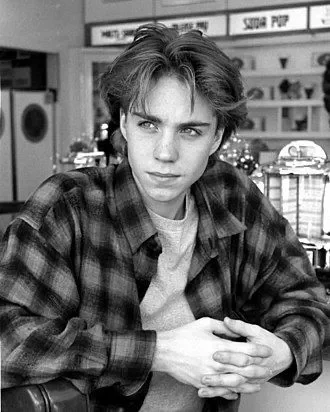
Jonathan Brandis
Born13 Apr, 1976
Died12 Nov, 2003
NationalityAmerican
Age at time of death27

Anton Yelchin
Born11 Mar, 1989
Died19 Jun, 2016
NationalityAmerican
Age at time of death27
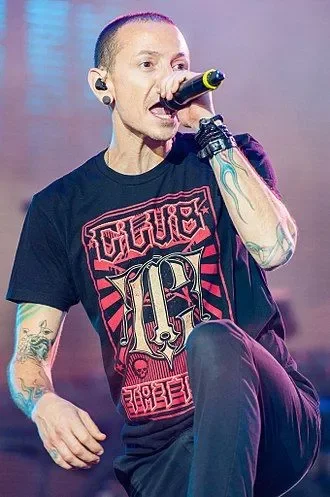
Chester Bennington
Born20 Mar, 1976
Died20 Jul, 2017
NationalityAmerican
Age at time of death41
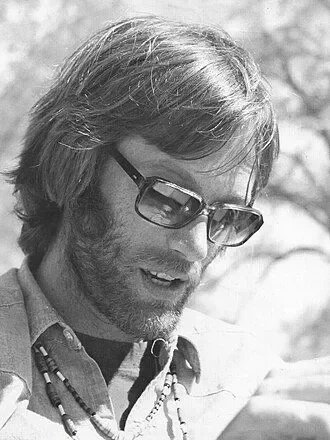
Peter Fonda
Born23 Feb, 1940
Died16 Aug, 2019
NationalityAmerican
Age at time of death79
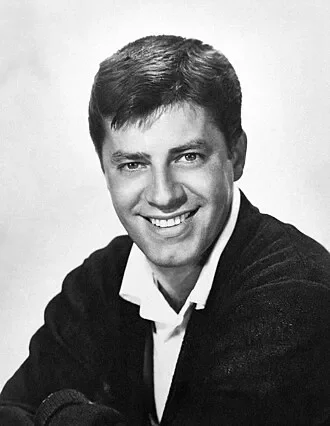
Jerry Lewis
Born16 Mar, 1926
Died20 Aug, 2017
NationalityAmerican
Age at time of death91
Marlon Brando
Born03 Apr, 1924
Died01 Jul, 2004
NationalityAmerican
Age at time of death80
James Stewart
Born20 May, 1908
Died02 Jul, 1997
NationalityAmerican
Age at time of death89

Cory Monteith
Born11 May, 1982
Died13 Jul, 2013
NationalityCanadian
Age at time of death31
Christopher Lee
Born27 May, 1922
Died07 Jun, 2015
NationalityBritish
Age at time of death93
Paul Mooney
Born04 Aug, 1941
Died19 May, 2021
NationalityAmerican
Age at time of death79
George Murphy
Born04 Jul, 1902
Died03 May, 1992
NationalityAmerican
Age at time of death89
Fred Ward
Born30 Dec, 1942
Died08 May, 2022
NationalityAmerican
Age at time of death79
Frank Sinatra
Born12 Dec, 1915
Died14 May, 1998
NationalityAmerican
Age at time of death82
Eric Morecambe
Born14 May, 1926
Died28 May, 1984
NationalityBritish
Age at time of death58
DMX
Born18 Dec, 1970
Died09 Apr, 2021
NationalityAmerican
Age at time of death50
Alfred Hitchcock
Born13 Aug, 1899
Died29 Apr, 1980
NationalityAmerican, British
Age at time of death80