Real Celebrities Never Die!
OR
Search For Past Celebrities Whose Birthday You Share
Died Age: 45
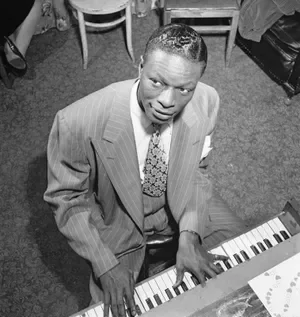
britannica.com
Nat King Cole
Birthday:
17 Mar, 1919
Date of Death:
15 Feb, 1965
Cause of death:
Lung Cancer
Nationality:
American
Famous As:
Actor.
Age at the time of death:
45
Nathaniel Adams Coles's Quote's

“Negroes have been exposed to many single appearances but have not been given a chance to do a regular show before now. I've been waging a personal campaign, aiming at a show of this kind. I hit a few snags here and there but I didn't give up the fight. It could be a turning point so that Negroes may be featured regularly on television.”
Nathaniel Adams Coles
🔗 deadcelebrityhub.com
Early Life: Born to Gospel, Raised in Rhythm
Nat King Cole didn’t just croon love songs—he melted racial barriers with elegance. With a voice smooth as satin and a presence calm as moonlight, he became the first Black man to host a national TV show in the United States, paving the way for generations of artists. Behind the suave piano stylings and romantic ballads was a quiet revolutionary—one who never shouted, but still shook the walls of segregation with every note.
Nathaniel Adams Coles was born on March 17, 1919, in Montgomery, Alabama, at a time when Jim Crow laws ruled the American South. His father, a Baptist minister, moved the family to Chicago when Nat was a child—a shift that proved pivotal. In Chicago’s Bronzeville neighborhood, music wasn’t just entertainment—it was survival, identity, and pride.
Nat's mother was his first piano teacher, training him in both classical and church music. But as a teenager, he fell under the spell of jazz legends like Earl Hines, and by age 12, he was playing professionally. While his roots were in gospel and classical traditions, his heart found its rhythm in jazz clubs.
Trivia: Cole dropped the "s" from his last name early in his career and adopted the nickname “King” after his band was called "The King Cole Trio"—a playful nod to the nursery rhyme.
Education: Lessons from Life and the Bandstand
Cole briefly studied music at Chicago’s prestigious Wendell Phillips Academy High School, but his real education came from performing. By 15, he was sneaking into clubs to perform late-night gigs, often dodging police and curfews. In 1937, he joined a national tour for the musical Shuffle Along, and though the show folded, he remained in Los Angeles, where his legend would begin.
It was there, playing in jazz clubs, that Cole refined the crisp piano stylings and smooth vocals that became his signature. What started as a pianist’s career quickly evolved—audiences kept asking him to sing.
Career Journey: From Jazz Prodigy to Pop Pioneer
Early Career: The King Cole Trio
Formed in 1939, The King Cole Trio revolutionized the jazz scene. With no drummer—just guitar, bass, and piano—the trio’s tight arrangements and improvisational flair drew comparisons to Duke Ellington and Count Basie.
His breakthrough came with the 1943 hit Straighten Up and Fly Right, a bouncy, sly tune inspired by one of his father's sermons. The song sold over 500,000 copies and made Cole a star.
Major Achievements: Crossing Over with Class
By the late 1940s and early 1950s, Nat King Cole made a rare and risky pivot—from jazz to popular music. With lush orchestral backing and a warm baritone, he began releasing romantic ballads like Mona Lisa, Unforgettable, and Too Young. He became the first African American to achieve mainstream success as a solo pop vocalist—while still fighting racial discrimination offstage.
He signed with Capitol Records, and his success helped fund the company’s famous Capitol Records Tower in Los Angeles, still affectionately known as “The House That Nat Built.”
Trivia: Cole was the first Black artist to reach number one on the Billboard pop chart with a song not classified as R&B (Mona Lisa, 1950).
Breaking Barriers: Television, Real Estate, and Racism
In 1956, Cole broke another barrier by hosting The Nat King Cole Show on NBC—the first network TV show hosted by an African American. But despite his star power and talent, the show struggled to attract national advertisers, who feared backlash in the segregated South. The show was canceled after just over a year, and Cole famously said, “Madison Avenue is afraid of the dark.”
Offstage, he endured constant racism, even after moving into a whites-only neighborhood in Los Angeles. White neighbors protested, and his family received threats—but Cole refused to move.
Personal Life: A Gentle Soul in a Harsh World
Nat King Cole was a reserved and elegant man, often described as private, gracious, and disciplined. He married singer Maria Hawkins Ellington in 1948, and together they had five children, including future singer Natalie Cole, who would later duet with him posthumously on Unforgettable, earning a Grammy in 1992.
Despite his fame, he often struggled to reconcile the glamor of his career with the realities of being a Black man in mid-century America. He wasn’t an activist in the mold of Dr. King or Malcolm X, but he made quiet, profound statements—by succeeding in spaces where no Black man had been allowed before.
Legacy: A Sound That Echoes Through Time
Nat King Cole died far too young—of lung cancer—in 1965, at just 45 years old. He had recorded over 100 songs that charted on Billboard, hosted a groundbreaking TV show, and helped desegregate American entertainment without ever raising his voice.
His influence extended far beyond music. Artists like Ray Charles, Sam Cooke, and even Frank Sinatra counted him as an inspiration. His daughter Natalie would keep his legacy alive, while countless others still sample his sound or draw from his example.
Today, he is remembered not only for his velvet voice but for the doors he opened. He made space for Black artistry on the grandest stages, and he did it with grace, charm, and unwavering excellence.
Trivia: After his death, his hometown of Montgomery, Alabama—where segregation once ruled—renamed a stretch of U.S. Route 31 the "Nat King Cole Memorial Parkway."
Conclusion: The Gentleman Who Changed the Melody of a Nation
Nat King Cole sang love songs in a time of hate, smiled in the face of exclusion, and played piano in rooms not built for men like him. He didn’t shout for justice—he sang it. And in doing so, he softened hearts, opened minds, and made American music more inclusive, more tender, and more true.
He was unforgettable—not just for his voice, but for the quiet revolution he carried in every note.
Profile Snapshot
Name:
Nathaniel Adams Coles
Popular Name:
Nat King Cole
Gender:
Male
Cause of Death:
Lung Cancer
Spouse:
Nadine Robinson
Maria Hawkings
Place of Birth:
Montgomery, Alabama, U.S.
Place of Death:
Santa Monica, California, U.S.
Occupation / Profession:
Actor.
American singer
Jazz pianist
Personality Type
Protagonist Nat King Cole was a charismatic and inspiring individual, whose warmth and charm captivated audiences, using his music and presence to deeply connect with others and leave a lasting impact.
Nathaniel Adams Coles's Interesting Facts
Despite facing racial discrimination, he became one of the most influential and beloved entertainers of the 20th century, leaving behind a lasting legacy in both music and television.
He was the first African American to host a television show in the U.S., The Nat King Cole Show, which aired from 1956 to 1957.
In addition to his vocal talents, Cole was a skilled pianist, and his early career was rooted in jazz, where he gained acclaim as a brilliant musician.
Nat King Cole was a pioneering African American jazz musician and singer, known for his smooth voice and timeless classics like Unforgettable and Mona Lisa.
Achievements & Awards
He also earned a star on the Hollywood Walk of Fame and was the first African American to host a national television show in the U.S., breaking major racial barriers in entertainment.
Nat King Cole was a legendary jazz pianist and singer who received a Grammy Lifetime Achievement Award in 1990.
Latest Profiles
People also viewed
Angie Stone
Born18 Dec, 1961
Died01 Mar, 2025
NationalityAmerican
Age at time of death63
Chris Jasper
Born30 Dec, 1951
Died23 Feb, 2025
NationalityAmerican
Age at time of death73

D’Wayne Wiggins
Born14 Feb, 1961
Died07 Mar, 2025
NationalityAmerican
Age at time of death64
Jill Sobule
Born16 Jan, 1959
Died01 May, 2025
NationalityAmerican
Age at time of death66
Kris Kristofferson
Born22 Jun, 1936
Died28 Sep, 2024
NationalityAmerican
Age at time of death88

Christina Victoria Grimmie
Born12 Mar, 1994
Died10 Jun, 2016
NationalityAmerican
Age at time of death22
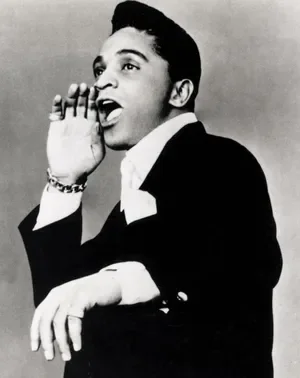
Jackie Wilson
Born09 Jun, 1934
Died21 Jan, 1984
NationalityAmerican
Age at time of death49
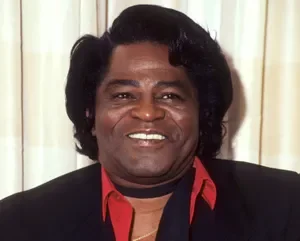
James Brown
Born03 May, 1933
Died25 Dec, 2006
NationalityAmerican
Age at time of death73
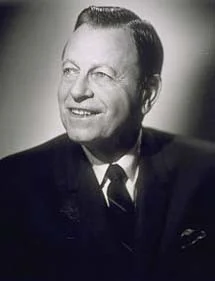
Jimmie Davis
Born10 Sep, 1899
Died05 Nov, 2000
NationalityAmerican
Age at time of death101
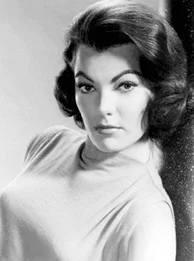
Judy Tyler
Born09 Oct, 1932
Died03 Jul, 1957
NationalityAmerican
Age at time of death24
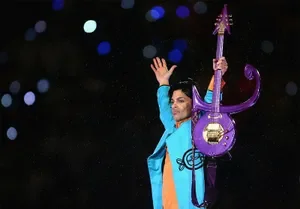
Prince
Born07 Jun, 1958
Died21 Apr, 2016
NationalityAmerican
Age at time of death57