Real Celebrities Never Die!
OR
Search For Past Celebrities Whose Birthday You Share
Died Age: 73
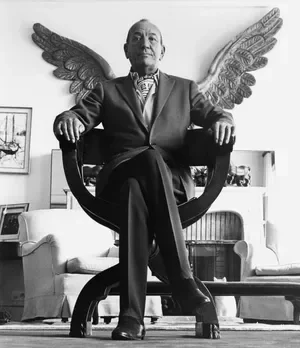
britannica.com
Noel Coward
Birthday:
15 Dec, 1899
Date of Death:
26 Mar, 1973
Cause of death:
Congestive heart failure
Nationality:
English
Famous As:
Actor
Age at the time of death:
73
A Born Performer: Early Life
Noel Coward was a man of many masks—playwright, actor, composer, director, wit—but behind every role he played, one thing remained constant: his razor-sharp elegance. With a cigarette in hand and a clever line always at the ready, Coward reshaped 20th-century British theatre, fusing humour with heartbreak, sophistication with satire. He was the embodiment of theatrical flair, an artist whose legacy glimmers like the polished monocle of a bygone era.
Born on December 16, 1899, in Teddington, Middlesex, Noel Coward was born into a world that was anything but opulent. His father, a piano salesman who frequently struggled to make ends meet, and his mother, a fiercely ambitious woman with theatrical leanings, nurtured a son who quickly showed an uncanny flair for the dramatic. By age six, Coward was already dressing up and staging performances in the family living room, enchanting relatives with made-up skits and borrowed melodies.
One telling childhood moment came when, still a young boy, he declared to his mother: “I intend to be a phenomenon.” It wasn’t a boast but a plan. And soon, it began to unfold.
The Stage as a Classroom: Education and Early Breaks
Formal schooling never quite suited Coward’s temperament. He was an indifferent student, far more fascinated by curtain calls than classroom bells. His real education began at the Italia Conti Academy of Theatre Arts in London, where he found himself among kindred spirits and caught the attention of established actors. He landed his first professional role at age 11 in the children’s play The Goldfish, and by his teens, was already moving in elite theatrical circles.
A pivotal friendship during this time was with the flamboyant writer Philip Streatfeild and later, Lytton Strachey’s Bloomsbury circle. It was an exposure to both intellectual rigour and creative freedom that would shape Coward’s voice as a playwright.
Career Journey: The Making of a Legend
Coward’s early 20s were marked by relentless hustle and a series of modest plays that often failed to find an audience. But in 1924, he struck theatrical gold with The Vortex—a scandalous, sharp-edged play that tackled drug addiction and sexual ambiguity. It stunned polite London society and made Coward a star.
The 1930s and '40s were Coward's most dazzling years. He became a household name, turning out hit after hit with dazzling speed. Hay Fever, Private Lives, Blithe Spirit, Design for Living. These weren’t just plays, they were sparkling cocktails of wit and emotion, served with Coward’s signature charm.
One of his most enduring works came during World War II: Brief Encounter (1945), based on his one-act play Still Life. The film’s understated passion and moral complexity struck a deep chord with a war-weary public, solidifying Coward’s reputation not only as a wit but as a writer with emotional depth.
Though the post-war years saw tastes change and Coward’s style occasionally branded as passé, he remained ever the showman. He reinvented himself as a cabaret performer, delighting audiences in Las Vegas, New York, and beyond with his self-deprecating humor and impeccable timing. His memoirs and diaries also revealed a sharp, observant mind and a deeply private soul which often hid vulnerability behind silk dressing gowns and bon mots.
In 1969, he was knighted. It was a fitting tribute to a man who had once been dismissed as too irreverent for such honours.
The Man Behind the Monocle: Personal Life
Though Coward never publicly declared his homosexuality, he lived with grace and openness among those who mattered to him. His long-term companion, Graham Payn, was a constant presence in his life and work. Coward adored travel, especially to his beloved Jamaica, where he built a hilltop home, Firefly, that became his refuge from the clamour of the stage.
He was famously fastidious, always impeccably dressed, even when gardening. He took great pride in crafting a public persona that was equal parts charisma and control. One quirky fact: he often claimed he could write a full-length play in just three days. It turned out to be a boast he proved more than once.
Encore: The Legacy of Noel Coward
Noel Coward left behind more than plays, songs, and performances. He prized elegance in expression, depth beneath polish, and the sheer joy of cleverness. His influence can be seen in the works of Tom Stoppard, Alan Bennett, and even the wry tone of modern British comedy.
When he died in 1973, at Firefly, tributes poured in from around the world. He is buried in Jamaica, overlooking the Caribbean Sea he loved so dearly. A few years later, a plaque in Poet’s Corner in Westminster Abbey honoured him, marking the first time a dramatist had been so enshrined since Shakespeare.
Sir Noel Coward once wrote, “Wit ought to be a glorious treat, like caviar. Never spread it about like marmalade.” He lived by that philosophy, offering audiences the kind of brilliance that still sparkles, decades on.
Profile Snapshot
Name:
Noël Peirce Coward
Popular Name:
Noel Coward
Gender:
Male
Cause of Death:
Congestive heart failure
Spouse:
Unmarried
Place of Birth:
131 Waldegrave Road, Teddington, UK
Place of Death:
Firefly Estate, Jamaica
Occupation / Profession:
Actor
Composer
Director
Playwright
Singer
Personality Type
Commander: Noel Coward was a charismatic and visionary figure who exuded confidence and intelligence, always taking charge and finding new ways to entertain and inspire through his wit, creativity, and strategic thinking.
Noël Peirce Coward's Interesting Facts
Coward was known for his impeccable style, often designing his own wardrobe.
He was a prolific letter writer, keeping an extensive correspondence with famous personalities like Greta Garbo, Somerset Maugham, and Elizabeth Taylor.
Noel Coward wrote the hit song "Mad About the Boy" in just one afternoon.
Achievements & Awards
Noel Coward's achievements spanned across multiple facets of the arts, with his works such as The Vortex (1924), Private Lives (1930), and Blithe Spirit (1941) becoming iconic pillars of British theatre.
Noel Coward's achievements spanned across multiple facets of the arts, with his works such as The Vortex (1924), Private Lives (1930), and Blithe Spirit (1941) becoming iconic pillars of British theatre. His sharp wit and versatility earned him acclaim both on stage and as a composer, with many of his plays enjoying long runs in the West End. In recognition of his immense contributions to the arts, Coward was knighted by Queen Elizabeth II in 1969, and in 1984, a memorial to him was placed in Westminster Abbey’s Poet’s Corner—cementing his place in cultural history.
External Links
Latest Profiles
People also viewed
Jimi Hendrix
Born27 Nov, 1942
Died18 Sep, 1970
NationalityAmerican
Age at time of death27

Jesse Powell
Born12 Sep, 1971
Died13 Sep, 2022
NationalityAmerican
Age at time of death51
James Dean
Born08 Feb, 1931
Died30 Sep, 1955
NationalityAmerican
Age at time of death24
Irving Berlin
Born11 May, 1888
Died22 Sep, 1989
NationalityAmerican
Age at time of death101
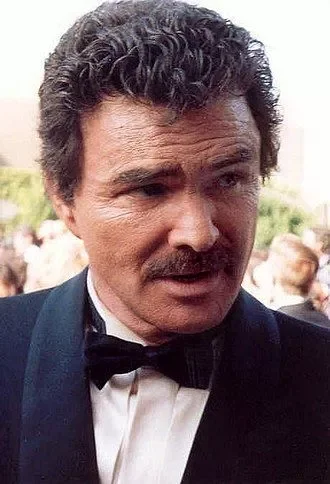
Burt Reynolds
Born11 Feb, 1936
Died06 Sep, 2018
NationalityAmerican
Age at time of death82
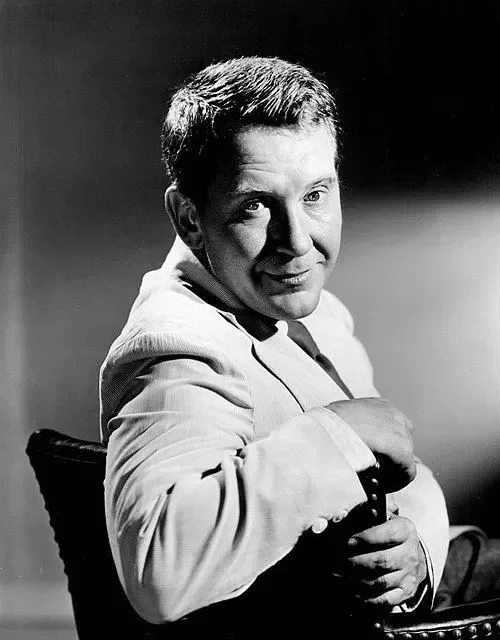
Oliver Burgess Meredith
Born16 Nov, 1907
Died09 Sep, 1997
NationalityAmerican
Age at time of death89

Paul Walker
Born12 Sep, 1973
Died30 Nov, 2013
NationalityAmerican
Age at time of death40
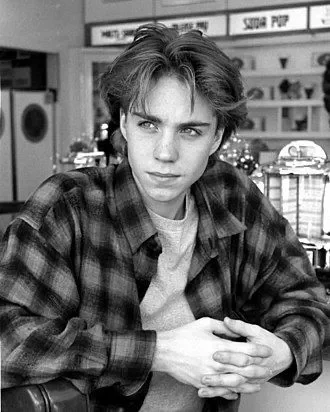
Jonathan Brandis
Born13 Apr, 1976
Died12 Nov, 2003
NationalityAmerican
Age at time of death27
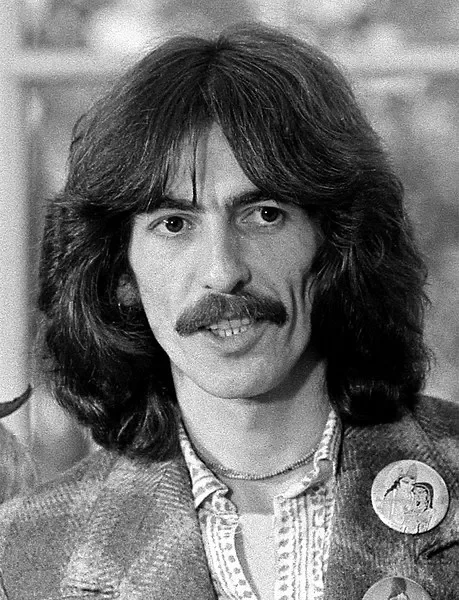
George Harrison
Born25 Feb, 1943
Died29 Nov, 2001
NationalityBritish
Age at time of death58
Tony Bennett
Born03 Aug, 1926
Died21 Jul, 2023
NationalityAmerican
Age at time of death96
Samuel Beckett
Born13 Apr, 1906
Died22 Dec, 1989
NationalityIrish
Age at time of death83
Sally Ann Howes
Born20 Jul, 1930
Died19 Dec, 2021
NationalityBritish, American
Age at time of death91

Anton Yelchin
Born11 Mar, 1989
Died19 Jun, 2016
NationalityAmerican
Age at time of death27
Jane Birkin
Born14 Dec, 1946
Died16 Jul, 2023
NationalityBritish, French
Age at time of death76

Chester Bennington
Born20 Mar, 1976
Died20 Jul, 2017
NationalityAmerican
Age at time of death41
Lupe Vélez
Born18 Jul, 1908
Died14 Dec, 1944
NationalityMexican
Age at time of death36
Johnny Ace
Born09 Jun, 1929
Died25 Dec, 1954
NationalityAmerican
Age at time of death25
Alexandre Dumas
Born24 Jul, 1802
Died05 Dec, 1870
NationalityFrench
Age at time of death68
Vera-Ellen
Born16 Feb, 1921
Died30 Aug, 1981
NationalityAmerican German
Age at time of death60
Rabindranath Tagore
Born07 May, 1861
Died08 Aug, 1941
NationalityIndian
Age at time of death80