Real Celebrities Never Die!
OR
Search For Past Celebrities Whose Birthday You Share
Died Age: 54
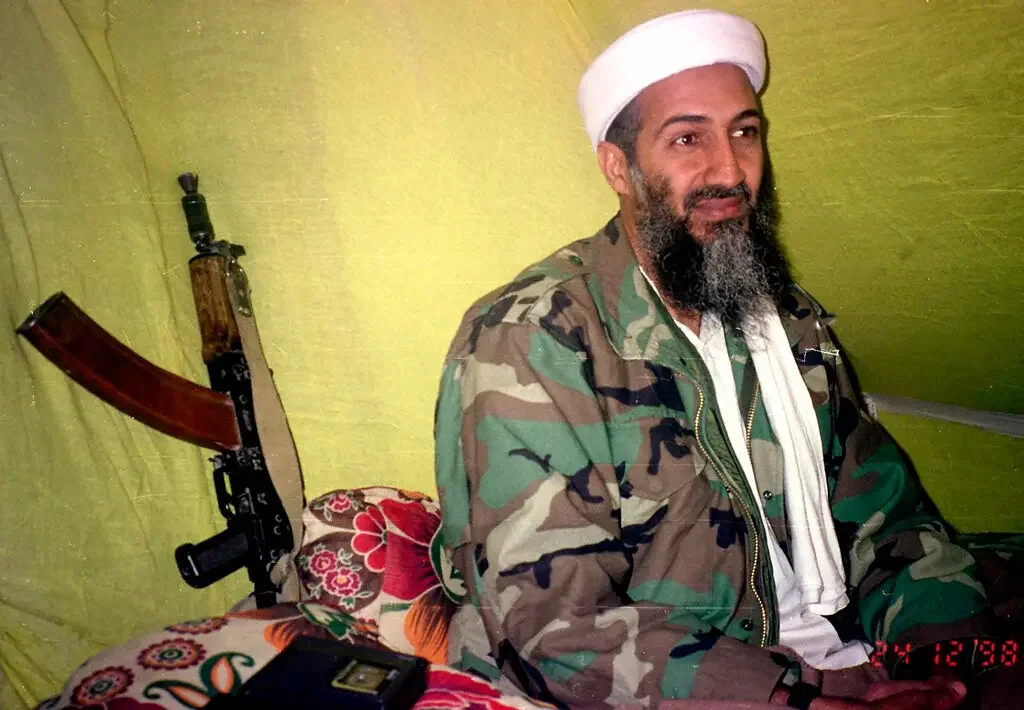
nytimes.com
Osama bin Laden
Birthday:
10 Mar, 1957
Date of Death:
02 May, 2011
Cause of death:
Gunshot wound
Nationality:
Saudi Arabian
Famous As:
Terrorist
Age at the time of death:
54
Osama bin Mohammed bin Awad bin Laden's Quote's

“What I lived in two years there[Afghanistan], I could not have lived in a hundred years elsewhere”
Osama bin Mohammed bin Awad bin Laden
🔗 deadcelebrityhub.com
Early Life: A Gilded Childhood Amid Changing Sands
In the shifting deserts of Saudi Arabia, a boy was born into immense wealth, only to later ignite conflicts that would shake the world. Osama bin Laden’s life traces a stark arc—from privileged beginnings to becoming the face of extremist terror. His story is a chilling reminder of how ideology, opportunity, and ambition can collide with devastating consequences.
Osama bin Mohammed bin Awad bin Laden was born on March 10, 1957, in Riyadh, Saudi Arabia. He was the 17th of over 50 children fathered by Mohammed bin Laden, a Yemeni immigrant who rose from humble origins to build the largest construction company in the Kingdom. The bin Laden family held close ties to the Saudi royal family, enjoying enormous wealth and influence.
Osama's early life unfolded within the walls of privilege but also deep conservatism. His mother, Alia Ghanem, was reportedly a Syrian of modest background, and Osama was considered part of her branch of the family, sometimes referred to as the "lesser" lineage. Even as a boy, Osama displayed traits that would later define him: seriousness, religious devotion, and a quiet charisma that drew others in.
Despite his future infamy, young Osama was an unremarkable student academically but excelled in horse riding and soccer—often playing as a forward and earning admiration for his athletic prowess.
Education: Seeds of Radicalism
Osama attended elite secular schools in Jeddah but became increasingly drawn to religious studies. In the late 1970s, he enrolled at King Abdulaziz University, where he studied economics and business administration. It was here, however, not in the classroom, that the crucial transformation began.
At the university, bin Laden encountered fiery Islamist scholars who advocated for global jihad. These teachings, combined with geopolitical events—the Soviet invasion of Afghanistan in 1979 chief among them—planted the seeds of radicalism. University life did not just educate bin Laden; it radicalized him.
Career Journey: From Mujahideen Fighter to Global Fugitive
Early Phase: The Call to Afghanistan
When Soviet tanks rolled into Afghanistan, Osama bin Laden answered what he saw as a divine call. Using his wealth and family connections, he funnelled money, arms, and fighters to the mujahideen resistance. By the mid-1980s, he had relocated to Peshawar, Pakistan, operating guesthouses for fighters and even visiting the battlefronts.
Though his personal combat role was minimal, his logistical contributions—and more importantly, his myth-making elevated his stature among jihadists. His construction skills were put to use building tunnels and bunkers for Afghan fighters.
Major Turning Point: Founding al-Qaeda
In 1988, amid the dying embers of the Afghan-Soviet war, bin Laden co-founded al-Qaeda ("The Base"), envisioning a global movement aimed at defending Islam through violence. This marked a critical shift: from regional fighter to aspiring leader of a worldwide jihadist network.
Throughout the 1990s, bin Laden relocated between Sudan and Afghanistan, funding terror operations and issuing declarations of war against the United States. A turning point came in 1998, when al-Qaeda bombed U.S. embassies in Kenya and Tanzania, killing over 200 people. These attacks announced his network’s deadly capabilities on the world stage.
Bin Laden was obsessively secretive. He avoided using telephones and relied on human couriers, a habit that would later prolong his ability to evade capture for years.
Later Phase: September 11 and Aftermath
September 11, 2001, marked the horrifying climax of bin Laden’s campaign. Coordinating a hijacking plot that used commercial aeroplanes as weapons, al-Qaeda carried out attacks on New York City’s World Trade Centre and the Pentagon, killing nearly 3,000 people.
In the aftermath, bin Laden became the world’s most wanted man. He fled deep into the mountainous tribal regions of Afghanistan and Pakistan, eluding a global manhunt for nearly a decade. During these years, he became more of a symbol than an active operational leader. His influence spread via recordings, videos, and ideological inspiration.
Personal Life: A Man Behind the Myth
Beyond the headlines, bin Laden lived a complex, contradictory personal life. He married at least five women and fathered more than 20 children. He was known to be austere in his habits, favouring simple clothing, vegetarian meals, and rigorous prayer schedules.
Despite orchestrating mass violence, he was reportedly a doting father who enjoyed poetry, reading, and long walks with his children. Yet, his warmth sharply contrasted with the cruelty of his public deeds—a paradox that continues to puzzle historians.
Legacy: A Shadow Over the Modern World
Osama bin Laden was killed by U.S. Navy SEALs on May 2, 2011, during a daring nighttime raid in Abbottabad, Pakistan. His death marked the end of a decade-long pursuit, but not the end of his influence.
Bin Laden left behind a fragmented world, scarred by wars in Afghanistan and Iraq, expanded surveillance states, and heightened fears of terrorism. His legacy is one of division, violence, and global insecurity. Yet his life also galvanised international cooperation against terrorism, reshaping military, intelligence, and foreign policy landscapes across the globe.
Today, Osama bin Laden is remembered not as a hero but as a cautionary symbol of how ideology, power, and fanaticism can converge to reshape the course of history, leaving a shadow that will linger for generations to come.
Profile Snapshot
Name:
Osama bin Mohammed bin Awad bin Laden
Popular Name:
Osama bin Laden
Gender:
Male
Cause of Death:
Gunshot wound
Spouse:
Amal al-Sadah
Siham Sabar
Khairiah Sabar
Khadijah sharif
Najwa Ghanem
Place of Birth:
Riyadh, Saudi Arabia
Place of Death:
Abbottabad, Pakistan
Occupation / Profession:
Terrorist
Personality Type
Architect: Imaginative and strategic thinkers, with a plan for everything. Logician. A secretive and relentless strategist driven by a radical vision. Osama bin Laden combined unwavering ideological conviction with cold, meticulous evil planning to leave a devastating horrible mark on the world.
Osama bin Mohammed bin Awad bin Laden's Interesting Facts
During his years in hiding, bin Laden reportedly watched American TV shows like Tom and Jerry, and admired some aspects of Western technology—even as he condemned Western culture publicly.
He was obsessed with horses and poetry
He was very frugal in personal life
Osama bin Laden was about 6'5" (1.95 meters) tall.
Achievements & Awards
He did not receive formal awards from any recognised international body, as his actions were widely condemned worldwide. Instead, he was designated a terrorist by numerous governments and became the world’s most wanted fugitive until his death in 2011.