Real Celebrities Never Die!
OR
Search For Past Celebrities Whose Birthday You Share
Died Age: 35
britannica.com
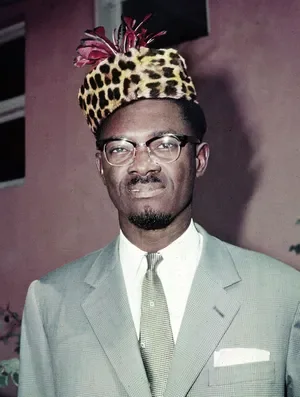
Patrice Lumumba
Birthday:
02 Jul, 1925
Date of Death:
17 Jan, 1961
Cause of death:
Assasination
Nationality:
Congolese
Famous As:
Congolese politician
Age at the time of death:
35
Patrice Émery Lumumba's Quote's

“We are no longer your monkeys!”
Patrice Émery Lumumba
🔗 deadcelebrityhub.com
Early Life: From Humble Roots to Fierce Convictions
Patrice Lumumba burned bright and fast, a fiery voice of freedom whose life became a symbol of African independence and political martyrdom. As the first Prime Minister of an independent Congo, Lumumba challenged the legacy of colonialism with unflinching courage and revolutionary vision. Though his time in power was tragically brief, his words still echo across continents—a beacon for justice, dignity, and African self-determination. His life was a short chapter, but one that helped write the story of a continent’s awakening.
Born on July 2, 1925, in the small village of Onalua in the Belgian Congo (now the Democratic Republic of the Congo), Patrice Émery Lumumba grew up in a region marked by poverty and oppression. He was part of the Tetela ethnic group, and his family belonged to the working class—his father a farmer, his upbringing modest.
He was educated in mission schools, where he learned French and excelled academically. Even as a boy, he stood out for his intelligence and eloquence. However, the more he learned, the more he saw the injustice surrounding him—how his people were denied basic rights and dignity under Belgian colonial rule.
Trivia: Before entering politics, Lumumba worked as a postal clerk, brewery salesman, and freelance journalist—roles that allowed him to travel and sharpen his rhetorical skills.
Education and Awakening: Self-Taught Radical, Reluctant Revolutionary
Though Lumumba never attended university, he became a voracious reader and self-taught intellectual. He consumed books on philosophy, political theory, and Pan-Africanism. His writing—whether in speeches or newspaper articles—reflected a bold, assertive tone uncommon among Congolese voices of his time.
In the 1950s, as winds of independence began to blow across Africa, Lumumba emerged as a leading voice of resistance. He co-founded the Mouvement National Congolais (MNC) in 1958, the first nationwide political party in Congo, advocating for unity, independence, and social reform.
His charisma, clarity, and conviction quickly made him a symbol of the people's aspirations. He was not afraid to call out colonial brutality, nor to dream of a Congo led by its own sons and daughters.
Career Journey: From Revolutionary Orator to Prime Minister
The Road to Independence
Lumumba’s rise coincided with growing unrest in Congo. Strikes, protests, and demands for sovereignty spread like wildfire. In 1960, after years of pressure, Belgium hastily granted Congo its independence. Lumumba, just 35 years old, was elected the nation’s first Prime Minister.
On June 30, 1960, Congo celebrated its liberation. At the official ceremony, Belgian King Baudouin gave a paternalistic speech lauding colonialism. Lumumba’s uninvited rebuttal electrified the crowd—and stunned the world.
"We are no longer your monkeys. We are men."
In a ten-minute address, Lumumba laid bare the humiliation and violence inflicted upon the Congolese people. His words were raw, defiant, and unforgettable—a seismic moment in anti-colonial history.
Crisis and Betrayal
But independence brought chaos. The army mutinied, Belgian interests resisted reforms, and the mineral-rich province of Katanga, backed by foreign powers, declared secession. Lumumba, seeking help, turned to the Soviet Union—a move that alarmed the U.S. and Belgium during the Cold War.
His enemies painted him as a communist puppet. Within months, he was dismissed by President Joseph Kasa-Vubu, placed under house arrest, and eventually captured by soldiers loyal to Colonel Joseph Mobutu, who would later become Congo’s long-standing dictator.
On January 17, 1961, Patrice Lumumba was executed by firing squad in Katanga—his body dissolved in acid to erase the evidence. But his silencing only amplified his voice.
Personal Life: The Man Behind the Movement
Lumumba was not just a politician—he was a husband, a father of five, and a deeply emotional human being. His letters from prison, especially the final one to his wife Pauline, reveal a man of profound conviction and poetic soul.
“History will one day have its say... Africa will write its own history.”
He was known for his intense focus, his fierce honesty, and his refusal to compromise on dignity. While some critics noted his lack of political maneuvering or strategic caution, others saw this as his greatest strength—he did not play the game. He simply told the truth.
Legacy: Africa’s Shining Martyr
Lumumba’s death sent shockwaves around the world. Protests erupted in global capitals. Poets, revolutionaries, and freedom fighters—from Frantz Fanon to Malcolm X—invoked his name. For many, Lumumba became the ultimate symbol of what happens when a Black leader dares to demand full liberation.
In Congo, his legacy was long suppressed by Mobutu’s regime, but over time, statues rose, streets were renamed, and his image was reclaimed. In 2022, over 60 years after his death, Belgium finally returned Lumumba’s only known remains—a single tooth—to his family, acknowledging its role in his assassination.
Trivia: Che Guevara, who visited Congo in 1965, called Lumumba “a true man of the people, an African who gave everything for his country.”
Conclusion: A Voice That Refused to Be Silenced
Patrice Lumumba lived only 35 years, but his vision remains timeless. He dreamed of a united Africa, free from foreign chains, standing tall in its own name. His fall was engineered by those who feared that dream. But what they couldn’t kill was his message.
He reminded the world that freedom isn't given—it’s taken. And that sometimes, even in death, a man’s voice grows louder.
In every protest chant for decolonization, in every African election where dignity is demanded, in every young mind that studies his defiant speech, Patrice Lumumba lives on—as the soul of a revolution unfinished, but unforgettable.
Profile Snapshot
Name:
Patrice Émery Lumumba
Popular Name:
Patrice Lumumba
Gender:
Male
Cause of Death:
Assasination
Spouse:
Pauline Opango
Place of Birth:
Katakokombe, Congo-Kasaï, Belgian Congo
Place of Death:
near Élisabethville, State of Katanga
Occupation / Profession:
Congolese politician
Independence leader
Personality Type
Protagonist: Patrice Lumumba was a charismatic and visionary leader, driven by deep convictions and a powerful sense of justice, inspiring others with his eloquence and unwavering belief in freedom and equality.
Patrice Émery Lumumba's Interesting Facts
Despite his tragic death at just 35, Lumumba became a symbol of African liberation and anti-colonial resistance across the continent.
He was a passionate advocate for Pan-Africanism and national sovereignty, delivering a powerful speech at Congo’s independence ceremony that criticized colonialism.
Lumumba’s tenure was short-lived—he was overthrown and later assassinated in 1961 under circumstances involving both Belgian and U.S. intelligence agencies.
Patrice Lumumba was the first Prime Minister of the Democratic Republic of the Congo after it gained independence from Belgium in 1960.
Achievements & Awards
Patrice Lumumba, the first Prime Minister of the Democratic Republic of the Congo, is celebrated posthumously as a symbol of African independence and anti-colonial struggle.
Though he didn’t receive formal awards during his lifetime, he has been honored globally through monuments, streets, and institutions bearing his name, recognizing his enduring impact on African liberation movements.
External Links