Real Celebrities Never Die!
OR
Search For Past Celebrities Whose Birthday You Share
Died Age: 69
encrypted-tbn0.gstatic.com
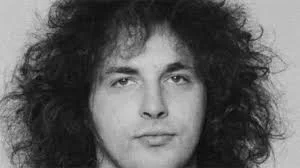
Paul Mario Day
Birthday:
18 Apr, 1956
Date of Death:
28 Jul, 2025
Cause of death:
Cancer
Nationality:
British
Famous As:
Singer
Age at the time of death:
69
Paul Mario Day's Quote's

“You’ve got to get better. You’ve got to be more in the audience’s face. You’ve got to be commanding. You’ve got to be a hero.”
Paul Mario Day
🔗 deadcelebrityhub.com
Early Life: From Whitechapel to the Stage Lights
Paul Mario Day carried the kind of voice that once echoed in empty London pubs before it set the stage for one of the most legendary metal bands in history. Though many may know Iron Maiden decades later for thunderous riffs and an iconic frontman, it was Day who first breathed life into the band — a brief but crucial moment that would echo far beyond his tenure. More than a footnote, his journey through bands like More, Wildfire, and Sweet shows the restless heart of a musician always seeking to sing louder, reach farther — and leave a mark.
Born on 19 April 1956 in Whitechapel, London, Paul Mario Day grew up in the gritty streets of East London. His childhood was ordinary in many ways, shaped by working-class roots and the steady hum of city life. Yet within that bustle, music stirred something restless in him. He wasn’t born into privilege — but perhaps that made music more urgent, more alive.
Those early years didn’t hint at stardom. Day was just another teenager discovering rock, dreaming of something beyond the neighbourhood. There’s no extravagant origin story, no prodigy upbringing — just a young man drawn to melody and power chords, hungry for expression.
A Musical Awakening: How Education Took Shape in Gigs
Paul Mario Day’s real “education” came not from classrooms, but from stages. By the early 1970s, he was seeking out gigs, honing his voice, pushing through the awkwardness and the nerves. It was raw, unfiltered, and entirely his own.
He was still a teenager when bassist Steve Harris recruited him into a fledgling band that would become Iron Maiden. That invitation in December 1975 was less a formal audition than a do or die shot: it meant proving himself night after night in dingy pubs and small halls, learning the mechanics of performance, and discovering that music demands more than talent — it demands presence.
Career Journey
A Brief Beginning — Iron Maiden (1975–1976)
At just 19, Day became the first lead singer of Iron Maiden. The band was young, unrefined, and still carving out its identity. On 1 May 1976, he stood in front of a small London crowd at the band’s first official gig. The room was modest, the audience sparse — but for a moment, everything felt possible.
His time in the band was short-lived. By October 1976, less than a year after joining, he was asked to step down. Iron Maiden’s internal reflection, revealed in their DVD The Early Days, cited a lack of stage charisma. For Day, the blow was painfully personal. In a later interview, he confessed:
“Steve was saying, ‘You’ve got to get better. You’ve got to be more in the audience’s face. You’ve got to be commanding. You’ve got to be a hero.’ I agreed with him — I just didn’t know how to make that happen.”
He admitted he was “gutted” — but also that it changed him. That moment of rejection would shape his voice, his ambition, his sense of himself as a performer.
Though he never recorded a studio album with Maiden, Day later claimed he co wrote “Strange World,” a track on their 1980 debut album. While he never received official credit, the claim speaks to his deeper involvement in the band’s creative genesis.
Rising Again — MORE, Monsters of Rock, Wildfire (1980s)
After a few years regrouping, Day re-emerged with a renewed sense of purpose. In 1980, he formed the band MORE, trading London pubs for the rising wave of British heavy metal. The band’s debut album, Warhead, came out in 1981 — a raw, unpolished collection of riff-heavy tracks that resonated with the underground metal scene.
That same year, MORE played the legendary Monsters of Rock festival at Castle Donington — sharing the stage with AC/DC, Def Leppard, Whitesnake and more. For Day, this was no small comeback: it was vindication. Standing on that stage, among giants, he was no longer a rejected teenager — he was part of a movement.
Yet the journey was not without friction. Reports suggest he parted ways with MORE after disagreements with the record label. Unfazed, he moved on. In 1983, he became frontman for Wildfire, releasing albums like Brute Force and Ignorance and Summer Lightning. Though the band was relatively short-lived (1983–1984), it carried the spirit of metal-forward experimentation.
Reinvention: Joining Sweet and the Move to Australia (Mid-1980s Onwards)
In 1985, Day took a different path. He auditioned for a newly reassembled version of Sweet — the glam rock band that had defined much of 1970s rock. Guitarist Andy Scott recalled their first impression: when Paul walked in, “we looked no further.”
With Sweet, Day performed in sold-out shows across the UK and Australia. One of those nights at London’s famed Marquee Club was recorded and released as Live at the Marquee — the CD/DVD would go on to find chart success. It was sweet (pun intended) redemption: from pub bands to festivals to glam rock arenas, Day had reinvented himself once more.
By 1986, after marrying his wife Cecily, he relocated to Australia. The move marked the beginning of a quieter — yet still creative — chapter. In Newcastle, New South Wales, he worked with local bands, joined groups like Crimzon Lake and Buffalo Crows, and continued performing, writing, and recording — even as the world of rock shifted around him.
Personal Life: More Than the Mic
Paul Mario Day didn’t become a rock star in the classic sense. He didn’t chase glitzy fame. Instead, after his move to Australia, he led a quieter, more grounded life. Married to Cecily, he found a stability that contrasted with the chaotic energy of rock tours.
In later years, even as his health waned, Day kept making music. According to friends, he recorded a final single near the end of his life — a deeply personal track that confronted his own mortality. It spoke not of glory, but of reflection.
Those who knew him described him as warm, unassuming — a “lovely person and good mate,” in the words of Iron Maiden’s tribute. On stage or off, he carried a humility uncommon in rock.
Legacy: The Quiet Spark Behind the Thunder
Paul Mario Day died on 29 July 2025, at his home in Newcastle, Australia, after a battle with cancer. He was 69. News of his passing prompted an outpouring of respect and mourning from fans, former bandmates, and the broader rock community. MORE called him “a huge part of the NWOBHM,” and Sweet’s Andy Scott lauded his vocals as “standing the test of time.”
He may not be the first name that comes to mind when people think of Iron Maiden — but he was the first voice. His tenure was short, his time under the spotlight brief — yet in that fragile run lies the spark of something much larger. Without him, perhaps Iron Maiden’s journey might have started differently.
Beyond Maiden, his work with MORE, Wildfire, and Sweet contributed to the texture of British heavy metal and glam rock in the 1980s. He showed resilience: when doors closed, he opened new ones. When critics said he lacked presence, he worked harder — reinvented himself, pushed into new roles, and moved continents to continue creating.
In private, he was a devoted husband and a late life musician still chasing the thrill of performing. In public, he was a foundational figure whose early voice helped birth a metal legend — and who never stopped singing, even when fame faded. In the thunder of heavy metal history, that note resonates. He reminds us that sometimes, the first voice, even if fleeting, can change everything.
Profile Snapshot
Name:
Paul Mario Day
Popular Name:
Paul Mario Day
Gender:
Male
Cause of Death:
Cancer
Spouse:
Cecily
Place of Birth:
London, United Kingdom
Place of Death:
Newcastle, Australia
Occupation / Profession:
Singer
Personality Type
Virtuoso: Paul Mario Day’s personality can be summed up as a resilient and humble artist, driven by passion and undeterred by setbacks, always seeking to grow and express himself through music.
Paul Mario Day's Interesting Facts
Paul once claimed he co‑wrote “Strange World,” a track on Iron Maiden’s 1980 debut album, though he was never officially credited.
Despite being born and raised in East London, he moved to Australia in the mid-1980s, where he lived until his passing — choosing a quieter life far from the spotlight.
In a 2019 interview, he reflected that being asked to leave Iron Maiden was the “worst experience … but the best lesson,” saying it pushed him to grow as a singer.
Achievements & Awards
Paul Mario Day holds the distinction of being the original lead vocalist for Iron Maiden — a key foundational role, even though he sang with them for less than a year.
After leaving Maiden, he successfully fronted the band More, whose 1981 album Warhead and performance at the legendary Monsters of Rock festival at Castle Donington helped cement his place in the New Wave of British Heavy Metal.
Later, his time with glam‑rock band Sweet led to a widely praised live album (Live at the Marquee), which is a testament to the enduring strength of his vocal performance.
External Links
Latest Profiles
People also viewed
Jimi Hendrix
Born27 Nov, 1942
Died18 Sep, 1970
NationalityAmerican
Age at time of death27
Jesse Powell
Born12 Sep, 1971
Died13 Sep, 2022
NationalityAmerican
Age at time of death51
George Harrison
Born25 Feb, 1943
Died29 Nov, 2001
NationalityBritish
Age at time of death58
Tony Bennett
Born03 Aug, 1926
Died21 Jul, 2023
NationalityAmerican
Age at time of death96
Sally Ann Howes
Born20 Jul, 1930
Died19 Dec, 2021
NationalityBritish, American
Age at time of death91
Jane Birkin
Born14 Dec, 1946
Died16 Jul, 2023
NationalityBritish, French
Age at time of death76
Chester Bennington
Born20 Mar, 1976
Died20 Jul, 2017
NationalityAmerican
Age at time of death41
Lupe Vélez
Born18 Jul, 1908
Died14 Dec, 1944
NationalityMexican
Age at time of death36
Johnny Ace
Born09 Jun, 1929
Died25 Dec, 1954
NationalityAmerican
Age at time of death25
Vera-Ellen
Born16 Feb, 1921
Died30 Aug, 1981
NationalityAmerican German
Age at time of death60
Olivia Newton-John
Born26 Sep, 1948
Died08 Aug, 2022
NationalityBritish, Australian
Age at time of death73
Jerry Lewis
Born16 Mar, 1926
Died20 Aug, 2017
NationalityAmerican
Age at time of death91
Cissy Houston
Born30 Sep, 1933
Died07 Oct, 2024
NationalityAmerican
Age at time of death91
Mary Martin
Born01 Dec, 1913
Died03 Nov, 1990
NationalityAmerican
Age at time of death76
Jim Morrison
Born08 Dec, 1943
Died03 Jul, 1971
NationalityAmerican
Age at time of death27
Christopher Lee
Born27 May, 1922
Died07 Jun, 2015
NationalityBritish
Age at time of death93
Biz Markie
Born08 Apr, 1964
Died16 Jul, 2021
NationalityAmerican
Age at time of death57
Billie Holiday
Born07 Apr, 1915
Died17 Jul, 1959
NationalityAmerican
Age at time of death44
Barry White
Born12 Sep, 1944
Died04 Jul, 2003
NationalityAmerican
Age at time of death58
Tina Turner
Born26 Nov, 1939
Died24 May, 2023
NationalityAfrican, American
Age at time of death83