Real Celebrities Never Die!
OR
Search For Past Celebrities Whose Birthday You Share
Died Age: 32
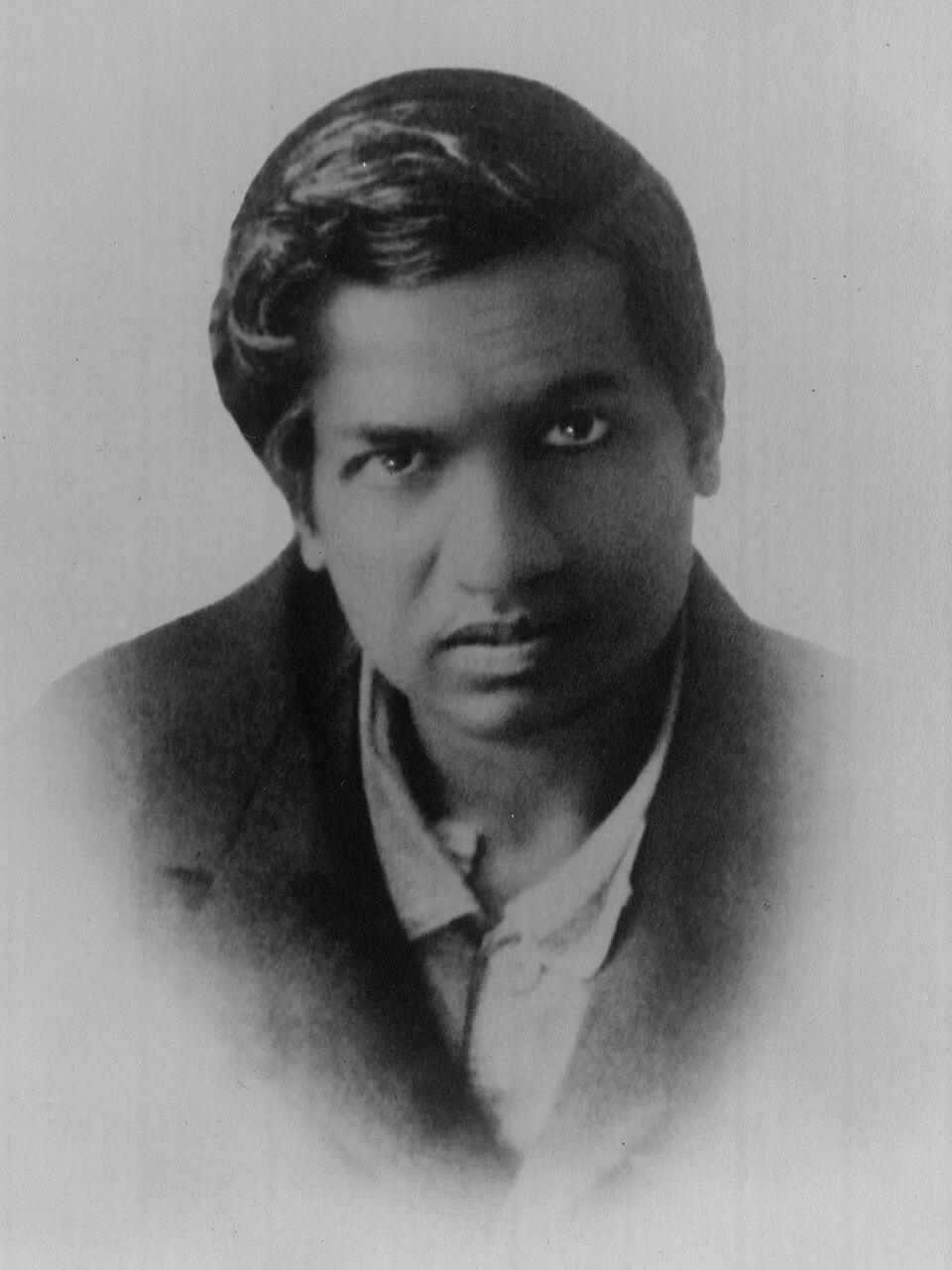
wikipedia.org
Ramanujan
Birthday:
21 Dec, 1887
Date of Death:
26 Apr, 1920
Cause of death:
Hepatic amoebiasis
Nationality:
Indian
Famous As:
Mathematician
Age at the time of death:
32
Srinivasa Ramanujan's Quote's

“An equation for me has no meaning unless it expresses a thought of God.”
Srinivasa Ramanujan
🔗 deadcelebrityhub.com
Srinivasa Ramanujan: Early Life
Srinivasa Ramanujan was born on December 22, 1887, in Erode, Madras Presidency (now in Tamil Nadu, India), was a self-taught mathematical prodigy. Despite a tragically life, his extraordinary achievements in mathematics left a lasting impact on the world. Born into a poor Brahmin family, Ramanujan’s early life was marked by challenges. He faced financial hardship and struggled in conventional schooling. He showed little interest in subjects other than mathematics. However, within the realm of numbers, his brilliance shone through. He devoured any mathematical text he could find, even creating his own theorems and formulas inspired by his dreams and visions.
Fascination with Numbers
Ramanujan’s was fascinated with numbers and had an innate mathematical intuition even from the very young age. Born into a modest Brahmin family, he displayed an early aptitude for mathematics. He often explored advanced topics with an intuitive understanding. His formal education was disrupted because of financial challenges. At the age of 16, Ramanujan independently discovered complex mathematical theorems and methods, showcasing an extraordinary depth of mathematical insight. His talent, though unrecognized locally, would soon attract the attention of the global mathematical community.
A Leap of Faith: Seeking Recognition
Ramanujan had no formal training, but he believed his work was important. In 1911, he wrote to the famous English mathematician G.H. Hardy, sending him a letter with his findings. Hardy, initially skeptical, was astonished by the depth and originality of Ramanujan’s ideas. Appalled by the poverty and substandard education in which this extraordinary talent was toiling, Hardy brought Ramanujan to Cambridge University in 1914.
Navigating Cultural Clashes
Ramanujan faced both opportunities and challenges while in England. He collaborated with Hardy and other mathematicians to refine his work and publish his discoveries. He also struggled with cultural and social barriers, including loneliness and adjusting to a new lifestyle.
A Legacy of Mathematical Marvels
Ramanujan was a revolutionary mathematician in the domain number theory. His findings in partitions, elliptic functions and continued fractions were revolutionary. Finding the balance between intuition and rigor was another hallmark of his work. His Ramanujan prime and its modular function are still the subject of active study by mathematicians, and his ideas live on in many fields of mathematics and physics.
Beyond the Theorems
Even after all this success, Ramanujan was still a humble, devout man. He described his insights as being woven into his faith and experience with the divine. He led a relatively simple life, focused mostly on his research and family. His own formal education was limited, but he had a piercing intellect and a profound knowledge of philosophy and literature.
Death and Enduring Legacy
While in England, Ramanujan became ill with tuberculosis in 1917. He recovered quickly, returned to India in 1919, and died within a year. However, the cause of death was actually hepatic amoebiasis. His untimely death in 1920 at the age of only 32 did not silence the legacy which continues to inspire generations of mathematicians and scientific minds. His work has been translated into many languages, his story adapted into films.
Profile Snapshot
Name:
Srinivasa Ramanujan
Popular Name:
Ramanujan
Gender:
Male
Cause of Death:
Hepatic amoebiasis
Spouse:
Janaki Ammal
Place of Birth:
Erode, Tamil Nadu, India
Place of Death:
Kumbakonam, Tamil Nadu, India
Occupation / Profession:
Mathematician
Researcher
Personality Type
Logician: Innovative inventors with an unquenchable thirst for knowledge. Known for his introspective nature, deep curiosity, and unparalleled ability to think abstractly and solve complex mathematical problems.
Srinivasa Ramanujan's Interesting Facts
His collaboration with G.H. Hardy at Cambridge University is legendary.
Ramanujan's mathematical insights were often intertwined with his religious beliefs, further adding to the mystical aura surrounding his genius.
The number 1729 is called the "Hardy-Ramanujan number" due to a famous anecdote involving the two mathematicians.
With limited formal education, his achievements defied convention and showcased the power of independent learning and intellectual curiosity.
Achievements & Awards
Awarded a Bachelor of Science degree by research from Cambridge University
Discovered over 3,900 mathematical results, many of which were groundbreaking.
Elected as a Fellow of the Royal Society in 1918
External Links
Additional Links
Latest Profiles
People also viewed

Paul Erdős
Born26 Mar, 1913
Died20 Sep, 1996
NationalityHungarian
Age at time of death83
Eva Crane
Born12 Jun, 1912
Died06 Sep, 2007
NationalityBritish
Age at time of death95

Barbara McClintock
Born16 Jun, 1902
Died02 Sep, 1992
NationalityAmerican
Age at time of death90
Lise Meitner
Born07 Nov, 1878
Died27 Oct, 1968
NationalityAustrian, Swedish
Age at time of death89
Rosalyn Sussman Yalow
Born19 Jul, 1921
Died30 May, 2011
NationalityAmerican
Age at time of death89
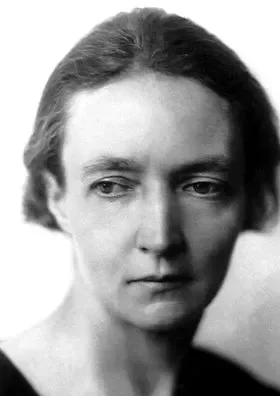
Irène Joliot-Curie
Born12 Sep, 1897
Died17 Mar, 1956
NationalityFrench
Age at time of death58
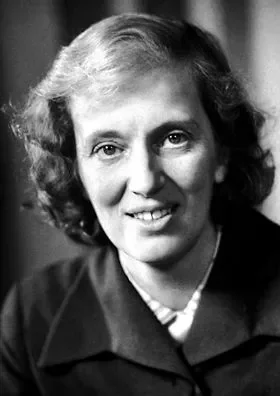
Dorothy Hodgkin
Born12 May, 1910
Died29 Jul, 1994
NationalityBritish
Age at time of death84
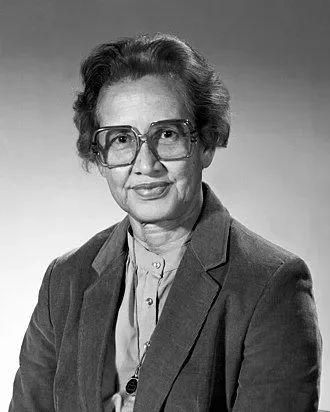
Katherine Johnson
Born26 Aug, 1918
Died24 Feb, 2020
NationalityAmerican
Age at time of death101

Gertrude Elion
Born23 Jan, 1918
Died21 Feb, 1999
NationalityAmerican
Age at time of death81
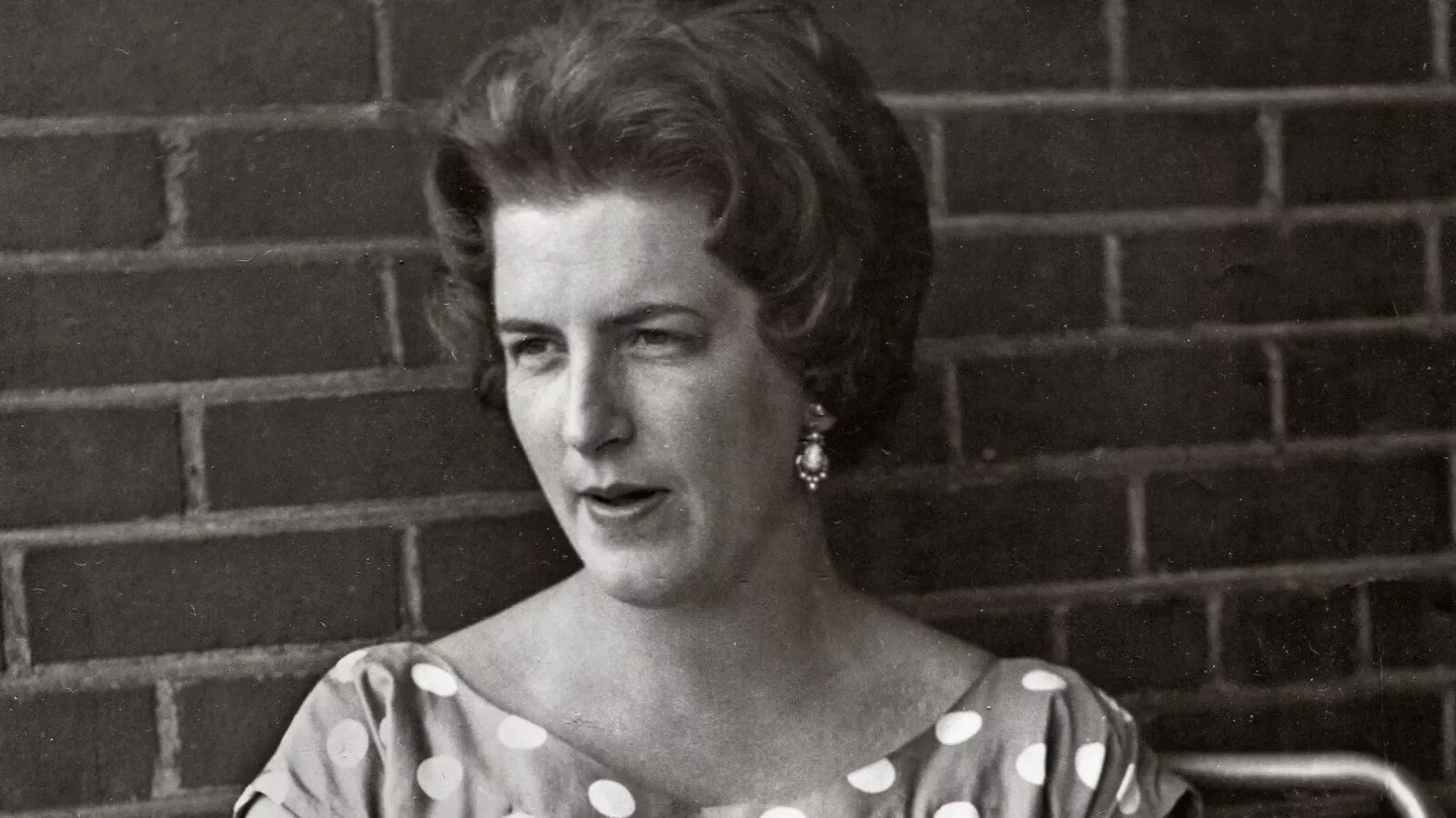
Yvonne Barr
Born11 Mar, 1932
Died13 Feb, 2016
NationalityIrish
Age at time of death83
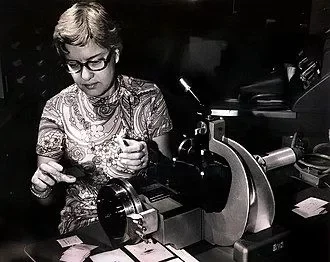
Vera Rubin
Born23 Jul, 1928
Died25 Dec, 2016
NationalityAmerican
Age at time of death88

Allen Newell
Born19 Mar, 1927
Died19 Jul, 1992
NationalityAmerican
Age at time of death65
George Boole
Born02 Nov, 1815
Died08 Dec, 1864
NationalityEnglish
Age at time of death49
James Clerk Maxwell
Born13 Jun, 1831
Died05 Nov, 1879
NationalityScottish
Age at time of death48
Christian Doppler
Born29 Nov, 1803
Died17 Mar, 1853
NationalityAustrian
Age at time of death49

Paul Allen
Born21 Jan, 1953
Died15 Oct, 2018
NationalityAmerican
Age at time of death65
John Hadley
Born16 Apr, 1682
Died14 Feb, 1744
NationalityEnglish
Age at time of death61
Kiyoshi Shiga
Born07 Feb, 1871
Died25 Jan, 1957
NationalityJapanese
Age at time of death85
Otto Hahn
Born08 Mar, 1879
Died28 Jul, 1968
NationalityGerman
Age at time of death89

Roy J. Plunkett
Born26 Jun, 1910
Died12 May, 1994
NationalityAmerican
Age at time of death83