Real Celebrities Never Die!
OR
Search For Past Celebrities Whose Birthday You Share
Died Age: 77
dims.apnews.com
Rick Derringer
Birthday:
05 Aug, 1947
Date of Death:
26 May, 2025
Cause of death:
Health Issues
Nationality:
American
Famous As:
American musician
Age at the time of death:
77
Richard Dean Zehringer's Quote's
“And what makes me happy now has changed as well . . . It's one thing to play in a bar or at a biker festival, and hear a guy who's been drinking beer all day come up and tell you how good you are. For a long time in your life that will make you happy.”
Richard Dean Zehringer
🔗 deadcelebrityhub.com
Early Life: A Small-Town Prodigy with a Big Sound
From teenage chart-topper to seasoned rock journeyman, Rick Derringer has lived multiple musical lives—each marked by fiery guitar licks, fearless reinvention, and an unshakable passion for sound. Best known for his high-octane anthem “Rock and Roll, Hoochie Koo,” Derringer’s name has long been synonymous with guitar-driven swagger. But behind the riffs lies a story of perseverance, adaptability, and quiet mastery.
Whether backing legends like Johnny Winter, producing for Weird Al Yankovic, or experimenting with Christian rock in later years, Derringer never stood still. His story is a testament to the restless spirit of rock—loud, inventive, and never fully at rest.
Born Richard Dean Zehringer on August 5, 1947, in Celina, Ohio, Rick grew up in a modest Midwestern household where music was the family bond. His father was a factory worker, and his mother a homemaker—but it was his older brother Randy who introduced him to the guitar.
By the age of nine, Rick was already playing shows, dazzling local crowds with a maturity well beyond his years. He absorbed everything: country twang, early rock ‘n’ roll, blues—all of it shaped his genre-blending style.
Fun Fact: Rick's first guitar was a mail-order Silvertone from Sears, which he played so relentlessly the frets wore thin before he was twelve.
Education: A Teenage Star Before Graduation
Derringer attended Union City High School in Ohio, where he balanced studies with a rapidly accelerating music career. At just 17, he and his band The McCoys hit it big with a cover of “Hang On Sloopy,” which knocked “Yesterday” by the Beatles off the #1 spot on the Billboard Hot 100 in 1965.
His education quickly took a backseat to national tours, television appearances, and the whirlwind of stardom. He’d gone from high school talent shows to sharing stages with rock royalty in a matter of months.
Career Journey: From Sloopy to Shredding—A Guitarist’s Evolution
The McCoys and Instant Fame
With “Hang On Sloopy,” The McCoys became teen sensations. While the band would record more hits, none reached the chart-topping heights of their debut. But for Derringer, the moment was less an end than a beginning. He was already eyeing a future far beyond pop.
Blues Rock Reinvention with the Winter Brothers
In the late ’60s, Derringer caught the attention of blues-rock luminaries Johnny and Edgar Winter. He joined Johnny Winter And, a hard-rocking blues band where Derringer’s guitar work took center stage. His tone grew heavier, his solos more ambitious.
It was with Edgar Winter’s White Trash that Derringer would truly shine, both as guitarist and producer. He played on and produced the iconic instrumental “Frankenstein” and the soulful anthem “Free Ride,” cementing his reputation as more than just a flashy guitarist—he was now a sonic architect.
Trivia: Despite his youthful pop beginnings, Derringer’s searing guitar solo in “Frankenstein” remains one of the most respected in rock history.
Going Solo: “Rock and Roll, Hoochie Koo” and Beyond
In 1973, Derringer stepped into the spotlight with his solo debut All American Boy. The album featured “Rock and Roll, Hoochie Koo,” a thunderous ode to rebellion that would become his signature track.
Over the next two decades, Derringer remained a staple of the rock world—touring relentlessly, releasing solo records, and collaborating with a wide spectrum of artists, including Alice Cooper, Todd Rundgren, and even Barbra Streisand.
The Studio Years: Weird Al, Wrestling, and Diversification
By the 1980s, Derringer was increasingly in demand as a producer and studio wizard. One of his most unexpected partnerships was with "Weird Al" Yankovic, for whom he produced several albums, including the Grammy-winning Eat It. His versatility shone through in projects ranging from hard rock to comedy to television scores.
Another curveball: Derringer composed "Real American," the entrance theme for wrestling icon Hulk Hogan. The song became an unofficial anthem of 1980s patriotism, heard by millions during WWE broadcasts.
Fun Fact: “Real American” was originally written for the wrestling tag team U.S. Express—but Hulk Hogan loved it so much, he took it for himself.
Later Career: A Spiritual Turn
In the 2000s, Derringer took a personal and artistic turn toward Christian rock. After a religious awakening, he began recording spiritually themed albums with his wife, Jenda. His music grew more introspective, but his commitment to virtuosic performance never wavered.
Personal Life: A Life of Faith, Family, and Fender Guitars
Rick Derringer married Brenda Jean “Jenda” Hall in the 1990s, and the couple often collaborated musically. They have children together and have lived a relatively private life despite Rick’s public-facing career.
Known for his patriotism, spiritual beliefs, and outspoken nature in later years, Derringer has occasionally stirred headlines for his political views. But to fans, he remains the Ohio-born kid who turned a Silvertone guitar and a dream into a legacy of sound.
Legacy: The Guitarist Who Always Played to His Own Rhythm
Rick Derringer’s career defies easy categorization. He’s been a teen idol, a blues-rock virtuoso, a hitmaker, a producer, a wrestling theme composer, and a born-again artist. Through it all, his guitar has remained his voice—raw, expressive, and unmistakably his.
He opened doors for guitarists who didn’t want to stay in one lane. He made it okay to go from pop to blues to parody and back again. And with every note, he reminded listeners that rock and roll isn’t just a genre—it’s an attitude.
Profile Snapshot
Name:
Richard Dean Zehringer
Popular Name:
Rick Derringer
Gender:
Male
Cause of Death:
Health Issues
Spouse:
Jenda
Place of Birth:
Celina, Ohio, U.S.
Place of Death:
Ormond Beach, Florida, U.S.
Occupation / Profession:
American musician
Producer
Songwriter
Personality Type
Entrepreneur Smart, energetic and very perceptive people, who truly enjoy living on the edge. Rick Derringer was a bold, high-voltage, hands-on musical tactician who thrived in live collaboration, pivoted with creative fluidity, and sparked iconic tracks with strategic flair.
Richard Dean Zehringer's Interesting Facts
Derringer famously collaborated with Weird Al Yankovic, playing guitar on many of his parody songs including "Eat It."
He played a key role in producing and performing on albums for both Johnny and Edgar Winter, becoming a staple in '70s rock.
He wrote and performed the entrance theme "Real American," which became iconic thanks to pro wrestler Hulk Hogan.
Rick Derringer was only 17 years old when he recorded the 1965 hit "Hang On Sloopy" with his band The McCoys.
Achievements & Awards
Rick Derringer was best known for his hit "Rock and Roll, Hoochie Koo" and his work with The McCoys, Johnny Winter, and Edgar Winter. While he hasn’t won major mainstream awards like Grammys, he’s been widely recognized in the rock and blues community for his guitar work and production, including producing the Grammy-winning album They Only Come Out at Night by the Edgar Winter Group. His influence and legacy are honored through decades of collaborations and iconic performances.
External Links
Additional Links
Latest Profiles
People also viewed
Jimi Hendrix
Born27 Nov, 1942
Died18 Sep, 1970
NationalityAmerican
Age at time of death27
Irving Berlin
Born11 May, 1888
Died22 Sep, 1989
NationalityAmerican
Age at time of death101
George Harrison
Born25 Feb, 1943
Died29 Nov, 2001
NationalityBritish
Age at time of death58
Olivia Newton-John
Born26 Sep, 1948
Died08 Aug, 2022
NationalityBritish, Australian
Age at time of death73
Jim Morrison
Born08 Dec, 1943
Died03 Jul, 1971
NationalityAmerican
Age at time of death27
Biz Markie
Born08 Apr, 1964
Died16 Jul, 2021
NationalityAmerican
Age at time of death57
Barry White
Born12 Sep, 1944
Died04 Jul, 2003
NationalityAmerican
Age at time of death58
Tina Turner
Born26 Nov, 1939
Died24 May, 2023
NationalityAfrican, American
Age at time of death83
Frank Sinatra
Born12 Dec, 1915
Died14 May, 1998
NationalityAmerican
Age at time of death82
Adam Yauch
Born05 Aug, 1964
Died04 May, 2012
NationalityAmerican
Age at time of death47
Nina Simone
Born21 Feb, 1933
Died21 Apr, 2003
NationalityAmerican
Age at time of death70
Tammi Terrell
Born29 Apr, 1945
Died16 Mar, 1970
NationalityAmerican
Age at time of death24

DMX
Born18 Dec, 1970
Died09 Apr, 2021
NationalityAmerican
Age at time of death50
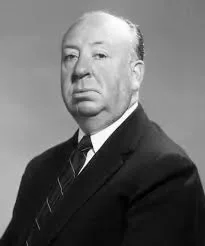
Alfred Hitchcock
Born13 Aug, 1899
Died29 Apr, 1980
NationalityAmerican, British
Age at time of death80
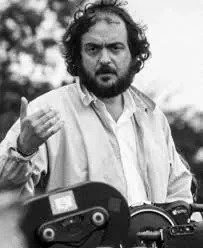
Stanley Kubrick
Born26 Jul, 1928
Died07 Mar, 1999
NationalityAmerican, British
Age at time of death70
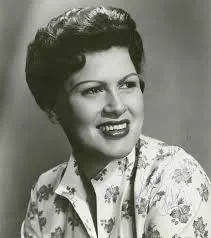
Patsy Cline
Born08 Sep, 1932
Died05 Mar, 1963
NationalityAmerican
Age at time of death30
Keith Martin
Born22 Sep, 1966
Died25 Mar, 2022
NationalityAmerican
Age at time of death55
Whitney Houston
Born09 Aug, 1963
Died11 Feb, 2012
NationalityAmerican
Age at time of death48
Waylon Jennings
Born15 Jun, 1937
Died13 Feb, 2002
NationalityAmerican
Age at time of death64
Chuck Berry
Born18 Oct, 1926
Died18 Mar, 2017
NationalityAmerican
Age at time of death90