Real Celebrities Never Die!
OR
Search For Past Celebrities Whose Birthday You Share
Died Age: 84
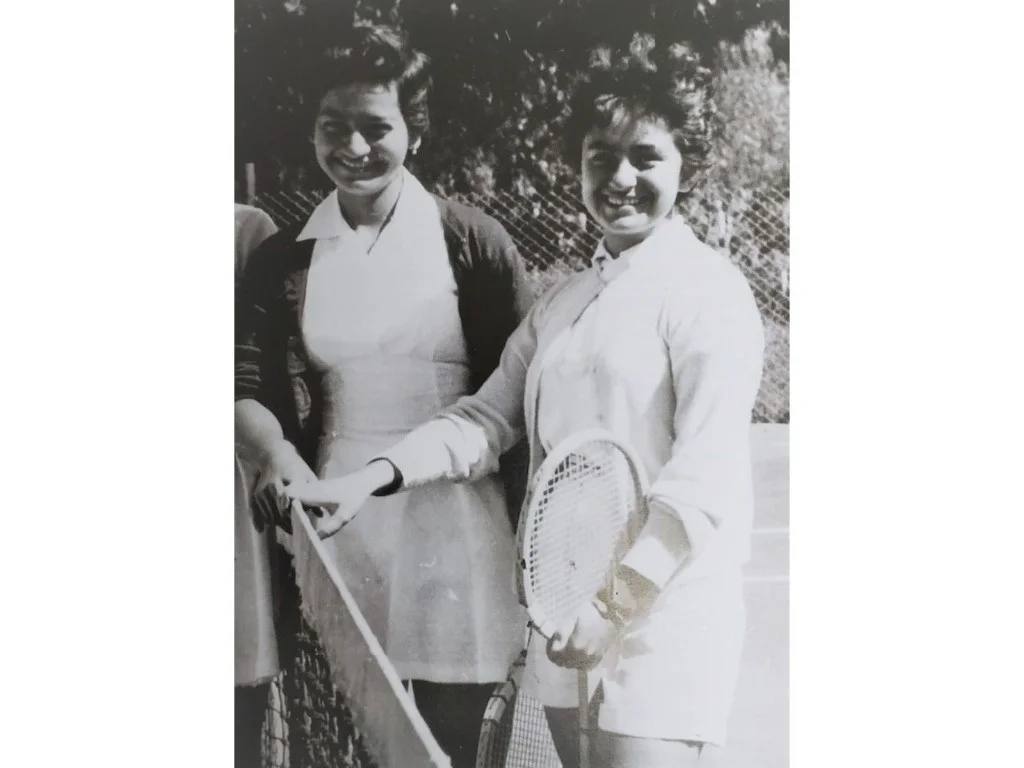
jornada.com.mx
Rosie Reyes
Birthday:
23 Mar, 1939
Date of Death:
04 Jan, 2024
Cause of death:
Lung Disease
Nationality:
Mexican
Famous As:
Mexican tennis player
Age at the time of death:
84
Early Life: A Havana Girl with a Racket and a Dream
Rosie Reyes was a pioneer long before the word became fashionable. With a graceful yet unyielding game, she blazed a trail for Latin American athletes at a time when few could even dream of such stages. Small in stature but towering in spirit, Rosie’s story is one of prodigious talent, fierce determination, and the quiet revolution of a girl who believed she belonged among the best—and proved it
Born Rosa María Reyes on March 23, 1939, in Havana, Cuba, Rosie grew up in a city humming with culture, music, and ambition. Her family was comfortably middle-class, and sports were seen as both recreation and character-building. While her peers gravitated toward dance or baseball, young Rosie found her passion on the tennis courts tucked away in Havana's country clubs.
Tennis was still very much a sport of the elite, dominated by European and American players. Yet from the moment Rosie first gripped a racket, she showed a precocious understanding of the game’s rhythms and strategies. It wasn’t just raw talent—it was hunger, a refusal to be seen as "less than" because of where she came from.
By her early teens, she was winning local tournaments, her footwork nimble, her forehand both elegant and deadly. Friends would later recall that Rosie played not with brashness but with an intense, almost meditative focus—an old soul on young legs.
Education: Lessons Beyond the Classroom
Formal schooling took a backseat once Rosie’s tennis career began to flourish. While she continued her studies diligently, it was on the court that she truly came alive. Her education came in the form of endless practice sessions, matches against older, stronger opponents, and long trips to regional tournaments.
At a time when there were few role models for young Latina athletes in international tennis, Rosie forged her path with resilience. Her early victories weren't just personal—they were political, unspoken assertions that talent knew no borders.
An interesting trivia: Rosie often trained against boys, developing a game that was both aggressive and adaptable—a style that would later set her apart on the international stage.
Career Journey: Rising, Winning, and Redefining Expectations
Early Spark: A Teen Sensation
Rosie's breakthrough came shockingly early. By 16, she was already making waves beyond Cuba. In 1956, at the tender age of 17, she traveled to the United States to compete—and stunned the tennis world.
That same year, partnering with fellow teenager Billy Jean Moffitt—later known as Billie Jean King—Rosie captured the Wimbledon women’s doubles title. They defeated the far more experienced team of Angela Buxton and Althea Gibson, a triumph that sent ripples through the traditionally staid world of tennis.
Winning Wimbledon wasn’t just an athletic achievement; it was a social statement. Here was a Cuban girl, playing on the world’s grandest grass courts, and winning.
Major Achievements: Making History
Rosie’s doubles prowess continued to shine. She reached the women’s doubles finals at the French Championships multiple times and claimed victory at the French Open in 1958, partnering with Australian Shirley Bloomer.
Her style was distinctive: Rosie played with precision rather than power, relying on flawless placement, an uncanny ability to read her opponents, and a net game that many contemporaries envied. She was known for her graceful movement and cool demeanor under pressure—a rare combination in an era that often demanded women to be either demure or fierce, but rarely both.
Though singles titles largely eluded her at the very highest levels, Rosie consistently ranked among the world’s top players throughout the late 1950s, a remarkable achievement for someone coming from a country with little infrastructure for developing tennis champions.
Challenges: A Game of Barriers
Despite her success, Rosie faced numerous challenges. She navigated cultural bias, geopolitical tensions (especially as U.S.-Cuba relations worsened), and the economic realities of being an international athlete from a small Caribbean nation.
Travel was expensive. Opportunities were limited. But Rosie never let these hurdles define her. She competed with a quiet defiance that spoke volumes: I am here, and I belong.
Personal Life: A Quiet Strength Beyond the Court
Unlike some of her contemporaries, Rosie eschewed the limelight. She preferred to let her racket speak for her, shying away from the media circus that often surrounded sports stars.
After retiring from professional tennis in the early 1960s, Rosie remained connected to the game, mentoring young players and advocating for greater access to tennis in Latin America. She married, raised a family, and transitioned into roles that emphasized giving back over personal glory.
One charming fact: Rosie was known to bring homemade Cuban pastries to practices and tournaments, earning her the affectionate nickname “Mamá Reyes” among younger players she coached later in life.
Legacy: A Quiet Revolutionary
Rosie Reyes may not be a household name today, but her impact on tennis—and on the broader world of sports—cannot be overstated. She was among the first Latina athletes to win at Wimbledon and a pioneer who made it possible for future generations of Latin American players to dream bigger.
In a world where few athletes of her background were given the chance to shine, Rosie forced the world to notice—not through scandal or spectacle, but through excellence. She opened doors simply by walking through them with grace and dignity.
Today, every time a Latin American girl steps onto a global tennis stage, part of the path they walk was cleared decades earlier by Rosie Reyes—the Havana girl with a dream, a racket, and a spirit too big for any one country to contain.
Profile Snapshot
Name:
Rosa María Reyes Darmon
Popular Name:
Rosie Reyes
Gender:
Female
Cause of Death:
Lung Disease
Spouse:
Pierre Darmon
Place of Birth:
Mexico City, Mexico
Place of Death:
Mexico City, Mexico
Occupation / Profession:
Mexican tennis player
Personality Type
Adventurer: Graceful, passionate, and quietly determined, Rosie Reyes embodied the spirit of an
Rosa María Reyes Darmon's Interesting Facts
As one of the pioneering Latin American women in professional tennis, she paved the way for future generations of players from the region.
Reyes was also a strong singles competitor, reaching the semifinals of the French Open in 1959
Rosie Reyes was a talented Mexican tennis player who gained international fame in the 1950s.
She won the women’s doubles title at the 1958 French Championships alongside her partner Yola Ramírez, making history for Mexican tennis.
Achievements & Awards
. Additionally, she secured a gold medal in the exhibition doubles event and a silver in the demonstration doubles event at the 1968 Mexico City Olympics, marking a historic moment in Mexican sports
Rosie Reyes was a distinguished Mexican tennis player who achieved significant success in the 1950s and 1960s. She won the women's doubles title at the 1958 French Championships with Yola Ramírez and reached the semifinals in singles at the 1959 French Open.
External Links