Real Celebrities Never Die!
OR
Search For Past Celebrities Whose Birthday You Share
Died Age:
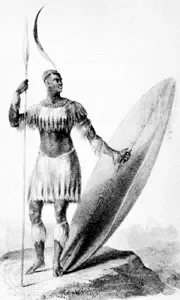
britannica.com
Shaka Zulu
Date of Death:
23 Sep, 1828
Cause of death:
Assassination (fratricide)
Nationality:
South Africa
Famous As:
King of the Zulu Kingdom
Age at the time of death:
Shaka kaSenzangakhona's Quote's

“A man who does not have a strong will will perish.”
Shaka kaSenzangakhona
🔗 deadcelebrityhub.com
Early Life: A Prince in Exile
Fearless on the battlefield and brilliant in strategy, Shaka Zulu rose from obscurity to become one of the most formidable military leaders in African history. His name still echoes through the annals of time—not just as a conqueror, but as a nation-builder who transformed the Zulu people from a minor clan into a mighty kingdom. Equal parts visionary and warrior, Shaka’s story is one of ambition, innovation, and legacy carved into the soil of southern Africa.
Born around 1787, Shaka was the illegitimate son of Senzangakhona, a Zulu chief, and Nandi, a woman from the Elangeni clan. Their union was considered scandalous, and soon after his birth, Shaka and his mother were cast out from the Zulu royal household. They wandered for years, enduring humiliation, hardship, and social stigma.
But exile forged his resilience. Raised in different territories—first among the Elangeni, later under the powerful Mthethwa—Shaka grew up immersed in warfare, cattle herding, and tribal politics. His difficult childhood bred a fierce independence and a deep understanding of power—both how it’s taken and how it's kept.
Trivia: The name “Shaka” may have derived from a beetle said to have caused his mother’s pregnancy—used mockingly by his peers, but worn with pride by the boy who would grow to command nations.
Education Through Warfare: The Making of a Leader
Shaka never received formal education in the modern sense, but his learning came from the battlefield. As a young man, he served as a warrior under Chief Dingiswayo of the Mthethwa. It was there that Shaka honed his military skills and began to think beyond the conventional warfare of his time.
He noticed inefficiencies in battle—throwing spears from a distance often led to inconclusive results. So Shaka developed a radical idea: get closer, strike harder, and train relentlessly. His innovation would soon reshape African warfare.
Career Journey: The Rise of the Zulu Kingdom
From Commander to King
When his father died in 1816, Shaka—backed by the Mthethwa—seized leadership of the Zulu clan. Though he wasn’t the rightful heir, he overpowered rivals and assumed control, consolidating scattered clans into a single, formidable force. From there, he began a campaign that would transform the region.
Military Reforms and the Mfecane
Shaka introduced groundbreaking military tactics. He replaced the traditional throwing spear with the short stabbing iklwa, redesigned the cowhide shield for closer combat, and organized regiments into age-based formations trained with brutal discipline.
He also introduced the “bull horn” formation—a strategy that used a central core to engage the enemy while “horns” encircled them. These tactics were devastatingly effective and led to rapid conquests.
But his legacy isn’t just one of war—it’s also one of unity. Shaka absorbed rival tribes not simply through violence, but through diplomacy and restructuring. He merged languages, customs, and loyalties into a larger Zulu identity.
This period, however, also saw the Mfecane (“the crushing”): a time of widespread upheaval, migration, and violence across southern Africa, sparked by Shaka’s campaigns and the ripple effects they caused.
Personal Life: The Lonely Power of a King
Despite his power, Shaka lived a life marked by emotional solitude. He never married, and some accounts suggest he distrusted women, perhaps due to the trauma of his early years. His relationship with his mother, Nandi, was intensely close—bordering on sacred. Her death in 1827 devastated him.
In mourning, Shaka ordered extreme measures: no crops planted, no milk consumed, and anyone who showed insufficient grief could be executed. These increasingly harsh decrees alienated his people and sowed the seeds of dissent within his inner circle.
Death and Legacy: The Immortal Flame of the Zulu Nation
In 1828, Shaka was assassinated by his half-brothers Dingane and Mhlangana, aided by his trusted commander Mbopa. They struck him down near the banks of the Mhlatuze River, ending a reign that lasted barely a decade—but changed history forever.
His killers sought to erase him, but instead, Shaka became legend.
Shaka’s military genius influenced generations of African leaders. He built one of the most sophisticated pre-colonial African states, founded on discipline, loyalty, and ingenuity. His methods have been studied in military academies across the globe. Despite criticism over his brutality, many South Africans view him as a national hero—a symbol of unity, pride, and resistance.
Today, statues, television series, and oral histories preserve his story. His name, like the man himself, commands attention: Shaka—the Zulu king who built an empire from exile.
The Visionary Warrior Who Redefined a People
Shaka Zulu was more than a conqueror. He was a strategist, a reformer, and a nation-maker whose leadership turned a minor clan into a political and military powerhouse. His reign was short, but his impact was seismic. Through pain and passion, vision and violence, he gave birth to a unified Zulu identity that still resonates today.
He rose from rejection to rule an empire. And though his body fell, the kingdom he forged—and the spirit he ignited—marches on.
Profile Snapshot
Name:
Shaka kaSenzangakhona
Popular Name:
Shaka Zulu
Gender:
Male
Cause of Death:
Assassination (fratricide)
Spouse:
Never Married
Place of Birth:
Mthethwa Paramountcy (today near Melmoth, KwaZulu-Natal, South Africa)
Place of Death:
KwaDukuza, Kingdom of Zulu
Occupation / Profession:
King of the Zulu Kingdom
Personality Type
Commander: Shaka Zulu was a bold, visionary leader with a strategic mindset, driven by a relentless desire for power and control, and a fierce determination to reshape his world and lead his people to dominance.
Shaka kaSenzangakhona's Interesting Facts
He revolutionized warfare by introducing new tactics and weapons, including the short stabbing spear (iklwa) and the "bull horn" formation.
Shaka's leadership unified various Nguni tribes under the Zulu banner, creating a centralized and formidable kingdom.
Shaka Zulu was a legendary warrior and leader who transformed the Zulu Kingdom into one of the most powerful military forces in southern Africa during the early 19th century.
Though his reign was marked by both innovation and brutality, Shaka remains one of Africa’s most iconic and influential historical figures.
Achievements & Awards
His legacy is honored across Africa for his strategic brilliance, leadership, and enduring cultural impact.
Shaka Zulu, the legendary leader of the Zulu Kingdom, didn't receive formal awards, but he is historically recognized for revolutionizing military tactics and unifying numerous clans into a powerful nation in the early 19th century.