Real Celebrities Never Die!
OR
Search For Past Celebrities Whose Birthday You Share
Died Age: 67
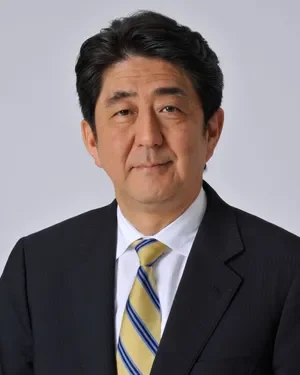
britannica.com
Shinzo Abe
Birthday:
21 Sep, 1954
Date of Death:
08 Jul, 2022
Cause of death:
Assassination
Nationality:
Japanese
Famous As:
Japanese politician
Age at the time of death:
67
Shinzo Abe's Quote's

“I have made a pledge never to wage war again, that we must build a world that is free from the sufferings of the devastation of war.”
Shinzo Abe
🔗 deadcelebrityhub.com
Early Life: Legacy Born in the Shadow of Power
Shinzo Abe was a statesman of resolve—a man who believed that Japan could be strong, proud, and forward-looking without forgetting the weight of its past.
As Japan’s longest-serving prime minister, Abe shaped an era defined by quiet strength, strategic assertiveness, and national revitalization.
His vision, known as “Abenomics,” sought not only to reinvigorate the Japanese economy, but to rekindle a spirit of purpose and presence in global affairs. To understand Abe is to understand modern Japan’s complex dance with tradition, transformation, and legacy.
Born on September 21, 1954, in Tokyo, Shinzo Abe came from a political dynasty as storied as any in Japan. His maternal grandfather, Nobusuke Kishi, served as prime minister from 1957 to 1960 and was a controversial figure, linked to Japan's wartime leadership but also its post-war rebuilding. His father, Shintaro Abe, was a prominent foreign minister and a potential prime minister himself—until illness cut his career short.
Young Shinzo grew up amid the machinery of power. He often accompanied his father on diplomatic visits, observing firsthand the delicate choreography of international relations. Yet he was not a child born hungry for politics; friends and teachers described him as quiet, thoughtful, even hesitant about stepping into the political arena.
Still, legacy pulled at him. His childhood was steeped in stories of Japan’s rise, fall, and rebirth—and the unspoken duty to continue that national narrative.
Trivia: Abe’s given name, “Shinzo,” means “new three,” symbolizing him as the third son in his generation—yet he would go on to be the foremost figure of his political lineage.
Education: Shaping a Global Perspective
Abe attended Seikei University in Tokyo, where he studied political science. But it was his time in the United States—studying public policy at the University of Southern California—that broadened his worldview. He admired American dynamism, but he was also deeply aware of Japan’s distinct identity and postwar limitations.
These experiences shaped his later policies. Abe became a politician fluent in both the West’s strategic language and Asia’s cultural nuance—an architect of Japan’s role as a bridge between East and West.
Career Journey: The Reformer Who Returned
Early Political Rise: Duty and Disillusion
Abe entered politics in 1993, winning his father’s old seat in the House of Representatives after Shintaro Abe’s death. Though he rose steadily through the Liberal Democratic Party (LDP), he remained under the radar until 2002, when he became deputy chief cabinet secretary and took a hardline stance in negotiations with North Korea over Japanese abductees. His firm posture made him a household name.
In 2006, Abe became Japan’s youngest postwar prime minister at age 52—but his first term was short-lived. Beset by scandals in his cabinet and health problems due to ulcerative colitis, Abe resigned in 2007, a decision many saw as premature and tragic.
The Comeback: Redefining Japan’s Trajectory
Few predicted his return. Fewer still imagined he would lead the nation for nearly a decade.
In 2012, Abe made a stunning political comeback, regaining the premiership with a renewed agenda focused on revitalization. His signature policy, dubbed “Abenomics,” rested on three arrows: monetary easing, fiscal stimulus, and structural reform. It was bold, experimental, and controversial—but it pulled Japan out of prolonged stagnation and restored a measure of global confidence.
Beyond economics, Abe championed a proactive foreign policy. He strengthened alliances—especially with the U.S.—and pursued a more assertive defense posture. He pushed for reinterpretation of Japan’s pacifist constitution to allow for collective self-defense, breaking with decades of postwar orthodoxy.
Trivia: Abe addressed the U.S. Congress in 2015, becoming the first Japanese leader to do so—an act of symbolism that honored history while looking ahead.
Later Years: Legacy and Controversy
Though Abe stepped down in 2020 due to recurring health issues, he remained a dominant force in Japanese politics. His stances on national pride, defense, and constitutional revision made him a revered and divisive figure—admired by conservatives, criticized by liberals.
His political vision was rooted in restoring what he saw as Japan’s “normalcy”—a nation no longer defined solely by its wartime past, but by its contemporary strength and values.
Personal Life: Quiet Devotion and Unyielding Discipline
Shinzo Abe was married to Akie Abe, a former radio DJ with a liberal streak who often defied expectations of a political spouse. Their marriage was one of contrasts—he, reserved and conservative; she, outspoken and independent—but their mutual respect was evident.
Privately, Abe was a disciplined man—up at dawn, a voracious reader, and known for his composure even in tense moments. He was famously guarded, but those close to him described a dry wit, deep loyalty, and moments of surprising warmth.
He never had children, a fact that led many to see his commitment to public service as deeply personal—his way of contributing to future generations.
Legacy: A Giant in Japan’s Postwar Story
On July 8, 2022, Shinzo Abe was assassinated while giving a campaign speech in Nara. The shocking event—an act of violence rare in Japan—sent shockwaves through the world. It was not only the death of a former leader but the silencing of a man who had shaped modern Japan more than any figure since World War II.
Abe's legacy is complex. He was a reformer and a nationalist, a pragmatist and an idealist. He pushed Japan to take its place on the world stage with more confidence, even as critics warned of echoes from the past. He was a man who sought to free his country from the “postwar regime” and move it toward a future defined by strength and sovereignty.
But more than that, he was a man who returned—after failure, after illness, after doubt—and left the political stage not in retreat, but at the height of influence.
Conclusion: Shinzo Abe, The Man Who Returned to Lead
Shinzo Abe’s story is one of rebirth, of leadership forged through hardship, and of a vision that dared to challenge the status quo. He did not always unite, but he always led—with conviction, with clarity, and with an unshakable belief in Japan’s place in the world.
He will be remembered not just as a political figure, but as a historical one—a man whose ideas shaped a nation, whose resilience defined a generation, and whose legacy, like the country he loved, will endure.
Profile Snapshot
Name:
Shinzo Abe
Popular Name:
Shinzo Abe
Gender:
Male
Cause of Death:
Assassination
Spouse:
Akie Matsuzaki
Place of Birth:
Shinjuku, Tokyo, Japan
Place of Death:
Kashihara, Nara, Japan
Occupation / Profession:
Japanese politician
Personality Type
Executive: Shinzo Abe was a pragmatic and resolute leader, whose structured approach and commitment to tradition reflected the hallmark.
Shinzo Abe's Interesting Facts
Abe came from a prominent political family—his grandfather Nobusuke Kishi was also a prime minister of Japan.
He was known for his economic policy package called “Abenomics,” which aimed to revive Japan’s stagnant economy through monetary easing, fiscal stimulus, and structural reforms.
Shinzo Abe was Japan’s longest-serving prime minister, holding office from 2006 to 2007 and again from 2012 to 2020.
Tragically, Shinzo Abe was assassinated in 2022 during a campaign speech, marking a shocking moment in Japan’s modern political history.
Achievements & Awards
He played a key role in revitalizing Japan's economy with his "Abenomics" policies and strengthening Japan's international relationships, earning him a prominent place in global politics.
Shinzo Abe, Japan's longest-serving prime minister, was recognized for his leadership with various honors, including the Grand Cross of the Order of Isabella the Catholic from Spain.
Latest Profiles
People also viewed
Tomiichi Murayama
Born02 Mar, 1924
Died16 Oct, 2025
NationalityJapanese
Age at time of death101